
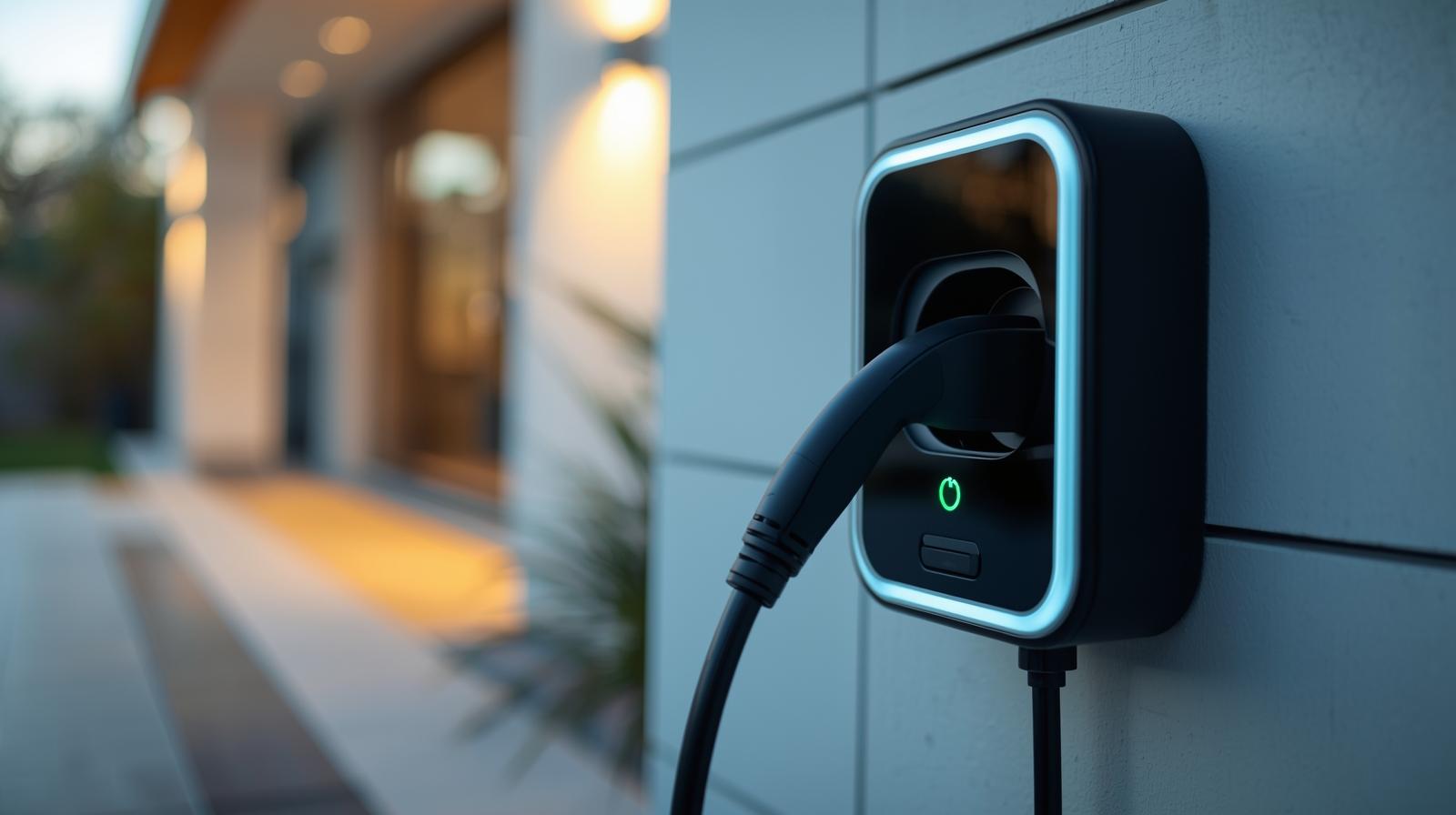
Transitioning to an electric vehicle (EV) is one of the smartest moves a modern driver can make, but one essential question always comes up: What is the real cost to install an EV charger at home? While home charging is cheaper, faster, and more convenient than relying on public stations, installation costs vary widely depending on charger type, electrical upgrades, permits, and labor.
This detailed, expert-level guide breaks down everything you need to know about the Cost to Install an EV Charger at Home, what affects pricing, how to reduce installation costs, and how to choose the right charger for your home.
Introduction
As electric vehicles become more affordable and mainstream, the EV ecosystem is rapidly evolving. One major part of EV ownership is charging, and most drivers quickly discover that home charging is not only cheaper but also far more convenient.
However, knowing the Cost to Install an EV Charger at Home is crucial before buying an EV or choosing your charging setup. This guide combines real-world electrician pricing, industry standards, installation case studies, and 2025 data so you get clear and accurate cost expectations.
What Is the Real Cost to Install an EV Charger at Home?
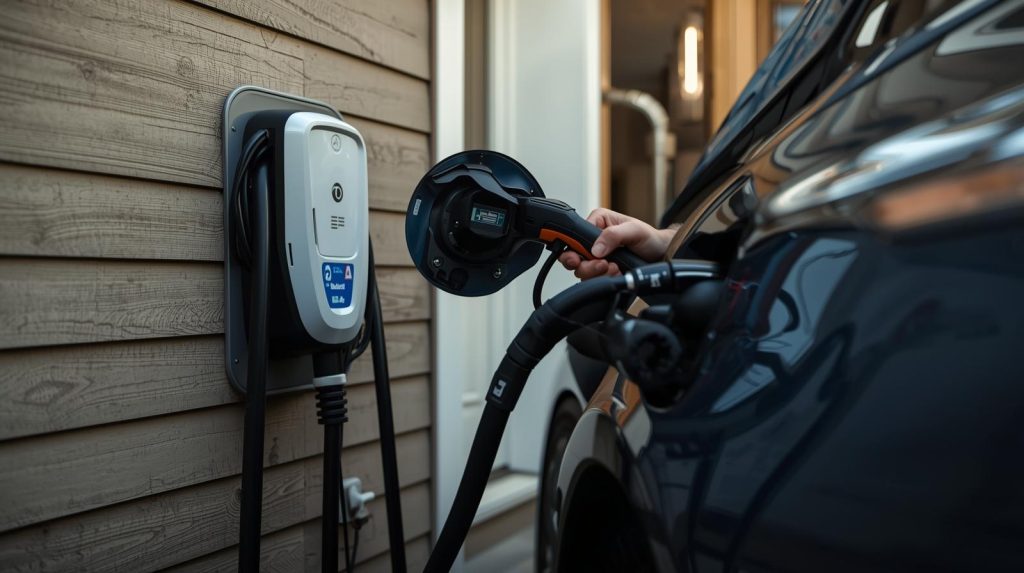
The average Cost to Install an EV Charger at Home ranges from:
$300 to $800 — Level 1 Charger (no installation needed)
$700 to $2,500 — Level 2 Charger (most common)
$12,000 to $40,000 — Level 3 DC Fast Charger (rare for homes)
The average U.S. homeowner installing a Level 2 charger typically pays:
Total cost: $1,200 to $2,000
This includes:
- Charger equipment
- Electrician labor
- Permits
- Electrical panel upgrades (if necessary)
- Wiring, conduit, breakers, outlet installation
Factors That Affect the Cost to Install an EV Charger at Home
The cost varies depending on:
1. Charger Type (Level 1, Level 2, Level 3)
Higher levels = faster charging = higher cost.
2. Home Electrical Capacity
If your panel is older or has no free breaker slots, upgrades can cost $800–$3,500.
3. Distance From Panel to Charger Location
More footage = more wiring = higher labor cost.
4. Mounting Location (Garage vs. Outdoors)
Outdoor installs may require weatherproofing.
5. Permits & Local Regulations
Some cities charge $50, others charge $500+.
6. Labor Rates in Your State
Electricians charge between $65 and $150 per hour.
7. Brand & Features of the Charger
Smart chargers cost more but add value.
Level 1, Level 2 & Level 3 Charger Installation Cost Comparison
Level 1 Charger (120V)
- Comes free with most EVs
- Uses a standard outlet
- Installation cost: $0 to $300
- Slow charging: 3–5 miles per hour
Level 2 Charger (240V)
- Most popular home charger
- Installation cost: $700 to $2,500
- Equipment: $300 to $900
- Charging speed: 20–50 miles per hour
Level 3 DC Fast Charger
- Not recommended for homes
- Requires industrial power supply
- Installation cost: $12,000 to $40,000+
- Speed: 80% charge in 20–30 minutes
Home Electrical Panel Upgrade Costs
If your home electrical panel is older than 20 years, or under 150 amps, you may need an upgrade.
Cost breakdown:
- Install a new 200-amp panel: $1,600–$3,000
- Sub-panel installation: $500–$1,200
- Breaker upgrade: $80–$200
Wiring, Conduit & Distance Costs
The further your charger is from the electrical panel, the higher the cost.
Average wiring cost per foot:
$8 to $12 per linear foot
Distance example:
- 10 feet = $80–$120
- 30 feet = $240–$360
- 50 feet = $400–$600
Permit & Inspection Fees
Cities require permits to ensure safety.
Typical costs:
- Small towns: $50–$100
- Medium cities: $100–$300
- Large cities: $300–$500+
Labor Costs by State
Electrician rates vary widely.
Lowest labor cost states:
- Mississippi
- Arkansas
- South Dakota
($65 to $85/hr)
Highest labor cost states:
- California
- Massachusetts
- New York
($120 to $150/hr)
Total Installation Cost by Home Type
Apartment / Condo:
$200–$2,000 (depends on shared parking approval)
Townhouse:
$600–$1,800
Single-family home:
$1,000–$2,500
Luxury home:
$2,500–$6,000
(Due to distance, upgrades, smart systems)
Cost to Install an EV Charger at Home in All 50 States (Averages)
- California: $1,500–$2,500
- Texas: $1,000–$1,800
- Florida: $1,000–$1,600
- New York: $1,300–$2,200
- Washington: $1,200–$2,000
- Georgia: $1,100–$1,800
- Colorado: $1,200–$2,000
- Nevada: $1,100–$1,700
- Illinois: $1,200–$1,900
- Pennsylvania: $1,000–$1,600
Rebates, Incentives & Tax Credits
Many homeowners save 30%–100% using rebates.
Federal Tax Credit:
Up to $1,000 rebate for home EV charger installation.
State incentives:
- NYSERDA (NY): up to $1,000
- California: $500–$2,000 depending on county
- Colorado: $500+
- Maryland: $700
Utility company rebates:
Some offer free chargers with installation support.
How to Save Money on Home EV Charger Installation
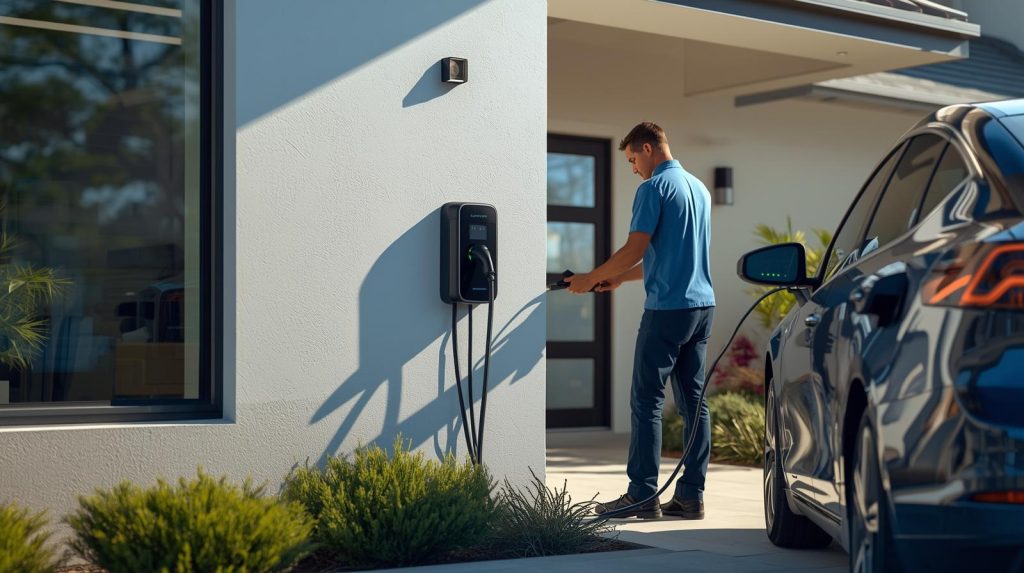
Install the charger close to your electrical panel
Choose a NEMA 14-50 outlet instead of hardwiring
Select an electrician offering free inspection
Apply for rebates before starting
Avoid unnecessary upgrades
Use a smart charger to reduce electricity costs
Should You Hire an Electrician or DIY?
Installing a Level 2 charger involves:
- 240V wiring
- Breaker installation
- Permits
- Building code compliance
DIY is not recommended for safety and legal reasons.
A licensed electrician ensures:
Proper load calculation
Fire safety
Warranty protection
Insurance compliance
How Long Does Installation Take?
- Basic installation: 2–3 hours
- With moderate wiring: 4–6 hours
- With panel upgrade: 1 full day
Best Home EV Chargers for 2025
- ChargePoint Home Flex
- Emporia EV Charger
- Wallbox Pulsar Plus
- JuiceBox 40
- Tesla Wall Connector
Each supports fast Level 2 charging and smart energy management.
FAQs
1. What is the average Cost to Install an EV Charger at Home?
$1,200–$2,000 for most homeowners.
2. Can I install a Level 2 charger without upgrading my panel?
Yes, if the panel has available capacity.
3. Do all EVs work with the same charger?
Most Level 2 chargers work universally.
4. Does installing a charger increase home value?
Yes, typically by $500–$1,500.
5. Can renters install a home charger?
Only with landlord approval.
Conclusion
The Cost to Install an EV Charger at Home depends on your home’s electrical setup, charger type, distance from the panel, and regional labor rates. Most homeowners spend between $1,200 and $2,000, especially when installing a Level 2 charger—the most practical option for daily EV charging.
Thanks to federal and state incentives, smart installation planning, and rapidly improving EV technologies, installing a home charger is easier and more affordable than ever.
Home charging is not only cost-effective—it turns your house into your own private fueling station, saving time and money for years to come.