
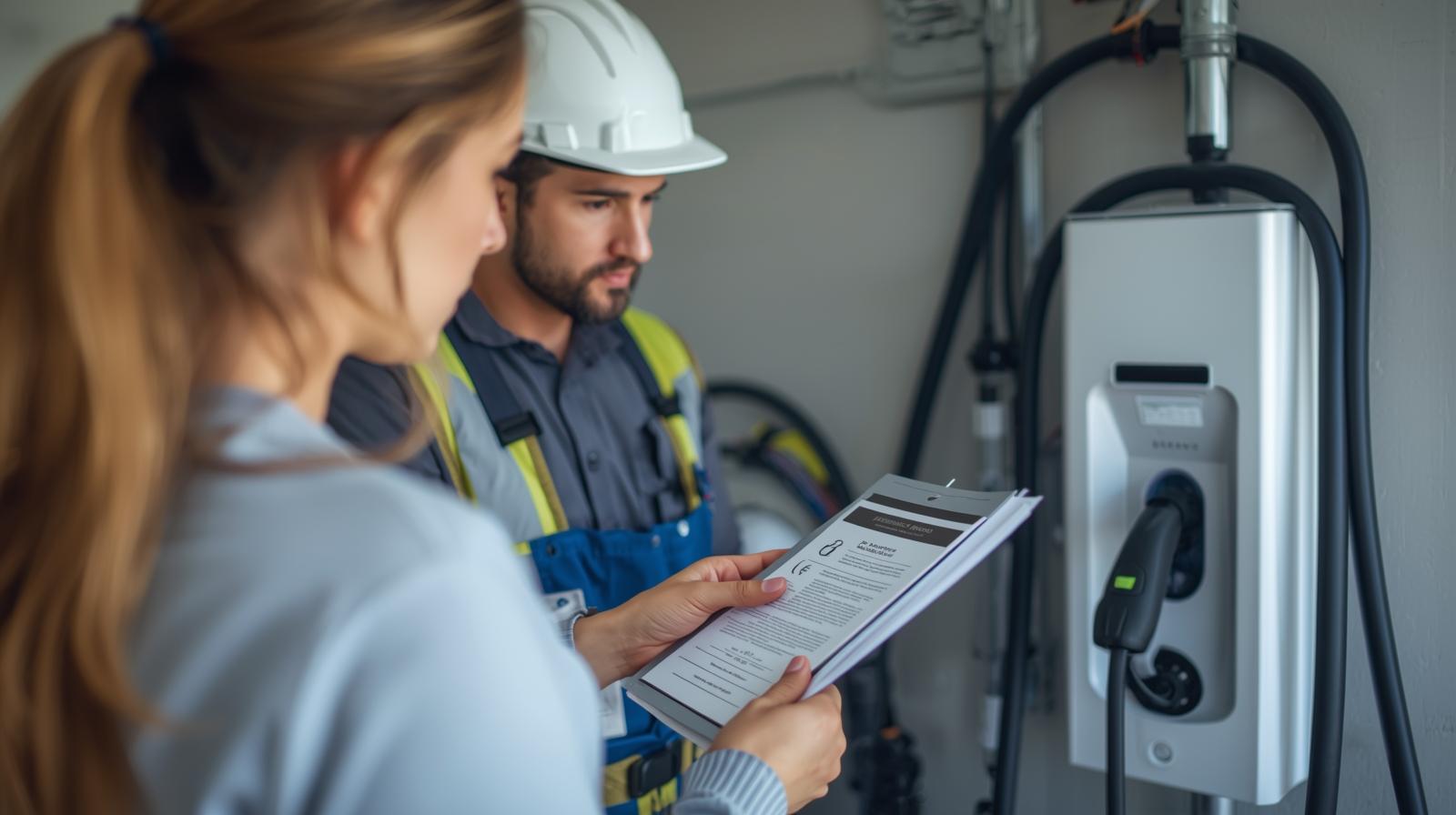
As more drivers switch to electric vehicles, installing a home EV charger has become one of the best upgrades for convenience, efficiency, and long-term savings. But before beginning installation, many homeowners ask the crucial question: “Do I need a permit to install an EV charger in my home?”
The short answer: Yes — in most cases, you do need a permit.
The long answer: It depends on your local jurisdiction, your home’s electrical capacity, and the type of EV charger you’re installing.
In this comprehensive guide, we will break down everything you need to know: why permits are required, how the process works, costs, safety standards, inspection requirements, and how to avoid common mistakes.
Introduction
Home EV charging is transforming the driving experience. No more depending on public chargers — instead, you charge overnight and wake up with a full battery. But before you can enjoy this convenience, you must understand the rules governing installation.
Many homeowners assume they can simply mount a Level 2 charger and plug it in. However, installing a Level 2 charger usually requires electrical upgrades, hardwiring, or new circuit installation — and that means permits and inspections are required.
What Is a Home EV Charger?
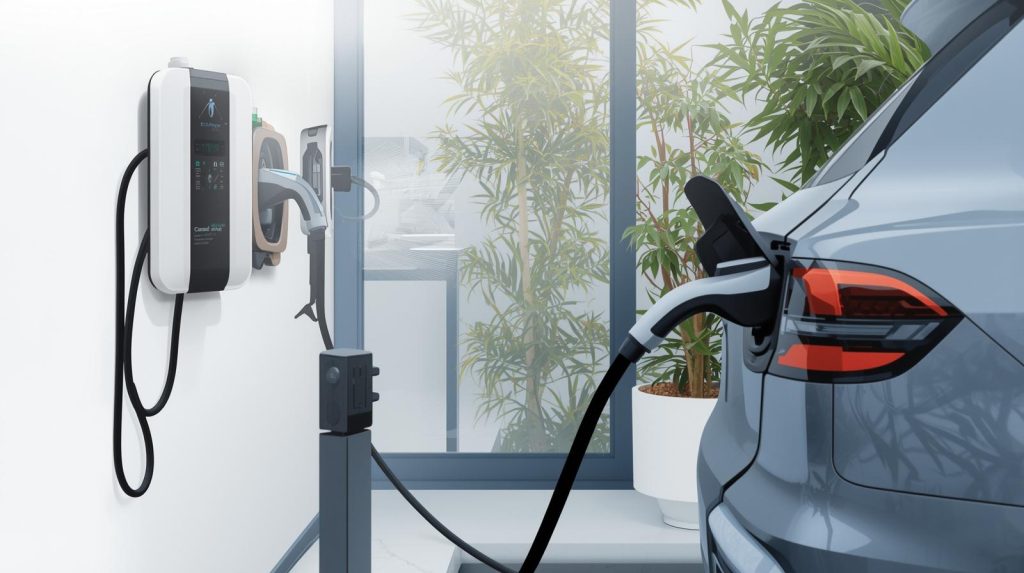
A home EV charger is an electric charging unit installed at home that allows EV owners to charge their vehicles faster and more efficiently. Chargers come in three levels, but Level 1 and Level 2 are most common for home use.
A home EV charger is a residential charging device that allows electric vehicle owners to safely and conveniently charge their car at home. Understanding what is a home EV charger helps drivers choose the right charging level, improve charging speed, and reduce dependency on public stations. With options like Level 1 and Level 2 chargers, homeowners can enjoy faster charging, lower costs, and the convenience of powering their EV overnight.
Types of Home EV Chargers
Level 1 Charger
- Uses a standard 120-volt outlet
- Slow charging
- No permit usually required
Level 2 Charger
- Uses a 240-volt dedicated circuit
- Requires professional installation
- Frequently requires a permit due to electrical work
Smart EV Chargers
- WiFi-enabled
- Requires proper mounting and electrical handling
Do I Need a Permit to Install an EV Charger in My Home?
Yes, you usually do need a permit — especially for a Level 2 charger that requires a 240-volt circuit. The permit ensures that:
- Electrical work meets safety standards
- Wiring is done correctly
- The electrical panel can safely handle the load
- Your installation complies with local building and electrical codes
Some homeowners assume small DIY electrical jobs don’t require a permit — but EV chargers are classified as major electrical upgrades, so the permit requirement applies in most areas.
If your main question is “Do I need a permit to install an EV charger in my home?”, the answer will almost always be yes.
Why Permits Are Required for EV Charger Installation
Permits are essential to protect:
1. Home Safety
EV chargers require high electrical loads. Incorrect installation can cause:
- Fire hazards
- Electrical shorts
- Overloaded circuits
- Damage to home wiring
2. Compliance With NEC (National Electrical Code)
Local electrical inspectors ensure the installation meets NEC standards.
3. Compliance With Local Building Codes
Each city has rules for wiring, circuits, and electrical panel capacity.
4. Insurance Coverage
Without a permit, insurance may refuse claims related to electrical fires.
5. Warranty Protection
Many EV charger manufacturers void warranties if the installation is unpermitted.
When a Permit Is Absolutely Mandatory
A permit is required if:
- You are installing a Level 2 charger
- A new 240-volt circuit is added
- Your panel needs upgrading
- You need a subpanel installation
- Wiring must be run through walls or conduit
- The charger is hardwired
- Installing a wall-mounted charger
If any new electrical work is involved, permits are non-negotiable.
Cases Where a Permit May Not Be Required
A permit might not be required if:
- You are using a Level 1 charger
- Charging from an existing 120-volt outlet
- No new wiring or breaker installation is needed
However, some jurisdictions still require permits for all fixed EV chargers — even plug-in types — so always check local regulations.
The EV Charger Permit Process Explained
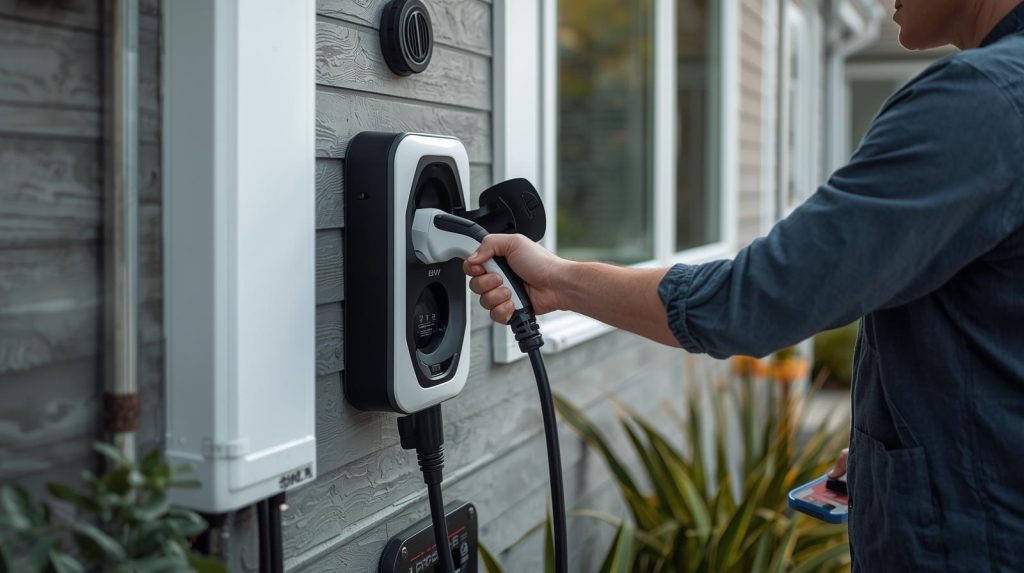
Here’s how the process usually works:
Step 1: Electrician Assessment
A licensed electrician evaluates:
- Panel capacity
- Existing wiring
- Location of the charger
Step 2: Permit Application
The electrician or homeowner submits:
- Electrical plans
- Site layout
- Load calculations
Step 3: Permit Review
City or county verifies compliance with local codes.
Step 4: Installation
A licensed electrician performs the installation.
Step 5: Inspection
Inspector visits to approve the work.
Step 6: Final Approval
You receive legal certification of safe installation.
Documents Needed for an EV Charger Permit
You may need:
- Electrical panel details
- Charger specifications
- Wiring diagrams
- Installation location sketch
- Load calculation sheet
- Electrician license number
Costs of EV Charger Permits
Permit costs vary widely but typically range from:
$50 to $300
In major cities, costs may be higher.
Electrical Load Calculations and Panel Requirements
A licensed electrician must conduct a load calculation to determine:
- Whether your current panel can handle a 40–60 amp circuit
- If you need a panel upgrade
- Whether a subpanel is necessary
Without load calculations, installations can be unsafe.
Why You Should Not Install Without a Permit
Unpermitted installation can lead to:
- Failed home inspections when selling
- Insurance claim rejections
- Fire hazards
- Code violations
- Fines
- Required rework by an electrician
Role of a Licensed Electrician in Permit Approval
Most cities require:
- Only licensed electricians may install EV chargers
- Only licensed electricians can obtain electrical permits
DIY installation is often prohibited.
Can I Pull a Permit Myself?
In some regions, homeowners can pull their own permits. But:
- Work must still pass inspection
- DIY work on high-voltage circuits requires experience
- Mistakes can be dangerous
It’s safer to let an electrician handle both permit and installation.
EV Charger Inspection: What to Expect
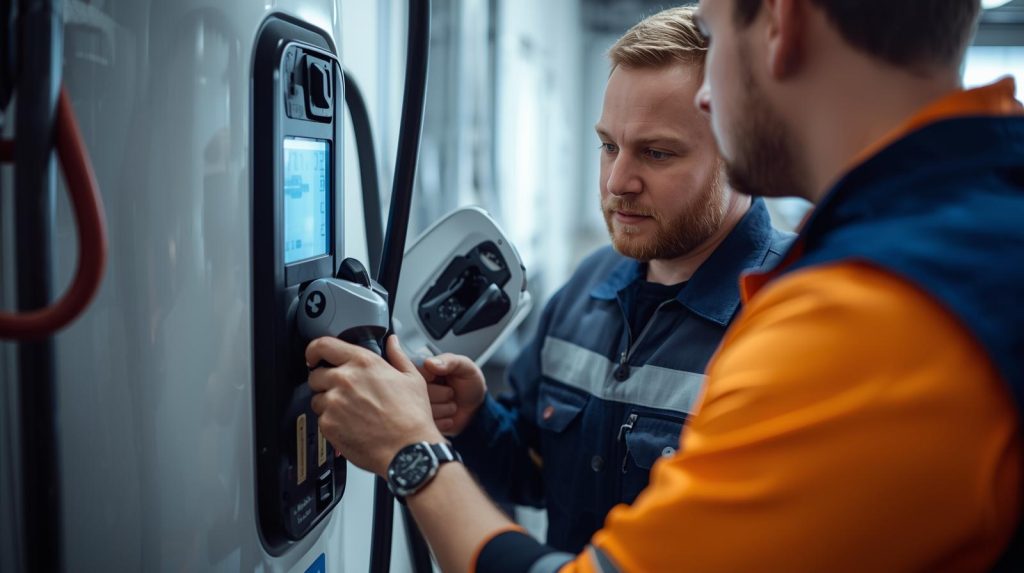
The inspector will check:
- Proper breaker size
- GFCI protection
- Conduit quality
- Wiring gauge
- Panel capacity
- Grounding
- Correct installation height and location
If everything meets code, approval is granted immediately.
Common Mistakes Homeowners Make With EV Charger Permits
- Not pulling a permit
- Using unlicensed electricians
- Installing chargers near water sources
- Overloading circuits
- Not following NEC standards
- Incorrect wiring gauge
- Improper grounding
How Permit Rules Differ by State or City
Permit rules vary, but the strictest states include:
- California
- Washington
- New York
- New Jersey
- Massachusetts
Some rural areas have more relaxed rules.
HOA and Condo Permit Requirements
If you live in:
- A condo
- Townhome
- Gated community
- Apartment
You may need:
- HOA approval
- Property manager approval
- Electrical feasibility confirmation
Conclusion
Understanding “Do I Need a Permit to Install an EV Charger in My Home?” is essential for every homeowner planning to switch to electric vehicle charging. While installing a Level 1 charger may not always require a permit, Level 2 chargers almost always do because they involve higher electrical loads, dedicated circuits, and upgrades that must follow local building and electrical codes. Securing the proper permits ensures your installation is safe, compliant, and eligible for future inspections, warranties, and insurance claims.
By working with a licensed electrician, following local permitting requirements, and completing the inspection process, you protect both your home and your investment. As EV adoption continues to grow, installing a permitted and professionally approved charger not only enhances safety but also increases your property’s value and long-term reliability. Taking the time to follow the correct permitting steps ensures you enjoy fast, efficient, and worry-free home charging for years to come.g requirements, and completing the inspection process, you protect both your home and your investment. As EV adoption continues to grow, installing a permitted and professionally approved charger not only enhances safety but also increases your property’s value and long-term reliability. Taking the time to follow the correct permitting steps ensures you enjoy fast, efficient, and worry-free home charging for years to come.
FAQ Section
1. Do I need a permit to install an EV charger in my home?
Yes. Most cities require a permit for installing a Level 2 EV charger because it involves new wiring, a 240V circuit, or electrical panel upgrades.
2. Why is a permit required for EV charger installation?
Permits ensure your installation follows electrical codes, prevents fire hazards, protects insurance coverage, and verifies correct wiring and grounding.
3. Can I install an EV charger without a permit?
You should not. Installing without a permit may result in fines, insurance claim denial, code violations, and unsafe electrical work.
4. Do Level 1 chargers require a permit?
Usually no, because Level 1 chargers plug into a standard 120V outlet. But check local rules — some areas require permits for any EV charger installation.
5. How much does an EV charger permit cost?
Permit fees typically range from $50 to $300, depending on your local city, county, and the complexity of the electrical work.
6. Can I pull an EV charger permit myself?
In some areas, homeowners may apply for their own permit. But a licensed electrician is still recommended due to safety and code compliance.
7. How long does it take to get an EV charger permit?
Approval usually takes 1–10 business days, depending on the city’s workload and whether your electrical plans need revisions.
8. What happens during the inspection?
An inspector checks breaker size, wiring, grounding, GFCI protection, conduit, charger placement, and electrical panel load to ensure proper installation.
9. What if my electrical panel doesn’t have enough capacity?
You may need a panel upgrade or subpanel, which also requires a permit. A licensed electrician can perform a load calculation to confirm.
10. Do condos or apartments require extra permits?
Yes. In multi-unit buildings, you also need HOA or property management approval, and sometimes additional electrical assessments.