
Electric cars are becoming very popular around the world, including in Pakistan. Many people ask: how does the electric car engine work? To understand this, we need to know that electric cars do not use the traditional petrol or diesel engine. Instead, they use an electric motor powered by a battery pack. This technology makes them more efficient, cleaner, and easier to maintain.
In this blog, we will explain in very simple words how electric car engines work, what their main parts are, and why they are different from petrol or diesel cars.
What is an Electric Car Engine?
An electric car engine, also called an electric motor, is the main part that makes an electric vehicle (EV) move. Unlike petrol or diesel engines that burn fuel, an electric motor uses electricity stored in the car’s battery to create motion. It works with the help of components like the battery pack, inverter, and controller to power the wheels. Electric car engines are more efficient, quieter, and cleaner than traditional engines, making them the future of transportation.
In electric cars, the “engine” is actually an electric motor. The motor gets power from large batteries and then moves the wheels of the car. Unlike petrol or diesel cars that burn fuel, electric motors use electricity to create motion.
- Petrol/Diesel Engine = burns fuel to make energy.
- Electric Car Engine (Motor) = uses stored electricity to make energy.
This simple difference makes electric motors more efficient and eco-friendly.
Main Components of an Electric Car Powertrain
An electric car engine works with the help of several key parts:
- Battery Pack – Stores electricity, like a fuel tank for EVs.
- Inverter – Converts DC (from battery) to AC (for motor).
- Electric Motor – Uses electricity to rotate and move the wheels.
- Controller/Power Electronics – Controls how much power goes to the motor.
- Transmission – Simpler than petrol cars, usually just one gear.
How Does the Electric Car Engine Work?
An electric car engine, or motor, works by using electricity stored in the battery to create motion. The inverter converts the battery’s DC power into AC power, which runs the motor. The motor then spins and drives the wheels, giving smooth and instant acceleration. Electric cars also use regenerative braking, which means the motor can send energy back to the battery when you slow down. This system makes electric car engines highly efficient, eco-friendly, and easy to maintain compared to petrol or diesel engines.
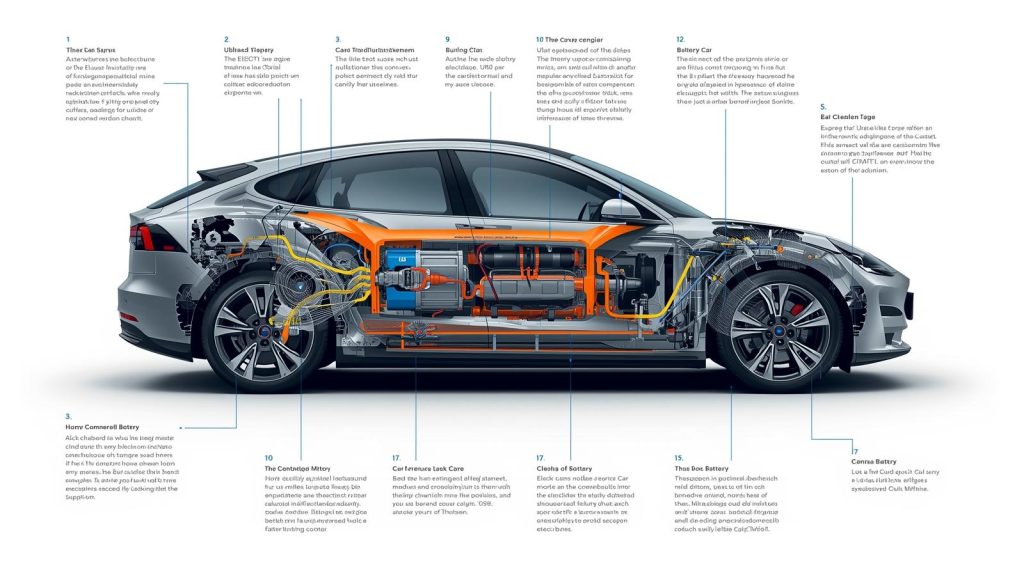
- The battery pack stores electricity when you charge the car.
- The inverter changes that electricity from DC to AC.
- The electric motor uses electromagnetic force to spin and create motion.
- The motor turns the car’s wheels through a transmission system.
- When you press the brake, the motor can work in reverse (regenerative braking) to send energy back to the battery.
This is how electric cars keep reusing energy and remain very efficient.
Types of Electric Car Motors
Electric cars use different types of electric motors, each with its own benefits:
- AC Induction Motor – Strong, reliable, and used in many EVs like Tesla.
- Permanent Magnet Motor – Compact, energy-efficient, and delivers high performance.
- Brushless DC Motor (BLDC) – Common in smaller EVs and electric bikes due to low maintenance and good efficiency.
These different motor types help electric vehicles achieve smooth driving, instant torque, and better energy efficiency, making them more advanced than traditional engines.
Advantages of Electric Car Engines
Electric car engines (motors) offer many benefits compared to petrol or diesel engines. They are highly efficient, converting most of the stored electricity into motion with very little energy loss. EV motors deliver instant torque, giving smooth and quick acceleration. They are also quiet and vibration-free, making the drive more comfortable. Another big advantage is low maintenance, since electric motors have fewer moving parts and don’t need oil changes. Most importantly, they are eco-friendly, producing zero tailpipe emissions and helping reduce air pollution.
Electric car motors have several benefits:
- High Efficiency – Less energy wasted compared to fuel engines.
- Instant Torque – Very fast acceleration and smooth driving.
- Quiet Driving – No engine noise, very comfortable.
- Low Maintenance – Fewer moving parts, no oil changes needed.
- Eco-Friendly – No smoke, no tailpipe emissions.
Challenges of Electric Car Engines
While electric car engines have many benefits, they also face some challenges. The biggest issue is the high cost of batteries, which makes EVs more expensive than petrol cars. Many electric cars also have a limited driving range, causing “range anxiety” for drivers. Another challenge is the lack of charging stations, especially in developing countries. Battery replacement and recycling are also costly. Despite these challenges, technology is improving, and electric car engines are becoming more affordable and practical every year.
Still, there are some challenges:
- Expensive Batteries – Batteries cost a lot to produce.
- Limited Range – Some EVs cannot travel very far on one charge.
- Charging Issues – Few charging stations in many countries, including Pakistan.
- Initial Cost – EVs are still more expensive than petrol cars.
Electric Car Engine vs Petrol/Diesel Engine
| Feature | Petrol/Diesel Engine | Electric Car Engine |
| Fuel Source | Petrol or Diesel | Electricity (Battery) |
| Efficiency | 25–30% | 85–90% |
| Maintenance | High (oil, filters) | Low (fewer parts) |
| Emissions | CO₂, smoke | Zero tailpipe emissions |
| Noise | Loud | Silent |
Real-World Examples of EV Engines
- Tesla – Uses advanced AC induction motors and permanent magnet motors.
- Nissan Leaf – One of the most famous EVs, uses a permanent magnet motor.
- Audi e-tron – Luxury EV with dual motors for strong performance.
- MG ZS EV (available in Pakistan) – Uses a simple but efficient electric motor.
Electric Car Engines in Pakistan
Electric car engines are still new in Pakistan, but interest is growing fast. Cars like the MG ZS EV, Audi e-tron, and Nissan Leaf are already running on Pakistani roads. These electric motors give smooth driving, low maintenance, and zero emissions, which is very useful for reducing pollution in big cities. However, challenges such as high car prices, limited charging stations, and costly batteries slow down adoption. With better EV policies and charging infrastructure, electric car engines in Pakistan have a bright future.In Pakistan, electric cars are slowly becoming popular. Models like MG ZS EV, Audi e-tron, and Nissan Leaf are already on the roads. But challenges remain:
- Very few charging stations.
- High import duty on EVs.
- Expensive battery replacement.
However, the government is working on EV policies, and in future, more affordable EVs may come to Pakistan.
Future of Electric Car Engines
The future of electric car engines looks very promising as technology continues to improve. With the development of solid-state batteries and more efficient motors, electric cars will offer longer driving ranges, faster charging, and lower costs. Governments around the world, including Pakistan, are supporting EV adoption to reduce pollution and fuel imports. As charging networks expand and production increases, electric car engines will become more affordable, powerful, and eco-friendly, making them a key part of the global shift toward green transportation.The future of electric car engines looks very bright:
- Better Batteries – Solid-state batteries will increase range.
- Cheaper Technology – Costs will reduce as more EVs are produced.
- Stronger Motors – New designs will make EVs faster and lighter.
- Green Mobility – More people will shift to electric cars for environmental reasons.
FAQs
Q1. How does the electric car engine work in simple words?
It uses electricity from the battery to power a motor, which spins the wheels.
Q2. Do electric cars have gears?
Most electric cars have a single gear, so driving is very smooth.
Q3. How long does an electric car motor last?
Electric motors can last more than 15–20 years with low maintenance.
Q4. Do electric cars need engine oil?
No, they don’t need engine oil because they don’t have pistons or fuel burning.
Conclusion
Electric cars are no longer just a modern trend – they are becoming a strong alternative to petrol and diesel vehicles. The key to their success lies in their electric engine, or motor, which works very differently from a traditional internal combustion engine. Instead of burning fuel, an electric car uses electricity stored in a battery, which is then converted into motion through the motor. This makes the process simpler, cleaner, and far more efficient.
By understanding how the electric car engine works, we can see why EVs are growing in popularity worldwide. They offer smooth and quiet driving, instant acceleration, lower maintenance, and most importantly, zero tailpipe emissions, which makes them better for the environment. Compared to petrol and diesel engines that waste a lot of energy and create pollution, electric motors are designed for maximum efficiency and sustainability.
In countries like Pakistan, electric vehicles are still new, and challenges like high prices, lack of charging stations, and expensive batteries remain. However, with government policies, growing awareness, and global investment in EV technology, the future looks promising. As batteries become cheaper and charging infrastructure improves, more people will shift towards EVs.