
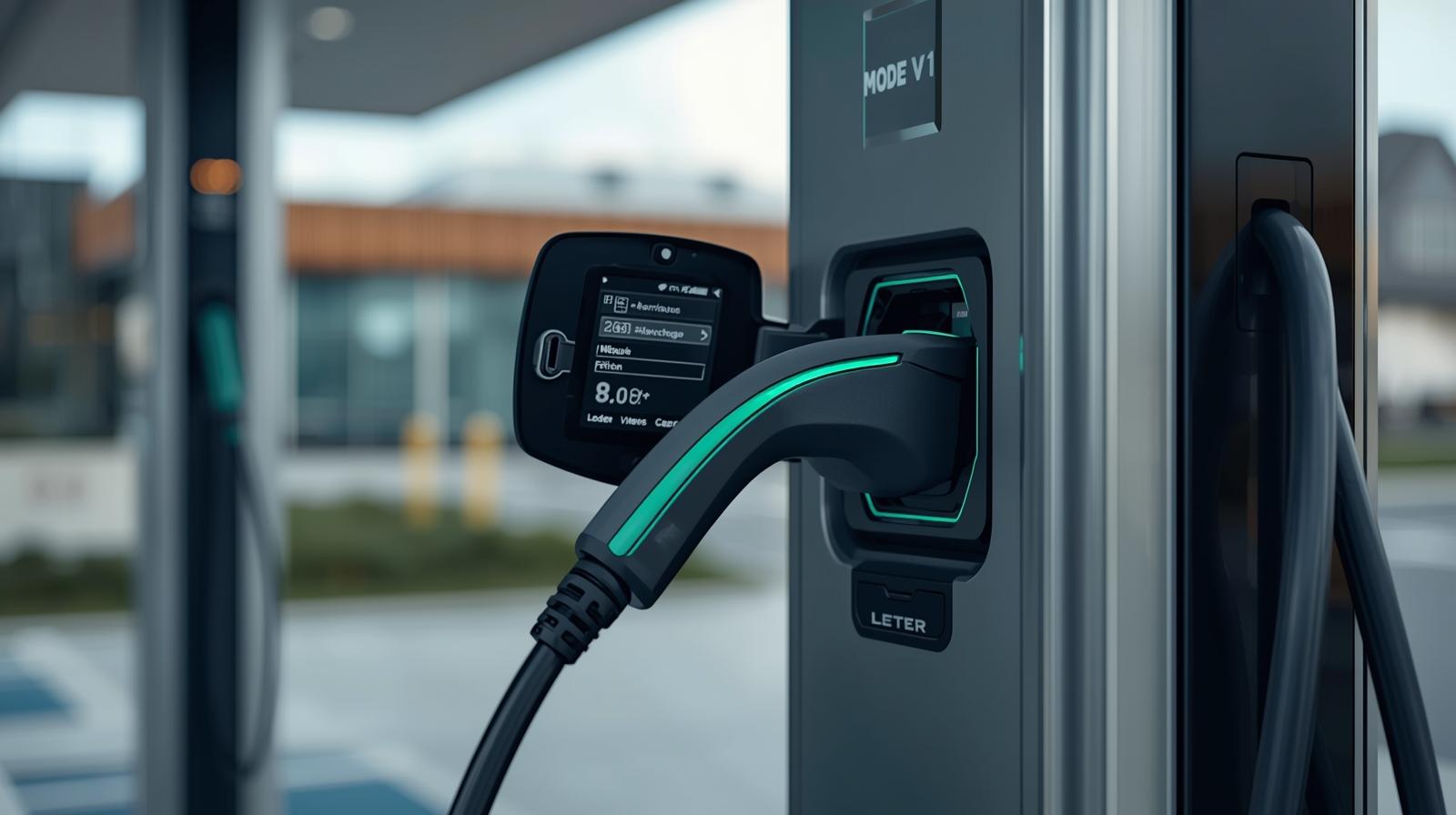
As electric vehicles (EVs) become a core part of global transportation, understanding the fundamentals of EV charging is no longer optional—it’s essential. Among the different EV charging standards, Mode 1 EV charging is the simplest, oldest, and most misunderstood method. While it is rarely used today, knowing how Mode 1 EV charging works provides valuable insight into the evolution of EV charging technology and highlights why modern solutions prioritize safety and intelligence.
This in-depth guide explains how Mode 1 EV charging works, breaking down its electrical process, components, limitations, safety concerns, and real-world applications. Whether you’re an EV beginner, automotive enthusiast, technician, or researcher, this article will give you a complete understanding of Mode 1 charging from both a technical and practical perspective.
Introduction to EV Charging Modes
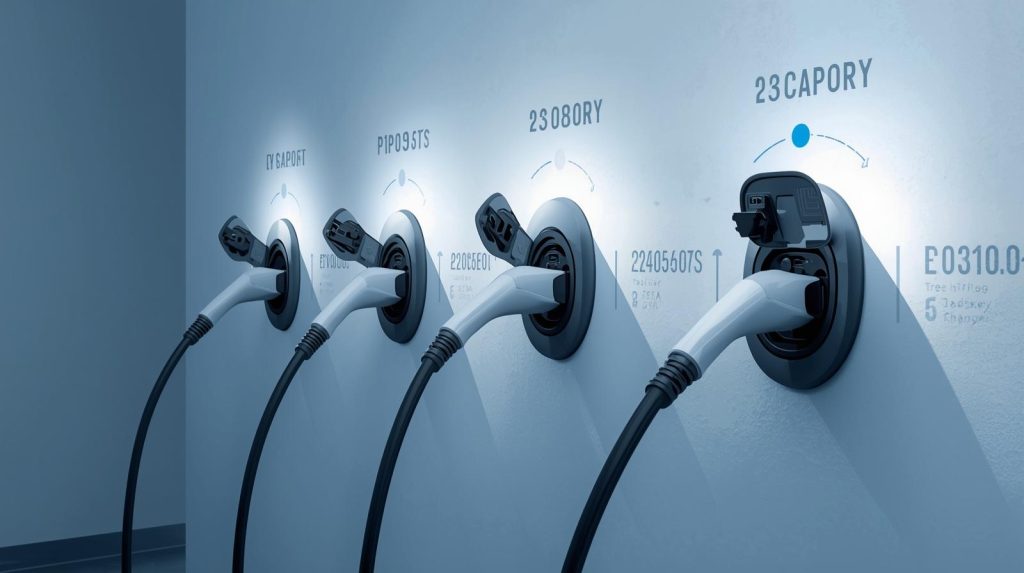
Before explaining how Mode 1 EV charging works, it’s important to understand the broader concept of EV charging modes.
EV charging modes are standardized by the International Electrotechnical Commission (IEC 61851) to define how an electric vehicle connects to a power source, how electricity flows, and what safety systems are involved.
The Four EV Charging Modes
- Mode 1 – Basic AC charging with no communication or control
- Mode 2 – AC charging with in-cable protection
- Mode 3 – Dedicated AC charging stations (wall boxes)
- Mode 4 – DC fast charging
Among these, Mode 1 EV charging is the most basic and least technologically advanced.
What Is Mode 1 EV Charging?
To fully understand how Mode 1 EV charging works, we must first define it clearly.
Mode 1 EV charging is a method where an electric vehicle is connected directly to a standard household power outlet using a basic cable, with no smart communication, no control box, and no active safety mechanisms.
In this mode:
- The power socket is not EV-specific
- The charging cable has no protection device
- The vehicle’s onboard charger controls the charging process
How Mode 1 EV Charging Works: Step-by-Step Explanation
Let’s break down how Mode 1 EV charging works in a clear, technical, yet easy-to-understand way.
Step 1: Connection to a Standard AC Power Source
Mode 1 charging begins when the EV is plugged into a standard alternating current (AC) outlet, such as:
- 120V socket (North America)
- 230V socket (Europe, Asia, UK)
These outlets are designed for everyday household appliances—not electric vehicles.
Step 2: Direct Power Flow Without Communication
One of the defining characteristics of how Mode 1 EV charging works is the absence of communication.
Unlike advanced charging modes:
- There is no digital handshake
- No verification of cable capacity
- No load balancing
- No error detection
Power flows immediately once the connection is made.
Step 3: Onboard Charger Converts AC to DC
Electric vehicle batteries store direct current (DC) electricity. Since household outlets supply AC power, conversion is required.
In Mode 1 charging:
- The EV’s onboard charger converts AC to DC
- Charging speed is limited by the onboard charger’s capacity
- The grid has no control over charging behavior
Step 4: Fixed and Continuous Charging Current
Another key aspect of how Mode 1 EV charging works is that charging occurs at a fixed current.
- No real-time adjustment
- No monitoring of cable temperature
- No automatic shutdown in abnormal conditions
Charging continues until:
- The battery is full
- The user manually unplugs the cable
- A circuit breaker trips (worst-case scenario)
Electrical Characteristics of Mode 1 EV Charging
Understanding the electrical behavior is crucial to understanding how Mode 1 EV charging works.
Typical Electrical Specifications
| Parameter | Mode 1 EV Charging |
|---|---|
| Voltage | 120V / 230V AC |
| Current | Up to 16A |
| Power Output | 1.4–3.7 kW |
| Communication | None |
| Safety Control | None |
This low power output explains why Mode 1 charging is extremely slow.
Components Involved in Mode 1 EV Charging
To better understand how Mode 1 EV charging works, let’s examine the components involved.
1. Household Power Outlet
- Designed for low-power appliances
- Not optimized for continuous high-current loads
- Risk of overheating during prolonged charging
2. Basic Charging Cable
- No in-cable control box
- No surge protection
- No ground fault interruption
3. Vehicle Onboard Charger
- Handles voltage conversion
- Controls charging rate internally
- Has no external safety support from the grid
Why There Is No Communication in Mode 1 Charging
A critical factor in how Mode 1 EV charging works is the lack of communication between the EV and the power source.
What Communication Enables in Other Modes
- Cable authentication
- Current adjustment
- Fault detection
- Emergency shutdown
Mode 1 does none of this, making it inherently unsafe by modern standards.
Safety Risks Associated With Mode 1 EV Charging
Understanding how Mode 1 EV charging works also requires understanding why it’s considered risky.
Major Safety Concerns
- Overheating of plugs and sockets
- Electrical fires due to worn wiring
- No protection against ground faults
- No detection of loose connections
Because of these risks, many regions discourage or prohibit Mode 1 charging.
Why Mode 1 EV Charging Is Rare Today
As EV technology evolved, charging standards had to improve.
Key Reasons for Decline
- Larger battery capacities
- Increased charging demand
- Stricter electrical safety laws
- Availability of affordable Mode 2 chargers
Mode 1 charging no longer meets modern safety expectations.
How Mode 1 EV Charging Differs From Mode 2 Charging
To better understand how Mode 1 EV charging works, comparison is helpful.
| Feature | Mode 1 | Mode 2 |
|---|---|---|
| Communication | None | Limited |
| Safety Control | None | In-cable protection |
| Risk Level | High | Moderate |
| Usage | Rare | Common backup option |
Real-World Scenarios Where Mode 1 Charging Is Used
Despite its drawbacks, Mode 1 charging still appears in limited cases.
Common Examples
- Older electric scooters
- Low-speed EVs
- Industrial testing environments
- Emergency or temporary charging
However, it is not recommended for daily use.
Charging Speed: Why Mode 1 Is So Slow
A major question related to how Mode 1 EV charging works is why it takes so long.
Key Reasons
- Low voltage and current
- No dynamic current optimization
- Limited onboard charger capacity
- Heat buildup restricts sustained load
Charging a modern EV battery could take 24–48 hours or more.
Impact on EV Battery Health
While Mode 1 charging is slow, it’s not necessarily battery-friendly.
Potential Issues
- Inconsistent voltage supply
- Risk of sudden power interruption
- Inefficient energy transfer
Modern EV manufacturers optimize batteries for smarter charging modes.
Legal and Regulatory Status of Mode 1 EV Charging
Another important aspect of how Mode 1 EV charging works is how it fits into regulations.
Global Perspective
- Restricted in many European countries
- Discouraged by EV manufacturers
- Rarely supported by modern EVs
IEC standards prioritize safer alternatives.
Manufacturer Recommendations
Most automakers:
- Do not include Mode 1 cables
- Warn against household socket charging
- Recommend Mode 2 or Mode 3 solutions
Always consult the vehicle manual before attempting Mode 1 charging.
How Mode 1 EV Charging Influenced Modern Charging Technology
Understanding how Mode 1 EV charging works helps explain why smarter systems were developed.
Mode 1 highlighted:
- The importance of communication
- The need for safety automation
- The risks of uncontrolled power flow
Modern charging modes directly address these flaws.
Is Mode 1 EV Charging Still Relevant?
Technically yes—but practically, its relevance is minimal.
When It Might Be Acceptable
- Very small batteries
- Temporary emergency charging
- Controlled private environments
When It Should Be Avoided
- Daily charging
- Old wiring
- High-capacity EVs
Future Outlook for Mode 1 EV Charging
The future of EV charging is:
- Faster
- Smarter
- Safer
- Grid-integrated
Mode 1 EV charging does not align with these trends and will remain a legacy method.
Final Conclusion: How Mode 1 EV Charging Works and Why It Matters
So, how Mode 1 EV charging works can be summarized simply:
- It connects an EV directly to a household outlet
- It relies entirely on the onboard charger
- It lacks communication and safety controls
- It is slow, outdated, and risky
Final Verdict
- Educational value: High
- Practical use: Very limited
- Safety standard: Outdated
For modern EV owners, Mode 2 or Mode 3 charging is always the safer and smarter choice.
characters) for the article “How Mode 1 EV Charging Works”.
They are written to improve search rankings, featured-snippet eligibility, and E-E-A-T compliance.
Frequently Asked Questions (FAQs)
1. How Mode 1 EV charging works?
Mode 1 EV charging works by connecting an electric vehicle directly to a standard household AC socket without smart communication or built-in safety controls.
2. What power source is used in Mode 1 EV charging?
Mode 1 EV charging uses a regular household power outlet, typically 120V or 230V AC, designed for common electrical appliances.
3. Why is Mode 1 EV charging considered unsafe?
Mode 1 EV charging lacks protective features such as ground fault detection, temperature monitoring, and automatic power cutoff, increasing safety risks.
4. How fast does Mode 1 EV charging work?
Mode 1 EV charging works at a slow speed, usually delivering 1.4 kW to 3.7 kW, which can take many hours to fully charge an EV.
5. Does Mode 1 EV charging communicate with the vehicle?
No, Mode 1 EV charging works without any communication between the electric vehicle and the power supply.
6. Can modern electric vehicles use Mode 1 charging?
Most modern EVs do not recommend Mode 1 charging and instead support safer options like Mode 2 or Mode 3 charging.
7. How is Mode 1 EV charging different from Mode 2?
Mode 1 EV charging works without safety or control devices, while Mode 2 includes an in-cable control and protection system.
8. Is Mode 1 EV charging still allowed today?
Mode 1 EV charging is still permitted in limited situations but is mainly used for emergency or temporary charging purposes.
9. Does Mode 1 EV charging affect battery health?
Mode 1 EV charging does not directly damage the battery, but inconsistent power delivery can reduce charging efficiency over time.
10. When should Mode 1 EV charging be avoided?
Mode 1 EV charging should be avoided for daily use, high-capacity EV batteries, and locations with old or unsafe electrical wiring.