
The world of cars is changing fast. With fuel prices going high and pollution increasing, people are now looking for better options. One of these smart options is the Hybrid-Electric Vehicle (HEV).
Hybrid cars are becoming popular because they save fuel, reduce smoke, and give a smooth drive. In Pakistan, cars like the Toyota Prius and Honda Vezel are famous examples of hybrids.
In this blog, we will explain everything about Hybrid-Electric Vehicles in very simple words – how they work, their types, benefits, challenges, charging system, HEVs in Pakistan, and their future.
What are Hybrid-Electric Vehicles (HEVs)?
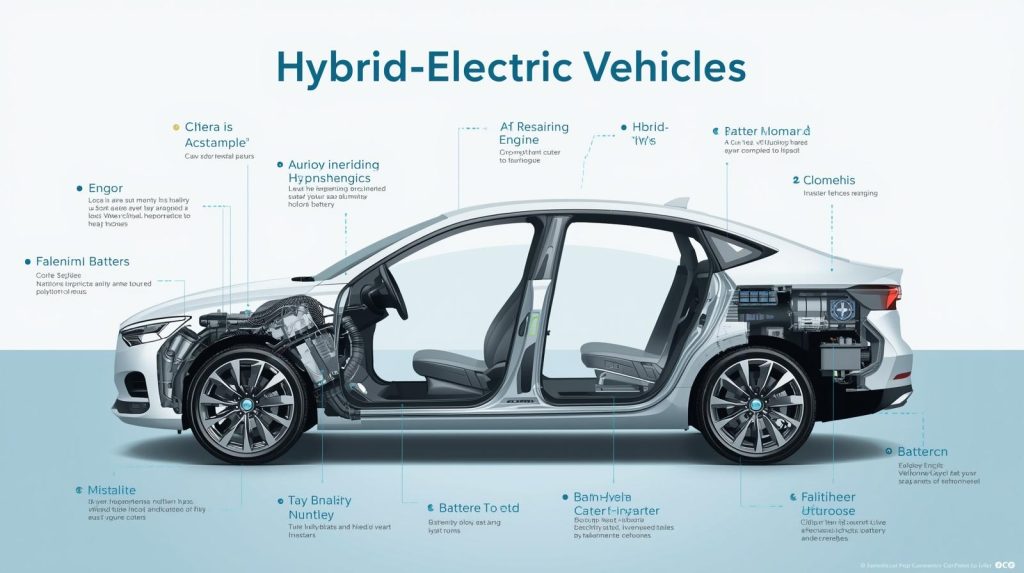
Hybrid-Electric Vehicles (HEVs) are cars that use both a petrol or diesel engine and an electric motor to move. The electric motor helps the engine, making the car more fuel-efficient and eco-friendly. Unlike fully electric cars, HEVs do not need external charging because their batteries recharge automatically while driving, especially through regenerative braking. These vehicles are becoming popular worldwide as they save fuel, reduce harmful emissions, and provide a smooth driving experience.
A Hybrid-Electric Vehicle (HEV) is a car that has two power systems:
- A petrol or diesel engine (like normal cars).
- An electric motor with a small battery.
The car can run on:
- The engine alone,
- The electric motor alone, or
- Both together.
The main difference between HEVs and Plug-in Hybrid Electric Vehicles (PHEVs) is that HEVs cannot be charged by plugging into electricity. Instead, their battery charges automatically while driving.
In simple words: An HEV is a normal petrol car, but with extra electric help for saving fuel and reducing pollution.
How Do Hybrid-Electric Vehicles Work?
The working of HEVs is very smart. Here’s how it happens:
- At low speed → the car uses the electric motor.
- At higher speed → the petrol engine takes over.
- When extra power is needed (like overtaking) → both engine and motor work together.
- During braking → the system collects energy and stores it in the battery (this is called regenerative braking).
This system makes driving fuel efficient, smooth, and eco-friendly.
Types of Hybrid-Electric Vehicles
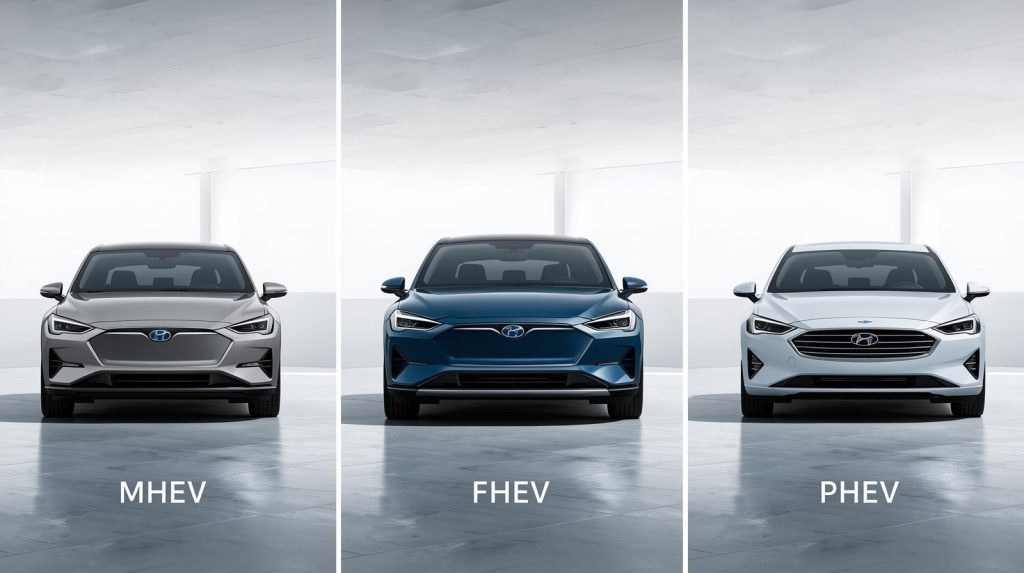
There are three main types of hybrids:
1. Mild Hybrid (MHEV)
A Mild Hybrid Electric Vehicle (MHEV) is a type of hybrid car that uses a small electric motor to support the petrol or diesel engine. The motor cannot drive the car on its own but helps reduce fuel use and improve performance. MHEVs save fuel by assisting during acceleration and by shutting off the engine when the car is idle, like at traffic signals. These vehicles are cost-effective compared to full hybrids and are a popular choice for drivers who want better mileage without worrying about charging.
- The electric motor helps the engine but cannot run the car alone.
- Example: Suzuki hybrid cars in some markets.
2. Full Hybrid (FHEV)
A Full Hybrid Electric Vehicle (FHEV) can run using the engine, the electric motor, or both together. At low speeds, the car can move only on electric power, which saves fuel and reduces emissions. When more power is needed, like on highways, the petrol or diesel engine takes over. The battery in an FHEV recharges automatically through regenerative braking and the engine, so there is no need for external charging. FHEVs offer better fuel efficiency and eco-friendly driving compared to normal cars, making them a popular choice worldwide.
- Can run on engine, motor, or both.
- Battery charges automatically during driving.
- Example: Toyota Prius, Toyota Aqua.
3. Plug-in Hybrid (PHEV)
A Plug-in Hybrid Electric Vehicle (PHEV) uses both an engine and a powerful electric motor. Unlike normal hybrids, PHEVs have bigger batteries that can be charged by plugging into an external charger. This allows the car to run only on electric power for short trips, saving a lot of fuel and cutting emissions. When the battery runs out, the petrol or diesel engine automatically takes over. PHEVs give drivers the benefit of electric driving with the backup of a fuel engine, making them a smart choice for people who want flexibility and better fuel efficiency.
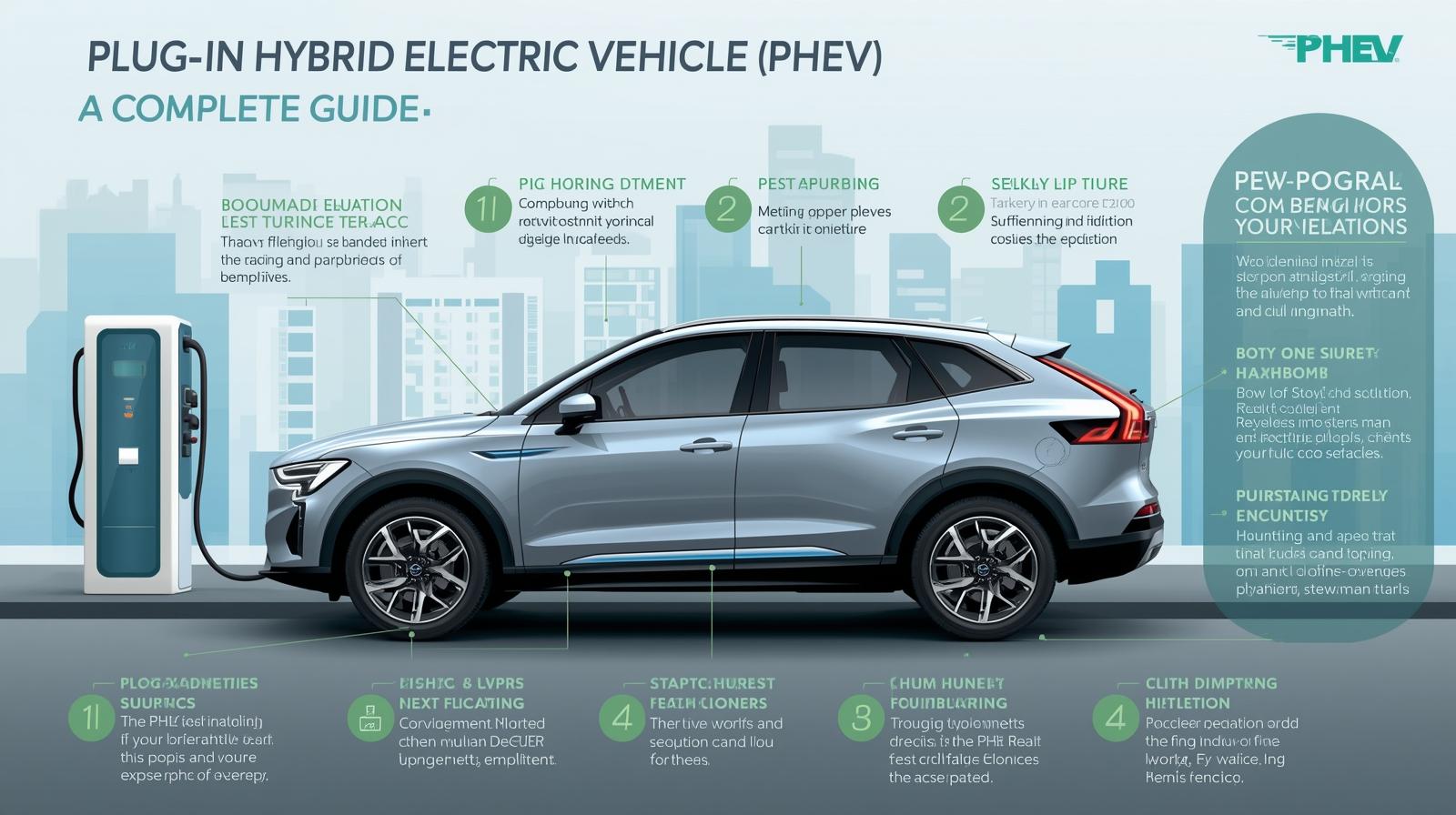
- Bigger battery than HEV.
- Can be charged with electricity (plug-in).
- Can drive longer on battery power.
- Example: Mitsubishi Outlander PHEV, Toyota Prius Plug-in.
Advantages of Hybrid-Electric Vehicles
HEVs are popular because of their many benefits:
- Fuel Saving – The electric motor reduces petrol use, which saves money.
- Low Emissions – Less smoke and pollution compared to normal cars.
- No Charging Needed – The battery charges automatically, so no worry about charging stations.
- Smooth & Quiet Drive – Electric motor makes driving silent and comfortable.
- Best for City Driving – In traffic, where fuel cars waste petrol, hybrids use electric mode.
Challenges of Hybrid-Electric Vehicles
While Hybrid-Electric Vehicles (HEVs) offer many benefits, they also come with some challenges. The first issue is their higher purchase price compared to normal cars, which makes them less affordable for many buyers. Second, the battery replacement cost can be expensive if it fails after several years. Another challenge is the limited availability of hybrid models in countries like Pakistan, where most cars are imported. Finally, repairs and maintenance may be difficult because not all mechanics are trained to handle hybrid technology.
Along with benefits, hybrids also have some challenges:
- High Price – Hybrids are more expensive than petrol cars.
- Battery Replacement Cost – If the battery gets weak after some years, replacement can be costly.
- Maintenance Complexity – Hybrids have both an engine and motor, so mechanics need special skills.
- Limited Options in Pakistan – Most HEVs are imported, so not everyone can afford them.
Charging & Fuel Efficiency in HEVs
One big advantage of Hybrid-Electric Vehicles is that they do not need external charging.
- The battery charges automatically through:
- The petrol engine.
- Regenerative braking (when you press the brake, energy goes back to the battery).
- The petrol engine.
This makes HEVs very practical for Pakistan, where charging stations are very few.
On average, hybrids can give 20–25 km per liter, which is much better than normal petrol cars.
Hybrid-Electric Vehicles in Pakistan
HEVs are very famous in Pakistan, especially among people who want to save fuel.
Popular Models in Pakistan:
- Toyota Prius
- Toyota Aqua
- Honda Vezel
- Honda Fit Hybrid
- Toyota Corolla Hybrid (imported)
Situation in Pakistan:
- Hybrids are mostly imported from Japan.
- Government has given some duty relaxations on hybrid cars.
- People like them because of fuel saving and smooth driving.
- Main problems: high prices and expensive maintenance.
Future of Hybrid-Electric Vehicles
The future of HEVs looks bright, especially in countries like Pakistan.
- Until charging stations for EVs become common, hybrids will remain very practical.
- More companies are launching hybrid models worldwide.
- In the next 5–10 years, Pakistan may see local production of hybrid cars.
- Hybrids are a bridge technology between petrol cars and fully electric cars.
In short: HEVs are not the final solution, but they are the right step toward clean and green driving.
HEVs vs PHEVs vs BEVs (Quick Comparison)
| Feature | HEVs | PHEVs | BEVs |
| Battery Charging | Self-charging | Plug-in + engine | Plug-in only |
| Driving Range (Electric) | Short (2–5 km) | Medium (30–80 km) | Long (150–500 km) |
| Fuel Use | Yes | Yes + battery | No fuel |
| Practical for Pakistan | Yes | Yes (but costly) | Limited (due to charging) |
FAQs about Hybrid-Electric Vehicles
1. What is a hybrid-electric vehicle in simple words?
A hybrid is a car that uses both petrol and electricity for driving.
2. Do hybrid cars need charging?
No, HEVs charge themselves automatically while driving.
3. Are hybrid cars fuel efficient?
Yes, they save a lot of fuel compared to normal petrol cars.
4. What are the disadvantages of hybrid cars?
They are costly, and battery replacement can be expensive.
5. Which hybrid cars are available in Pakistan?
Toyota Prius, Aqua, Honda Vezel, and Honda Fit are popular hybrid cars in Pakistan.
Conclusion
Hybrid-Electric Vehicles (HEVs) are a smart choice for today’s drivers. They give better fuel average, low emissions, and a smooth drive without the need for charging stations.
In Pakistan, hybrids are already popular, especially imported Japanese cars. Yes, they are expensive, but they help save fuel in the long run.
If you want to save money on fuel, reduce pollution, and enjoy modern driving, a hybrid car is a great option before moving fully to electric cars (EVs).