
The rapid growth of electric mobility has brought many advanced power-electronics components into the spotlight. Among them, the dc-dc converter for hybrid electric vehicle and ev plays a critical yet often overlooked role. While motors and batteries usually receive the most attention, the DC-DC converter is the silent backbone that ensures every electrical system inside a vehicle receives the correct voltage safely and efficiently.
In both hybrid electric vehicles (HEVs) and electric vehicles (EVs), multiple voltage levels coexist. High-voltage battery packs power traction motors, while low-voltage systems run lights, infotainment, control units, and safety electronics. Bridging this gap is impossible without a reliable dc-dc converter for hybrid electric vehicle and ev.
Understanding the Role of DC Power in Hybrid and Electric Vehicles
Before diving deep into the dc-dc converter for hybrid electric vehicle and ev, it is important to understand how electrical power is distributed inside modern vehicles.
Multiple Voltage Levels in HEVs and EVs
Unlike conventional vehicles, HEVs and EVs operate with:
- High-voltage systems (200V–800V) for propulsion
- Low-voltage systems (12V or 48V) for auxiliary loads
These voltage levels cannot directly interact without a conversion system. That is where the dc-dc converter for hybrid electric vehicle and ev becomes indispensable.
What Is a DC-DC Converter?
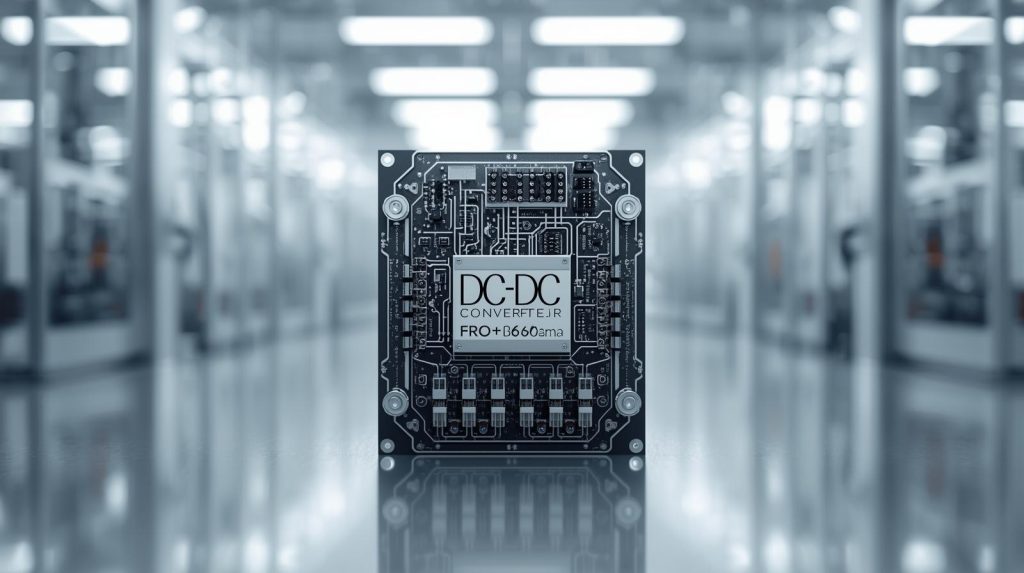
A DC-DC converter is a power-electronics device that converts direct current (DC) from one voltage level to another while maintaining high efficiency and stable output.
In automotive applications, a dc-dc converter for hybrid electric vehicle and ev typically:
- Steps down high voltage to low voltage
- Provides stable power to sensitive electronics
- Replaces or supports traditional alternators
Why DC-DC Converters Are Essential in Hybrid Electric Vehicles
Hybrid electric vehicles combine an internal combustion engine (ICE) with an electric powertrain. This complexity makes the dc-dc converter for hybrid electric vehicle and ev especially important.
Key Functions in HEVs
In hybrid vehicles, the DC-DC converter:
- Converts high-voltage battery power to 12V or 48V
- Powers ECUs, sensors, lighting, and infotainment
- Maintains the auxiliary battery charge
- Reduces reliance on engine-driven alternators
By reducing alternator usage, hybrids achieve better fuel efficiency and lower emissions.
Importance of DC-DC Converters in Electric Vehicles (EVs)
In fully electric vehicles, there is no engine or alternator. This makes the dc-dc converter for hybrid electric vehicle and ev a mission-critical component.
Role in EV Architecture
In EVs, the DC-DC converter:
- Supplies low-voltage power from the traction battery
- Keeps the 12V battery charged
- Ensures uninterrupted operation of safety systems
- Enables vehicle startup and control logic
Without a DC-DC converter, even a fully charged EV would fail to operate its basic electronics.
How a DC-DC Converter Works in HEVs and EVs
Understanding the working principle is essential to appreciating the value of a dc-dc converter for hybrid electric vehicle and ev.
Basic Working Principle
- High-voltage DC enters the converter
- Power switches rapidly turn on and off
- Energy is stored and released through inductors and capacitors
- Output voltage is regulated and stabilized
- Low-voltage power is delivered to vehicle systems
Advanced control algorithms ensure efficiency, reliability, and safety.
Types of DC-DC Converters Used in Hybrid Electric Vehicles and EVs
Different vehicle architectures require different converter designs. Below are the most common types of dc-dc converter for hybrid electric vehicle and ev applications.
1. Buck (Step-Down) Converters
- Reduce voltage (e.g., 400V to 12V)
- Most common type in EVs
- High efficiency and reliability
2. Boost (Step-Up) Converters
- Increase voltage levels
- Used in certain hybrid configurations
- Supports regenerative energy management
3. Buck-Boost Converters
- Can increase or decrease voltage
- Useful in variable voltage systems
4. Isolated DC-DC Converters
- Provide electrical isolation
- Improve safety
- Common in high-voltage EV architectures
5. Bidirectional DC-DC Converters
- Allow power flow in both directions
- Enable regenerative braking support
- Essential for modern HEVs and V2G systems
Bidirectional DC-DC Converter for Hybrid Electric Vehicle and EV
One of the most advanced forms of dc-dc converter for hybrid electric vehicle and ev is the bidirectional converter.
Why Bidirectional Conversion Matters
Bidirectional converters:
- Support energy recovery
- Balance power between batteries
- Enable vehicle-to-grid (V2G) technology
- Improve overall system efficiency
These converters are increasingly used in next-generation EV platforms.
Advantages of DC-DC Converters in HEVs and EVs
The dc-dc converter for hybrid electric vehicle and ev offers numerous advantages:
1. Improved Energy Efficiency
- Reduces energy losses
- Optimizes power distribution
2. Enhanced Vehicle Reliability
- Stable voltage for sensitive electronics
- Reduces electrical failures
3. Compact and Lightweight Design
- Saves space
- Improves vehicle range
4. Better Battery Management
- Maintains auxiliary battery health
- Supports long-term reliability
5. Reduced Emissions (for HEVs)
- Less engine load
- Improved fuel economy
Safety Considerations and Standards
Safety is a top priority in automotive power electronics. A dc-dc converter for hybrid electric vehicle and ev must meet strict standards.
Key Safety Features
- Over-voltage protection
- Over-current protection
- Thermal management
- Electrical isolation
Compliance Standards
- ISO 26262 (functional safety)
- IEC automotive standards
- OEM-specific requirements
These standards ensure the converter operates safely under all driving conditions.
Challenges in Designing DC-DC Converters for EVs and HEVs
Despite their benefits, designing a dc-dc converter for hybrid electric vehicle and ev comes with challenges.
Key Challenges
- High power density requirements
- Thermal management
- Electromagnetic interference (EMI)
- Cost optimization
- Long-term durability
Manufacturers continuously innovate to overcome these challenges.
Efficiency and Performance Considerations
Efficiency is a critical metric for any dc-dc converter for hybrid electric vehicle and ev.
Typical Efficiency Range
- Modern converters achieve 92%–98% efficiency
- Higher efficiency translates to better vehicle range
Factors Affecting Efficiency
- Switching frequency
- Semiconductor technology (Si vs SiC)
- Cooling system design
Role of Semiconductor Technology
Advanced semiconductors are transforming the dc-dc converter for hybrid electric vehicle and ev.
Silicon Carbide (SiC) and Gallium Nitride (GaN)
- Higher switching speeds
- Lower losses
- Smaller converter size
- Better thermal performance
These technologies are shaping the future of EV power electronics.
DC-DC Converter vs Alternator: A Major Shift
Traditional vehicles rely on alternators. In contrast, HEVs and EVs depend on the dc-dc converter for hybrid electric vehicle and ev.
Why DC-DC Converters Are Better
- Higher efficiency
- No mechanical losses
- Better integration with electric drivetrains
This shift is a major milestone in vehicle electrification.
Real-World Applications in Modern Vehicles
Almost every modern HEV or EV uses at least one dc-dc converter for hybrid electric vehicle and ev to:
- Power braking systems
- Run climate control electronics
- Support autonomous driving sensors
- Maintain vehicle safety systems
Their importance continues to grow as vehicles become more software-driven.
Future Trends in DC-DC Converters for EVs and HEVs
The future of the dc-dc converter for hybrid electric vehicle and ev is closely tied to EV innovation.
Emerging Trends
- Higher voltage architectures (800V+)
- Fully bidirectional converters
- Integrated power modules
- AI-based power management
- Vehicle-to-grid (V2G) compatibility
These advancements will further improve efficiency, safety, and sustainability.
Final Conclusion
The importance of the dc-dc converter for hybrid electric vehicle and ev cannot be overstated. It is the bridge between energy storage and real-world vehicle operation. As hybrid and electric vehicles continue to evolve, DC-DC converters will remain at the heart of automotive power electronics—quietly powering the future of sustainable transportation.
Frequently Asked Questions (FAQs)
1. What is a DC-DC converter in a hybrid electric vehicle and EV?
A DC-DC converter in a hybrid electric vehicle and EV converts high-voltage DC power from the traction battery into low-voltage DC power to run auxiliary systems like lighting, infotainment, and control units.
2. Why is a DC-DC converter important in electric vehicles?
A DC-DC converter is important because EVs do not have alternators. It ensures continuous power supply to low-voltage systems and keeps the 12V battery charged.
3. How does a DC-DC converter work in hybrid electric vehicles?
In hybrid electric vehicles, the DC-DC converter steps down high-voltage battery power and supports low-voltage systems, reducing the need for engine-driven alternators and improving fuel efficiency.
4. What voltage levels do DC-DC converters handle in EVs?
DC-DC converters typically convert high-voltage levels ranging from 200V to 800V down to 12V or 48V, depending on the vehicle architecture.
5. What types of DC-DC converters are used in hybrid electric vehicles and EVs?
Common types include buck converters, boost converters, buck-boost converters, isolated converters, and bidirectional DC-DC converters.
6. What is a bidirectional DC-DC converter in EVs?
A bidirectional DC-DC converter allows power to flow in both directions, supporting regenerative braking, energy recovery, and vehicle-to-grid (V2G) applications.
7. How does a DC-DC converter improve EV efficiency?
A DC-DC converter improves efficiency by minimizing energy losses, optimizing voltage regulation, and reducing heat generation during power conversion.
8. Are DC-DC converters safe for electric vehicles?
Yes, DC-DC converters are designed with advanced safety features such as over-voltage protection, thermal management, and electrical isolation to meet automotive safety standards.
9. What happens if a DC-DC converter fails in an EV?
If a DC-DC converter fails, low-voltage systems may stop working, which can lead to vehicle shutdown or safety system failure, even if the main battery is fully charged.
10. How will DC-DC converters evolve in future EVs?
Future DC-DC converters will be smaller, more efficient, bidirectional, and compatible with higher voltage systems and advanced semiconductor technologies like silicon carbide.