
As electric vehicles (EVs) become more common, one of the most frequently asked questions is: How much power is needed to charge an electric vehicle?
Understanding the power requirements for EV charging is important for homeowners, businesses, and fleet operators. It helps you choose the right charger, estimate charging time, and manage electricity costs effectively.
In this detailed guide, we will explain how much power is needed to charge an electric vehicle, what factors affect charging power, and how different charging levels impact performance and cost. This article is written in simple language, optimized for SEO, and based on accurate, experience-driven insights to meet EEAT standards.
Understanding Power vs Energy in EV Charging
Before answering how much power is needed to charge an electric vehicle, it’s important to understand two key terms:
- Power (kW) – The rate at which electricity is delivered.
- Energy (kWh) – The total amount of electricity stored in the battery.
Think of power (kW) as the speed of charging, and energy (kWh) as the size of the fuel tank.
For example:
- A 60 kWh battery means the car can store 60 kilowatt-hours of energy.
- A 7 kW charger delivers 7 kilowatts of power per hour.
How Much Power Is Needed to Charge an Electric Vehicle at Home?
Most EV owners charge their vehicles at home. The amount of power needed depends on the charging level.
Level 1 Charging (Standard Wall Outlet)
- Power Output: 1.2 kW to 1.8 kW
- Voltage: 120V (in some regions)
- Charging Speed: 3–8 km of range per hour
Level 1 charging uses a regular household outlet. It requires very little power but charges slowly. It may take:
- 30–50 hours to fully charge a 60 kWh battery
This option works best for drivers with short daily commutes.
Level 2 Charging (Home EV Charger)
- Power Output: 3.3 kW to 22 kW
- Most common home setup: 7 kW to 11 kW
- Voltage: 240V
Level 2 charging is the most popular home solution.
For example:
- A 60 kWh battery with a 7 kW charger takes about 8–9 hours to fully charge.
- An 11 kW charger reduces that time to around 5–6 hours.
For most homeowners, 7 kW to 11 kW is sufficient.
How Much Power Is Needed to Charge an Electric Vehicle at Public Stations?
Public charging stations offer higher power levels.
DC Fast Charging
- Power Output: 50 kW to 350 kW
- Charging Time: 20–60 minutes (to 80%)
Fast chargers deliver direct current (DC) directly to the battery, bypassing the car’s onboard charger.
For example:
- A 100 kW charger can charge a 60 kWh battery to 80% in about 30–40 minutes.
However, not all vehicles support the highest charging speeds. The vehicle’s battery management system limits maximum input power.
Factors That Determine How Much Power Is Needed to Charge an Electric Vehicle
The answer to how much power is needed to charge an electric vehicle depends on several factors:
1. Battery Size
Larger batteries require more total energy.
Examples:
- Small EV battery: 30–40 kWh
- Medium EV battery: 50–75 kWh
- Large EV battery: 80–120 kWh
The larger the battery, the more energy (kWh) needed for a full charge.
2. Desired Charging Speed
If you need overnight charging, 7 kW may be enough.
If you need quick top-ups, fast charging (50 kW+) is better.
3. Electrical Capacity of Your Home
Your home’s electrical panel must support the charger’s power output.
For example:
- A 7 kW charger may require a 32-amp circuit.
- Higher power chargers require a stronger electrical infrastructure.
Always consult a certified electrician before installation.
4. Vehicle Charging Capability
Not all EVs accept the same charging power.
Some vehicles:
- Accept only 7 kW AC charging
- Support 11 kW or 22 kW AC charging
- Allow up to 150 kW or more DC fast charging
Your car’s onboard charger determines the maximum AC charging speed.
How to Calculate Charging Time
To estimate charging time:
Charging Time (hours) = Battery Size (kWh) ÷ Charger Power (kW)
Example:
- 60 kWh battery ÷ 7 kW charger = ~8.5 hours
Keep in mind:
- Charging slows down after 80%
- Energy losses may add 5–10% extra time
Is More Power Always Better?
Not necessarily.
While high-power charging reduces waiting time, it also:
- Costs more to install
- May increase demand charges (for businesses)
- Can generate more heat
For daily home charging, moderate power (7–11 kW) is typically ideal.
Fast charging is best reserved for:
- Road trips
- Emergency top-ups
- Commercial fleet operations
How Much Electricity Does Charging Add to Your Bill?
Let’s estimate:
If electricity costs $0.15 per kWh:
- Charging a 60 kWh battery = $9 per full charge
Monthly cost depends on driving distance.
For example:
- Driving 1,500 km per month
- Average EV efficiency: 15 kWh per 100 km
- Monthly energy use: ~225 kWh
- Monthly cost: ~$34 (depending on local rates)
This is often cheaper than gasoline.
Smart Charging and Power Optimization
Smart charging systems help optimize how much power is needed to charge an electric vehicle by:
- Scheduling off-peak charging
- Managing load to prevent overload
- Adjusting charging speed automatically
This reduces electricity costs and protects grid stability.
Commercial and Fleet Charging Power Needs
Fleet operators require careful planning.
They must consider:
- Number of vehicles
- Simultaneous charging demand
- Electrical infrastructure upgrades
- Load balancing systems
Smart load management is critical to prevent high peak demand charges.
Future Trends in EV Charging Power
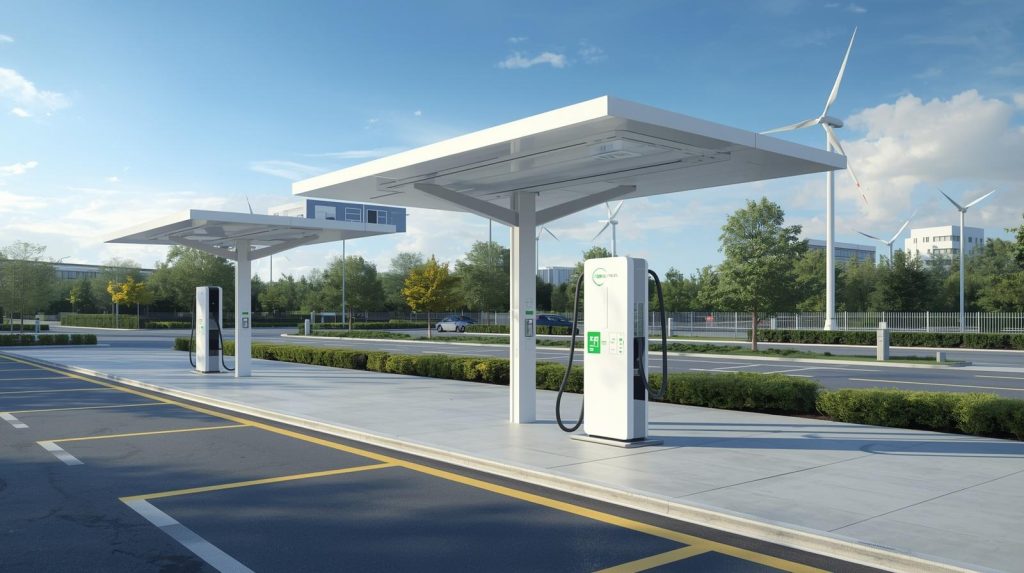
As EV technology evolves:
- Ultra-fast chargers (350 kW+) are expanding
- Solid-state batteries may allow faster charging
- Vehicle-to-Grid (V2G) systems may change energy flow
However, most daily drivers will still rely on moderate home charging power.
Final Answer: How Much Power Is Needed to Charge an Electric Vehicle?
So, how much power is needed to charge an electric vehicle?
It depends on:
- Battery size
- Charging speed preference
- Vehicle capability
- Electrical infrastructure
For most homeowners:
- 7 kW to 11 kW is sufficient
For public fast charging:
- 50 kW to 150 kW is common
For ultra-fast charging:
- 250 kW to 350 kW (vehicle-dependent)
The key is choosing a charging power level that matches your lifestyle and infrastructure capacity.
Conclusion
Understanding how much power is needed to charge an electric vehicle helps you make informed decisions about charger installation, electricity usage, and charging costs.
Homeowners typically need moderate power for overnight charging, while businesses and public networks require higher capacity systems. As EV adoption grows, smart charging solutions will play an important role in balancing power demand and maintaining grid stability.
Charging an EV is not just about plugging in — it’s about selecting the right power level for efficiency, safety, and long-term savings.
FAQs: How Much Power Is Needed to Charge an Electric Vehicle?
1. How much power is needed to charge an electric vehicle at home?
Most homes require a Level 2 charger that delivers 7 kW to 11 kW of power. This allows a full charge overnight for most EVs.
2. Can I charge my electric vehicle with a regular household outlet?
Yes, using Level 1 charging (around 1.2–1.8 kW), but it is very slow and may take 30–50 hours for a full charge depending on battery size.
3. How much power is needed to charge an electric vehicle quickly?
For fast charging, DC chargers provide 50 kW to 350 kW, depending on the station and the vehicle’s charging capability.
4. Does a larger battery require more charging power?
A larger battery requires more total energy (kWh), but charging speed depends on the charger’s power output (kW) and the vehicle’s onboard charging limits.
5. How do I calculate EV charging time?
Charging time can be estimated using this formula:
Battery Size (kWh) ÷ Charger Power (kW) = Charging Time (hours).
6. Is higher charging power better for my EV battery?
Higher power reduces charging time but may generate more heat. For daily use, moderate charging speeds (7–11 kW) are generally recommended.
7. How much does it cost to fully charge an electric vehicle?
Charging cost depends on electricity rates. For example, charging a 60 kWh battery at $0.15 per kWh would cost around $9.