

Electric vehicles are becoming more popular every year. At the same time, renewable energy systems such as solar power and battery storage are also growing rapidly. These technologies are now working together to create a new way of charging electric cars called off-grid EV charging.
But many people still ask:
What is off-grid EV charging?
Off-grid EV charging means charging an electric vehicle without using the traditional electricity grid. Instead of depending on utility power, the EV is charged using independent energy sources such as:
- Solar panels
- Wind energy
- Battery storage systems
- Portable power stations
This type of charging allows EV owners to generate and use their own electricity almost anywhere.
How Does Off-Grid EV Charging Work?
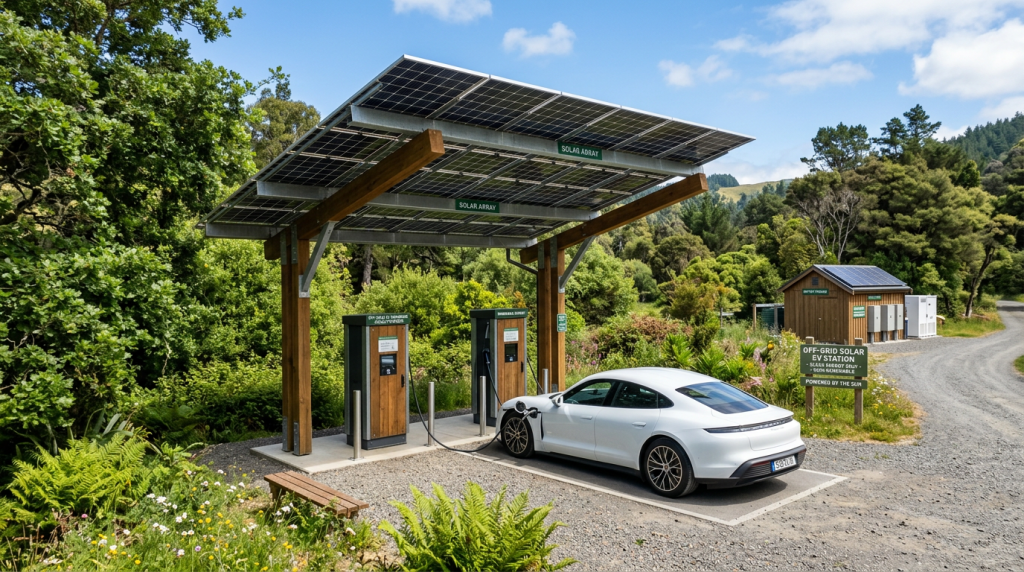
Off-grid EV charging works by creating a self-powered energy system that does not rely on public electricity infrastructure.
The process usually works like this:
- Solar panels or renewable energy sources generate electricity
- Battery storage systems store extra energy
- An inverter converts electricity into usable power
- The EV charger sends power to the electric car battery
This setup allows EV owners to charge vehicles even in remote areas without utility electricity access.
Why Is Off-Grid EV Charging Becoming Popular?
More people are becoming interested in energy independence and sustainable living.
Off-grid EV charging offers several advantages:
- Lower electricity costs
- Greater energy freedom
- Cleaner transportation
- Emergency backup charging
- Reduced dependence on utility companies
As electric vehicles and renewable energy technology improve, off-grid charging is becoming more practical for homeowners and travelers.
Main Components of an Off-Grid EV Charging System
A complete off-grid EV charging setup requires several important components.
Solar Panels
Solar panels are the most common power source for off-grid EV charging.
They collect sunlight and convert it into electricity using photovoltaic technology.
The larger the solar system:
- The more electricity it produces
- The faster the EV can charge
Solar panels provide clean and renewable energy without fuel costs.
Battery Storage Systems
Battery storage is extremely important in off-grid charging systems.
Battery systems store extra solar energy produced during the day.
This stored electricity can later:
- Charge the EV at night
- Provide backup power during cloudy weather
- Support continuous energy supply
Popular battery companies include:
- Tesla Powerwall
- Enphase
- LG Energy Storage
Solar Inverter
Solar panels produce direct current (DC) electricity, while most EV chargers use alternating current (AC) electricity.
The inverter converts DC power into usable AC electricity.
Without an inverter, most home EV charging systems cannot operate correctly.
Modern inverters also help manage:
- Energy flow
- Battery charging
- Power efficiency
EV Charger
The EV charger safely transfers electricity to the car battery.
Popular EV charger brands include:
- Tesla
- ChargePoint
- Wallbox
- JuiceBox
Smart chargers improve charging efficiency and energy management.
Can You Charge an EV Fully Off-Grid?
Yes, absolutely.
A properly designed off-grid system can fully charge an electric vehicle without using utility electricity.
However, success depends on:
- Solar panel size
- Battery storage capacity
- Daily driving distance
- Weather conditions
Larger systems produce more electricity and provide better charging reliability.
Benefits of Off-Grid EV Charging
Off-grid EV charging provides several important benefits.
Lower Electricity Bills
One of the biggest advantages is reduced electricity costs.
Instead of paying utility companies for power, you generate your own energy using solar panels.
Over time, this can save:
- Hundreds of dollars yearly
- Thousands over the system lifetime
Solar energy becomes almost free after installation.
Greater Energy Independence
Off-grid charging allows EV owners to rely less on utility companies.
This protects against:
- Rising electricity prices
- Grid outages
- Energy shortages
Energy independence is becoming more valuable as energy demand increases globally.
Environmentally Friendly Transportation
Off-grid charging usually relies on renewable energy sources like solar power.
This reduces:
- Carbon emissions
- Air pollution
- Fossil fuel dependence
Combining electric vehicles with renewable energy creates a much cleaner transportation system.
Useful for Remote Areas
Off-grid EV charging is extremely useful in:
- Rural areas
- Remote homes
- Camping locations
- Off-grid cabins
People living far from utility infrastructure can still charge electric vehicles using renewable energy systems.
Emergency Backup Power
Battery storage systems can also provide backup electricity during emergencies.
This helps power:
- EV charging
- Home appliances
- Lighting
- Essential electronics
During power outages, off-grid systems continue operating independently.
Challenges of Off-Grid EV Charging
Although off-grid charging offers many advantages, there are also some challenges.
High Initial Installation Cost
Off-grid systems require:
- Solar panels
- Batteries
- Inverters
- EV chargers
The upfront investment can be expensive.
However, long-term savings often offset installation costs over time.
Weather Dependence
Solar systems depend heavily on sunlight.
Cloudy weather and rainy days can reduce solar energy production.
This may slow EV charging unless sufficient battery storage is available.
Battery Storage Limitations
Battery systems can only store a limited amount of energy.
If the EV uses more electricity than the solar system produces, charging may become difficult during poor weather conditions.
Larger battery systems improve reliability but increase costs.
Slower Charging Speeds
Some off-grid systems may charge more slowly than powerful grid-connected chargers.
This depends on:
- Solar system size
- Battery capacity
- Charger type
Larger systems provide faster charging performance.
Level 1 vs Level 2 Off-Grid Charging
There are different types of EV chargers for off-grid setups.
Level 1 Charging
Level 1 chargers use standard household outlets.
Advantages
- Lower power demand
- Simpler installation
- Lower cost
Disadvantages
- Slow charging
- Limited efficiency
Level 1 charging works well for small daily driving needs.
Level 2 Charging
Level 2 chargers use higher voltage and provide faster charging.
Advantages
- Faster charging
- Better efficiency
- Improved smart features
Disadvantages
- Higher installation cost
- Greater energy demand
Most advanced off-grid systems use Level 2 chargers.
Smart Charging Technology
Modern EV chargers now include advanced smart features.
Useful technologies include:
- Solar optimization
- Charging schedules
- Mobile app control
- Energy monitoring
- Load balancing
Popular smart charger brands include:
- Wallbox
- ChargePoint
- Emporia
These features help maximize renewable energy usage.
Is Off-Grid EV Charging Worth It?
For many people, yes.
Off-grid charging offers:
- Long-term savings
- Cleaner transportation
- Greater energy independence
- Emergency power backup
- Reduced environmental impact
Although setup costs can be high initially, many homeowners save significant money over time.
Future of Off-Grid EV Charging
Off-grid EV charging technology is improving quickly.
Future systems may include:
- AI-powered charging management
- Faster battery storage
- Portable solar EV charging
- Vehicle-to-home power sharing
As renewable energy becomes cheaper and more efficient, off-grid charging will become even more popular worldwide.
Common Mistakes to Avoid
Many people make mistakes when building off-grid EV systems.
Avoid these problems:
- Installing too few solar panels
- Buying undersized batteries
- Using low-quality chargers
- Ignoring energy consumption calculations
- Skipping professional installation
Good planning improves reliability and performance.
Professional Installation Is Important
A professional installer can:
- Calculate energy needs
- Design the correct solar system
- Install safe electrical wiring
- Configure charging equipment properly
This improves safety and long-term system efficiency.
Final Verdict: What Is Off-Grid EV Charging?
So, what is off-grid EV charging?
Off-grid EV charging is a system that charges electric vehicles using independent renewable energy sources instead of relying on the public electricity grid.
Most systems use:
- Solar panels
- Battery storage
- Inverters
- Smart EV chargers
to create self-sufficient charging solutions.
Off-grid EV charging offers:
- Lower electricity costs
- Greater energy independence
- Cleaner transportation
- Reliable backup power
As renewable energy and battery technology continue improving, off-grid EV charging is becoming one of the most exciting solutions for the future of sustainable transportation.
FAQs About Off-Grid EV Charging
1. What is off-grid EV charging?
Off-grid EV charging means charging an electric vehicle without using the traditional electricity grid. It usually uses renewable energy sources like solar panels and battery storage systems.
2. Can you charge an electric car completely off-grid?
Yes, a properly designed off-grid solar system can fully charge an electric vehicle without relying on utility electricity.
3. What do you need for off-grid EV charging?
A typical off-grid EV charging system includes:
- Solar panels
- Battery storage
- A solar inverter
- An EV charger
These components work together to generate and store electricity for EV charging.
4. Is off-grid EV charging cheaper?
Yes, off-grid EV charging can reduce long-term electricity costs because solar energy is free after installation. However, the initial setup cost can be expensive.
5. Can off-grid EV charging work during power outages?
Yes, off-grid systems can continue working during grid power outages if they have battery storage and enough stored energy.
6. Are solar panels the best option for off-grid EV charging?
Yes, solar panels are currently the most popular and practical renewable energy source for off-grid EV charging systems.
7. How many solar panels are needed for off-grid EV charging?
The number depends on:
- EV battery size
- Daily driving distance
- Sunlight availability
- Energy consumption
Most systems require multiple solar panels and battery storage for reliable charging.
8. What are the best EV chargers for off-grid charging?
Popular smart EV charger brands include:
- Tesla
- ChargePoint
- Wallbox
- JuiceBox
Electric vehicles are becoming more popular every year. At the same time, renewable energy systems such as solar power and battery storage are also growing rapidly. These technologies are now working together to create a new way of charging electric cars called off-grid EV charging.
But many people still ask:
What is off-grid EV charging?
Off-grid EV charging means charging an electric vehicle without using the traditional electricity grid. Instead of depending on utility power, the EV is charged using independent energy sources such as:
- Solar panels
- Wind energy
- Battery storage systems
- Portable power stations
This type of charging allows EV owners to generate and use their own electricity almost anywhere.
How Does Off-Grid EV Charging Work?
Off-grid EV charging works by creating a self-powered energy system that does not rely on public electricity infrastructure.
The process usually works like this:
- Solar panels or renewable energy sources generate electricity
- Battery storage systems store extra energy
- An inverter converts electricity into usable power
- The EV charger sends power to the electric car battery
This setup allows EV owners to charge vehicles even in remote areas without utility electricity access.
Why Is Off-Grid EV Charging Becoming Popular?
More people are becoming interested in energy independence and sustainable living.
Off-grid EV charging offers several advantages:
- Lower electricity costs
- Greater energy freedom
- Cleaner transportation
- Emergency backup charging
- Reduced dependence on utility companies
As electric vehicles and renewable energy technology improve, off-grid charging is becoming more practical for homeowners and travelers.
Main Components of an Off-Grid EV Charging System
A complete off-grid EV charging setup requires several important components.
Solar Panels
Solar panels are the most common power source for off-grid EV charging.
They collect sunlight and convert it into electricity using photovoltaic technology.
The larger the solar system:
- The more electricity it produces
- The faster the EV can charge
Solar panels provide clean and renewable energy without fuel costs.
Battery Storage Systems
Battery storage is extremely important in off-grid charging systems.
Battery systems store extra solar energy produced during the day.
This stored electricity can later:
- Charge the EV at night
- Provide backup power during cloudy weather
- Support continuous energy supply
Popular battery companies include:
- Tesla Powerwall
- Enphase
- LG Energy Storage
Solar Inverter
Solar panels produce direct current (DC) electricity, while most EV chargers use alternating current (AC) electricity.
The inverter converts DC power into usable AC electricity.
Without an inverter, most home EV charging systems cannot operate correctly.
Modern inverters also help manage:
- Energy flow
- Battery charging
- Power efficiency
EV Charger
The EV charger safely transfers electricity to the car battery.
Popular EV charger brands include:
- Tesla
- ChargePoint
- Wallbox
- JuiceBox
Smart chargers improve charging efficiency and energy management.
Can You Charge an EV Fully Off-Grid?
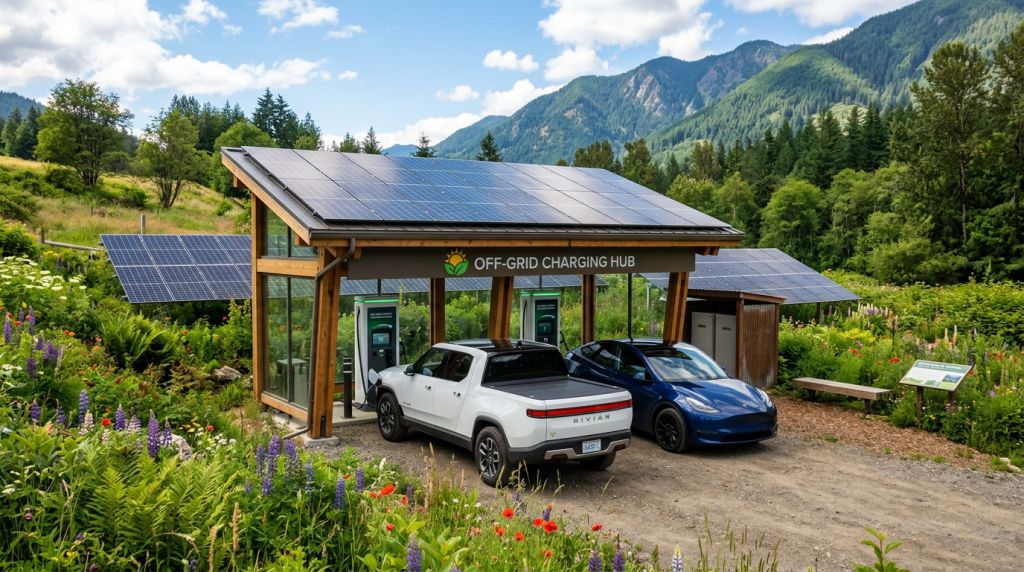
Yes, absolutely.
A properly designed off-grid system can fully charge an electric vehicle without using utility electricity.
However, success depends on:
- Solar panel size
- Battery storage capacity
- Daily driving distance
- Weather conditions
Larger systems produce more electricity and provide better charging reliability.
Benefits of Off-Grid EV Charging
Off-grid EV charging provides several important benefits.
Lower Electricity Bills
One of the biggest advantages is reduced electricity costs.
Instead of paying utility companies for power, you generate your own energy using solar panels.
Over time, this can save:
- Hundreds of dollars yearly
- Thousands over the system lifetime
Solar energy becomes almost free after installation.
Greater Energy Independence
Off-grid charging allows EV owners to rely less on utility companies.
This protects against:
- Rising electricity prices
- Grid outages
- Energy shortages
Energy independence is becoming more valuable as energy demand increases globally.
Environmentally Friendly Transportation
Off-grid charging usually relies on renewable energy sources like solar power.
This reduces:
- Carbon emissions
- Air pollution
- Fossil fuel dependence
Combining electric vehicles with renewable energy creates a much cleaner transportation system.
Useful for Remote Areas
Off-grid EV charging is extremely useful in:
- Rural areas
- Remote homes
- Camping locations
- Off-grid cabins
People living far from utility infrastructure can still charge electric vehicles using renewable energy systems.
Emergency Backup Power
Battery storage systems can also provide backup electricity during emergencies.
This helps power:
- EV charging
- Home appliances
- Lighting
- Essential electronics
During power outages, off-grid systems continue operating independently.
Challenges of Off-Grid EV Charging
Although off-grid charging offers many advantages, there are also some challenges.
High Initial Installation Cost
Off-grid systems require:
- Solar panels
- Batteries
- Inverters
- EV chargers
The upfront investment can be expensive.
However, long-term savings often offset installation costs over time.
Weather Dependence
Solar systems depend heavily on sunlight.
Cloudy weather and rainy days can reduce solar energy production.
This may slow EV charging unless sufficient battery storage is available.
Battery Storage Limitations
Battery systems can only store a limited amount of energy.
If the EV uses more electricity than the solar system produces, charging may become difficult during poor weather conditions.
Larger battery systems improve reliability but increase costs.
Slower Charging Speeds
Some off-grid systems may charge more slowly than powerful grid-connected chargers.
This depends on:
- Solar system size
- Battery capacity
- Charger type
Larger systems provide faster charging performance.
Level 1 vs Level 2 Off-Grid Charging
There are different types of EV chargers for off-grid setups.
Level 1 Charging
Level 1 chargers use standard household outlets.
Advantages
- Lower power demand
- Simpler installation
- Lower cost
Disadvantages
- Slow charging
- Limited efficiency
Level 1 charging works well for small daily driving needs.
Level 2 Charging
Level 2 chargers use higher voltage and provide faster charging.
Advantages
- Faster charging
- Better efficiency
- Improved smart features
Disadvantages
- Higher installation cost
- Greater energy demand
Most advanced off-grid systems use Level 2 chargers.
Smart Charging Technology
Modern EV chargers now include advanced smart features.
Useful technologies include:
- Solar optimization
- Charging schedules
- Mobile app control
- Energy monitoring
- Load balancing
Popular smart charger brands include:
- Wallbox
- ChargePoint
- Emporia
These features help maximize renewable energy usage.
Future of Off-Grid EV Charging
Off-grid EV charging technology is improving quickly.
Future systems may include:
- AI-powered charging management
- Faster battery storage
- Portable solar EV charging
- Vehicle-to-home power sharing
As renewable energy becomes cheaper and more efficient, off-grid charging will become even more popular worldwide.
Common Mistakes to Avoid
Many people make mistakes when building off-grid EV systems.
Avoid these problems:
- Installing too few solar panels
- Buying undersized batteries
- Using low-quality chargers
- Ignoring energy consumption calculations
- Skipping professional installation
Good planning improves reliability and performance.
Professional Installation Is Important
A professional installer can:
- Calculate energy needs
- Design the correct solar system
- Install safe electrical wiring
- Configure charging equipment properly
This improves safety and long-term system efficiency.
Final Verdict: What Is Off-Grid EV Charging?
So, what is off-grid EV charging?
Off-grid EV charging is a system that charges electric vehicles using independent renewable energy sources instead of relying on the public electricity grid.
Most systems use:
- Solar panels
- Battery storage
- Inverters
- Smart EV chargers
to create self-sufficient charging solutions.
Off-grid EV charging offers:
- Lower electricity costs
- Greater energy independence
- Cleaner transportation
- Reliable backup power
FAQs About Off-Grid EV Charging
1. What is off-grid EV charging?
Off-grid EV charging means charging an electric vehicle without using the traditional electricity grid. It usually uses renewable energy sources like solar panels and battery storage systems.
2. Can you charge an electric car completely off-grid?
Yes, a properly designed off-grid solar system can fully charge an electric vehicle without relying on utility electricity.
3. What do you need for off-grid EV charging?
A typical off-grid EV charging system includes:
- Solar panels
- Battery storage
- A solar inverter
- An EV charger
These components work together to generate and store electricity for EV charging.
4. Is off-grid EV charging cheaper?
Yes, off-grid EV charging can reduce long-term electricity costs because solar energy is free after installation. However, the initial setup cost can be expensive.
5. Can off-grid EV charging work during power outages?
Yes, off-grid systems can continue working during grid power outages if they have battery storage and enough stored energy.
6. Are solar panels the best option for off-grid EV charging?
Yes, solar panels are currently the most popular and practical renewable energy source for off-grid EV charging systems.
7. How many solar panels are needed for off-grid EV charging?
The number depends on:
- EV battery size
- Daily driving distance
- Sunlight availability
- Energy consumption
Most systems require multiple solar panels and battery storage for reliable charging.
8. What are the best EV chargers for off-grid charging?
Popular smart EV charger brands include:
- Tesla
- ChargePoint
- Wallbox
- JuiceBox