

Electric vehicles (EVs) are increasingly common, offering quiet, efficient driving and lower emissions. But what happens if your EV runs out of battery while on the road? In this comprehensive article we’ll explore the full scenario — from how your vehicle signals low charge, to what actually occurs when the battery is exhausted, how to handle the situation, and how to avoid it. We’ll deliver a deep dive that meets E-A-T (Expertise, Authoritativeness, Trustworthiness) criteria, is SEO-friendly, and tailored for everyday EV drivers.
The Early Warning Stage

When you’re driving and your EV approaches a very low charge, it doesn’t simply die without warning. Most vehicles provide multiple cues and gradually reduce performance.
Dashboard alerts & range estimate
Your EV’s display typically shows a “miles remaining” (or km remaining) estimate, and as the state-of-charge drops, you’ll see warning messages or icons. According to J.D. Power, while you have a theoretical range left, conditions such as terrain, temperature or speed may reduce it sharply.
Because the range estimation takes into account driving style and conditions, the actual remaining miles may be less than shown — which means you must plan with margin.
Performance reduction (a “turtle” or “limp” mode)
When the battery charge gets critically low, many EVs enter a mode in which power to the drivetrain is reduced, acceleration is slowed, and you’ll notice diminished responsiveness. This is often referred to as “turtle mode”.
For example, one blog notes that after “0%” the vehicle may still allow a few kilometers of very slow driving, but only on reserve.
Why? Because the manufacturer includes a buffer in the high-voltage battery to protect from full deep-discharge and to give you a last-mile safe zone. J.D. Power explains that there is less risk of drivetrain damage in an EV running out of battery versus a fuel vehicle running out of gas.
Why this stage matters
Recognising these early signs gives you a chance to act — pull off safely, find a charger, or stop before you’re stranded. Even though EVs provide good warning, it’s still possible to misjudge or ignore them — especially under unexpected conditions (hilly terrain, strong AC/heating use, bad weather). Fail to heed the warnings and you may reach the next stage: full stop.
What happens if EV runs out of battery on road? The Full Stop Stage
If you ignore the warnings or miscalculate your remaining range, your EV will eventually reach (or go past) its usable energy limit. What exactly happens?
Gradual slowdown and immobilisation
Rather than a sudden stall (as you might get with a fuel car that runs out of gas), your EV will typically slow significantly, lose power, and then stop altogether. As CarMax explains: “Running out of juice in an EV isn’t nearly as dramatic… the process is actually pretty gradual.”
In practice:
- At very low charge you may reach-“0 %” but the battery still has a small reserve; you may drive a little farther.
- The vehicle may reduce speed, cut non-essential loads, disable air-conditioning/heating, and limit acceleration.
- Ultimately you’ll come to a stop — no more propulsion power.
Impact on other systems (12 V battery, power steering/brakes)
When the high-voltage battery is depleted, the auxiliary 12 V battery (which powers electronics, lights, locks) may also be impacted. J.D. Power warns that letting the main battery go to zero can harm the 12 V system, which may prevent you from unlocking doors or using keyless entry.
Additionally, while most EVs maintain power steering/brake assist at very low charge, most manufacturers advise to minimise further driving when the battery is near dead. CarMax notes that things like power steering and power brakes “stop working” when the battery dies.
Recovery: towing or mobile charging
Once stopped, your options are limited: you’ll need external help. According to Toyota Motor Corporation Dealer advice, when your EV runs out of battery you should pull over and call roadside assistance. They may bring a mobile charger or flat-bed tow your vehicle to the nearest charging station.
Important: EVs often must be towed with wheels off the ground (flatbed) because dragging wheels can damage drivetrain/gear components.
Left another way: if you run out of battery, your EV doesn’t behave like a fuel-car that you can just roll into a station — you’ll need a charger or proper towing.
Implications for battery health
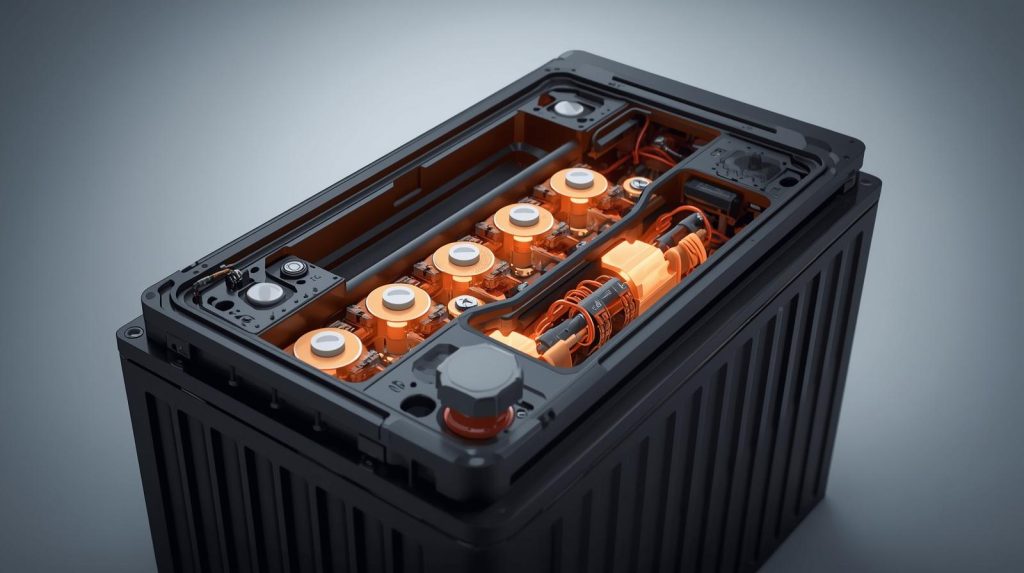
Deep-discharging your battery (to full zero) isn’t simply inconvenient — it can reduce long-term battery life. For example, Rizon Truck warns that letting the battery drop to 0% will degrade performance more quickly and may require replacement of the 12 V battery.
So the consequence: you might avoid being stranded, but you’ll pay later in reduced range, diminished resale value, and possibly higher service costs.
What happens if EV runs out of battery on road? Real-World Scenario & User Perspectives
To ground this in real experience, here are some illustrative cases and what users have reported.
Real user stories and Reddit feedback
On Reddit, a user recounts:
“Eventually, if you deplete it completely… the car powers off and you’ll grind to a halt. The 12 V battery can keep some electronics up, but it’s not much help.”
Another user adds:
“Close to 0 % the car will reduce power to drivetrain… After that the car can still be moved to park.”
These anecdotal accounts align with the manufacturer data: you get warnings, then limp-mode, then stop.
Common conditions leading to run-out
Some recurring themes in real-world events:
- Incorrect range estimate due to steep incline, high speed or heavy load (which reduces range faster than expected). J.D. Power points out the calculator assumes typical conditions; deviations produce risk.
- Charging station unavailable/unreliable when you arrive (occupied, broken, incompatible connector).
- Poor planning in areas with sparse charging infrastructure (long rural stretches or new markets).
- Cold or hot weather increasing energy consumption and reducing effective range (see news article about cold weather EV range loss).
Why this matters for drivers
Understanding the real-world scenario keeps you prepared. Knowing that your EV might still show 0% but have a few km of reserve helps you stay calm; knowing that you need special towing prevents using an inappropriate conventional tow that could damage your car.
What happens if EV runs out of battery on road? What to Do (Step-by-Step)
If you find yourself in the unfortunate position of your EV’s battery being nearly or fully depleted, follow these steps to handle it safely and efficiently.
Step 1: Pull over safely
- Choose a safe location: flat ground, off the main traffic lane, hazard lights on.
- Engage parking brake, turn wheels away from traffic, if possible.
- Note your exact location (mile marker, nearest junction, GPS coordinate) so help can find you.
Step 2: Notify rescuer or roadside assistance
- Contact your roadside assistance plan (check if it covers EVs).
- Tell them clearly: your EV has run out of high-voltage battery power and may need a mobile charger or flatbed. As Toyota Dealer advice states: let them know you have an electric car so they send the right equipment.
- While waiting, stay inside the vehicle or in a safe spot away from traffic until help arrives.
Step 3: Charging vs. towing decision
- Some services may bring a portable charger (mobile charging truck) sufficient for you to drive to the nearest station.
- If portable charging is not available, a flatbed tow to a charging station is the usual solution. Avoid standard tow methods for EVs (wheels down) unless recommended by the manufacturer.
- You may also need to wait if charging stations are remote or unavailable — plan for potential delays.
Step 4: Once at a charging station
- Plug in as soon as you can and charge to a safe level (often 80 % or so for daily driving).
- Check your vehicle’s trip history: what conditions, speed, terrain or usage led to depletion?
- If you’re far from home, plan your next leg: locate chargers along the route, consider weather/terrain and reserve buffer.
Step 5: Review and prevent reoccurrence
- Make a note of the situation: what caused the run-out? Was the range estimator inaccurate? Was the charger broken?
- Update your route planning or charging habits accordingly (we’ll cover that next).
- If any systems (12 V battery, dashboard warnings) acted unusually, have your vehicle inspected — especially if deep discharge occurred.
Prevention & Best Practices
Avoiding the scenario is far preferable to recovering from it. Here are best practices to reduce the risk of running out of battery.
Know your vehicle’s realistic range
- Use your EV’s trip computer to monitor kWh/100 km (or equivalent) in your driving conditions (urban vs highway, flat vs hilly).
- Always assume a conservative range estimate: allow for 10-20 % less than the display says if you’ll encounter hills, high speed or strong heating/AC.
Use charging infrastructure proactively
- Before long trips, identify charging stations along your route (apps like PlugShare, car navigation systems).
- Top up earlier rather than waiting until 5-10 %. Many battery experts recommend not discharging below ~20 % routinely.
- In regions with sparse chargers (e.g., rural or emerging markets) plan each leg carefully and carry contingency.
Adapt driving style & use range-modes
- Use “Eco” or “Range” modes in your EV when you’re pushing toward a charger — these reduce acceleration, limit speed, limit auxiliary loads.
- Be mindful of high loads: heater or air-conditioning, high speed, or hill climbs all increase consumption.
- In cold weather, pre-condition your car while plugged in, and allow extra margin for range loss. As the AP news article indicates, cold can cut range by 10-36 %.
Maintain your battery health
- Avoid consistently charging to 100 % (unless necessary for long trip) and avoid letting it drop to 0 % — both extremes accelerate battery degradation.
- Check that your 12 V auxiliary system is healthy — deep discharge of the main battery can affect auxiliary systems.
- Keep your software updated; many EV manufacturers refine range estimation algorithms in updates.
Understand local/regional factors
If you’re driving in a country or region where EV infrastructure is still developing (such as Pakistan), give additional margin:
- Charging stations may be less frequent, slower, or occasionally out of service.
- Grid issues (voltage drops, outages) may affect charging reliability.
- Tow or roadside assistance services for EVs may be less common — verify ahead of time.
- Terrain (hills, weather) may differ significantly from flat highway assumptions.
Frequently Asked Questions
Can an EV really run out of battery and leave me stranded?
Yes, although it’s uncommon if you monitor your charge and plan. Your EV will give warnings and reduce power first, but if you ignore or mis-calculate, you can be stranded.
What happens when the battery hits 0%?
At 0% you will likely enter a reserve mode (some km still possible), then limp-mode or turtle mode with reduced speed and performance, and ultimately your car will stop.
Will running out of battery damage my EV?
One occasion may not destroy the vehicle, but repeated deep discharges to 0% can degrade battery health and affect auxiliary systems.
Can I push my EV to the next charger if it’s out of battery?
Generally not reliably. EVs often must be towed with all wheels off the ground or charged via a mobile charger. Pushing may be unsafe or harmful to the vehicle’s systems.
How long does it take to recover from running out of battery?
It depends on charger type and how far you got depleted. After towing to charger, the time to get enough charge to drive can vary (Level-2 chargers take hours; DC fast chargers maybe 30-60 minutes). Keep in mind you may be waiting for towing or service assistance.
Does my EV’s navigation help when battery is low?
Yes — many EVs show nearest charging stations, give warnings when range is getting tight, and help you plan to avoid running out.
Is running out of battery the same as running out of gas?
No — an EV won’t usually stop instantly like a fuel car might when the tank is empty; rather it slows gradually and then stops, and recovery is different (you’ll need to charge or be towed).
Conclusion:
Running out of battery power in an electric vehicle can seem like a nightmare, but it’s entirely avoidable with a little awareness and preparation. Modern EVs are designed with intelligent systems that warn you well in advance before reaching critical levels. From low-battery alerts to reduced-power modes, your vehicle gives you several chances to act before it stops completely.
If you do find yourself stranded, remember that help is available — whether through mobile charging services, flatbed towing, or roadside assistance programs. However, the best strategy is prevention: plan your trips carefully, monitor your battery health, know your nearest charging stations, and maintain at least a 20–30% charge buffer whenever possible.
Electric vehicles are not just the future — they’re a smarter, cleaner way to travel today. By understanding how your EV behaves when its battery runs low, and by practicing responsible charging habits, you’ll enjoy peace of mind, longer battery life, and worry-free driving wherever the road takes you.