

Electric vehicles continue to gain momentum in the U.S. as more drivers shift toward cleaner, cost-saving transportation. But if you’re thinking about buying an EV, one question comes up more than almost any other: “Is the EV tax credit refundable?”
This isn’t just a technical tax question—knowing the answer can help you understand how much money you can actually save when purchasing an electric vehicle. With new rules under the Inflation Reduction Act (IRA), point-of-sale dealer credits, and income limits, the structure of the EV tax credit has changed significantly.
In this in-depth guide, we break down exactly how EV tax credits work in 2025, whether they’re refundable, how refundable vs. nonrefundable credits differ, and what this means for buyers of new and used EVs.
Is the EV Tax Credit Refundable? A Complete 2025 Explanation
The short answer to Is the EV tax credit refundable? is:
No — the federal EV tax credit is not refundable.
But thanks to new rules starting in 2024 and continuing in 2025, the credit can still be applied upfront at the dealership, even if you owe very little or no federal income tax.
This new system makes the credit feel refundable—because you receive the full benefit regardless of your tax liability.
To fully understand why, you need to learn how refundable vs. nonrefundable tax credits work.
Understanding What “Is the EV Tax Credit Refundable?” Really Means

To answer the question “Is the EV tax credit refundable?” clearly, you must understand the IRS definition of refundable vs. nonrefundable credits.
Refundable Tax Credits
A refundable tax credit gives you money even if your tax bill is zero.
Examples:
- Earned Income Tax Credit (EITC)
- Additional Child Tax Credit
With refundable credits, the IRS sends you the remaining balance as a refund.
Nonrefundable Tax Credits
A nonrefundable tax credit can reduce your tax bill to zero, but cannot generate a refund beyond that.
The EV tax credit is nonrefundable in its original form.
But after 2024, new rules allow you to receive the benefit even if you owe little or no tax — through the point-of-sale system.
Let’s break it down.
If the Credit Is Not Refundable, How Do Buyers Still Receive It?
A common misconception is that nonrefundable means “you can’t get the credit.”
That’s no longer accurate.
Beginning in 2024–2025: Full Credit Available at Purchase
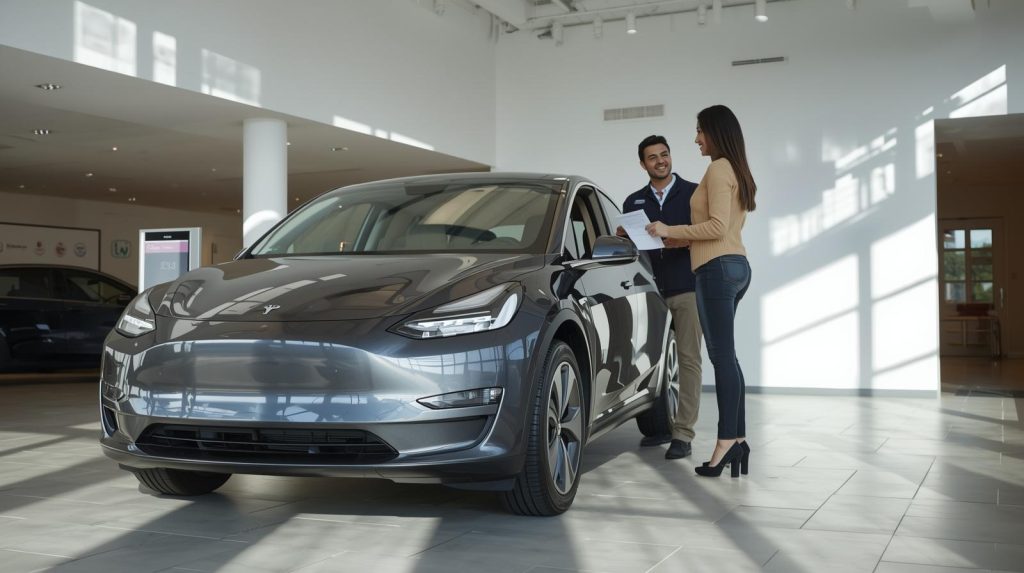
Dealers can apply the federal EV tax credit instantly toward the purchase price.

Meaning:
- No more waiting for tax season
- No need to owe tax to qualify
- No risk of losing unused credit
After applying the credit to your purchase, the dealer receives reimbursement directly from the IRS.
This effectively solves the biggest limitation of asking “Is the EV tax credit refundable?” because even though the IRS classifies it as nonrefundable, the benefit is guaranteed at the dealership.
Who Is Eligible to Claim the Nonrefundable EV Tax Credit?
Even though the credit can be applied upfront, eligibility rules still matter.
To receive the benefit, you must meet requirements related to:
1. Income Limits
Your Modified Adjusted Gross Income (MAGI) must be below:
- $150,000 (single)
- $225,000 (head of household)
- $300,000 (married filing jointly)
For used EVs:
- $75,000 (single)
- $112,500 (HOH)
- $150,000 (married filing jointly)
2. Vehicle Requirements
New EV rules require:
- Final assembly in North America
- Battery component and mineral sourcing compliance
- MSRP caps:
- $55,000 for cars
- $80,000 for SUVs, trucks, vans
Used EVs must:
- Cost less than $25,000
- Be at least two years old
- Be purchased from a dealer
Understanding these rules is key for buyers asking, “Is the EV tax credit refundable if I qualify?”
You must qualify first.
How the Question ‘Is the EV Tax Credit Refundable?’ Applies to New EVs
For new EVs, the credit is worth up to $7,500, split into:
- $3,750 for battery components
- $3,750 for critical minerals
Even though the IRS still treats the credit as nonrefundable, you receive the full $7,500 at the dealership if the vehicle meets the requirements.
Example Scenario
If you buy a new EV priced at $40,000:
- Dealer applies $7,500 credit
- You pay $32,500
- Dealer gets reimbursed by IRS
- You do not need to owe tax
This practical outcome is why many people feel the credit has become functionally refundable, even though technically it’s not.
How the Question ‘Is the EV Tax Credit Refundable?’ Applies to Used EVs
Used EV buyers can receive a 30% credit up to $4,000.
Even though this credit is also nonrefundable, the same point-of-sale rules apply:
- You can apply the credit at the dealership
- You receive the full amount regardless of tax liability
So, in practice, asking Is the EV tax credit refundable? leads to a surprising answer:
No, but you can still receive the full credit immediately.
Why the IRS Does Not Make the EV Tax Credit Refundable
There are several reasons why the credit remains nonrefundable:
1. Preventing Excessive Federal Payouts
Refundable credits cost the government more money, increasing federal spending.
2. Ensuring Taxpayer Accountability
Nonrefundable credits typically require verifying income, vehicle eligibility, and other documentation.
3. Encouraging Structured EV Adoption
By keeping the credit nonrefundable but offering point-of-sale transfers, the IRS:
- Expands access
- Prevents abuse
- Controls payout timing
This balance helps incentivize EV adoption while maintaining fiscal oversight.
Does Getting the Credit at the Dealership Make It “Like” a Refundable Credit?
Yes—functionally, the credit behaves similarly to a refundable credit at the dealership.
Why?
- You receive the full benefit
- You do not need tax liability
- The credit lowers your purchase cost instantly
But officially?
- The IRS still classifies it as nonrefundable
- It does not create you a tax refund
- It cannot be carried over to future years
So the accurate answer to Is the EV tax credit refundable? remains no, but the dealership system makes it equally beneficial for most buyers.
Sections with Keyword Integration
Below are subtopics with proper keyword placements.
Is the EV Tax Credit Refundable for Buyers With Zero Tax Liability?
For buyers with zero federal income tax liability, the question “Is the EV tax credit refundable?” is extremely important.
Without the point-of-sale option:
You would receive no benefit because nonrefundable credits cannot exceed tax owed.
With the point-of-sale option:
You can receive the entire credit at the dealership, even with:
- No taxable income
- No tax bill
- No refund eligibility
This change dramatically expands access for retirees, students, and low-income households.
Is the EV Tax Credit Refundable When Filing Taxes?
No.
If you choose to claim the credit on your tax return instead of at the dealership:
- It can only reduce your tax bill
- It cannot trigger a refund
- It cannot carry forward
This is why the IRS recommends claiming the credit upfront at purchase.
Is the EV Tax Credit Refundable for Leasing?
Leasing works differently.
The credit goes to the leasing company, not the driver.
But many leasing companies apply the credit to lower the monthly payment.
So while you don’t receive a refundable credit, you still receive the financial benefit.
Common Misconceptions About Whether the EV Tax Credit Is Refundable
Many buyers misunderstand how the credit works. Let’s clear up the biggest myths.
Myth #1: You only get the EV credit if you owe taxes.
False (after 2024).
The dealer applies the credit regardless of tax liability.
Myth #2: The EV tax credit is refundable like the Earned Income Tax Credit.
False.
It is nonrefundable but transferable at the dealership.
Myth #3: If you don’t use the full credit, you get the rest as a refund.
False.
Any unused portion simply disappears—unless applied at point-of-sale.
Myth #4: Leasing removes the credit entirely.
False.
Leasing companies often pass the credit to you through a lower monthly payment.
Step-by-Step: How to Receive the EV Tax Credit (Refundable or Not)
1. Confirm that your vehicle qualifies
Check battery sourcing, price caps, and assembly rules.
2. Confirm your income qualifies
Use your current or previous year’s MAGI.
3. Ask your dealership to apply the credit at point-of-sale
They handle IRS registration and reimbursement.
4. Complete IRS Form 8936 if claiming on taxes
Only necessary if not applied at the dealership.
5. Save all documentation
Proof of purchase and IRS Vehicle Eligibility Form.
Pros and Cons of the EV Tax Credit Not Being Refundable
Pros
- Full credit available instantly at dealerships
- No waiting for tax season
- Buyers with low income still qualify
- Faster EV adoption nationwide
Cons
- Cannot receive extra refund through IRS
- Cannot carry unused credit to future years
- Some leased vehicles may not pass full savings to drivers
FAQs: Is the EV Tax Credit Refundable?
1. Is the EV tax credit refundable?
No. The EV tax credit is not refundable. That means it cannot generate a tax refund and cannot exceed your total tax liability if you claim it on your tax return. However, the point-of-sale option allows you to receive the full credit at the dealership.
2. Can I still get the full EV tax credit if I owe little or no taxes?
Yes. With the new point-of-sale system, buyers can receive the full credit directly from the dealer — even if they owe zero federal tax. The dealer gets reimbursed later by the IRS.
3. Do I need to file taxes to use the point-of-sale EV credit?
You must have a valid taxpayer identification number, but you do not need to owe taxes or file Form 8936 if you take the credit at the dealership.
4. Can the EV tax credit be carried forward to future years?
No. The EV tax credit cannot roll over to future tax years. If you choose to claim it on your tax return and don’t have enough tax liability, the unused portion disappears.
5. Is the used EV tax credit refundable?
No. The used EV credit is not refundable either. But the same point-of-sale system allows you to apply the credit immediately toward your purchase price.
6. Do leased EVs qualify for a refundable tax credit?
Leasing works differently. The leasing company receives the credit, not the customer. Many pass the savings to you through lower monthly payments, but the credit itself is still nonrefundable.
7. Does the EV tax credit reduce the price upfront or after taxes?
Before 2024, the credit applied only at tax time.
Now, you can choose:
- Apply it upfront at the dealership (recommended)
- Claim it later on your tax return (not refundable)
8. Is the point-of-sale EV tax credit guaranteed?
Yes—if you and the vehicle meet eligibility requirements, the credit is guaranteed at the dealership. Your tax liability does not affect the credit amount.
Conclusion
Understanding “Is the EV tax credit refundable?” is essential for anyone considering an electric vehicle. While the technical IRS classification is clear — the credit is not refundable — the updated point-of-sale system has transformed how buyers benefit from it.
You no longer need to wait until tax season or worry about how much federal tax you owe. By applying the credit directly at the dealership, you receive the full benefit immediately, even with zero tax liability. This makes EV ownership more affordable, more accessible, and more predictable for millions of Americans.
The modern EV tax credit system was designed to accelerate clean transportation adoption while removing financial barriers for low- and middle-income buyers. Whether you’re purchasing a new or used EV, or even considering a lease, the updated rules ensure you can capture the maximum possible savings.
So, while the answer to “Is the EV tax credit refundable?” is technically no, the reality is that the point-of-sale credit effectively gives you the same financial advantage. With more EV options, stronger incentives, and flexible qualification rules, there has never been a better time to make the switch to electric.