
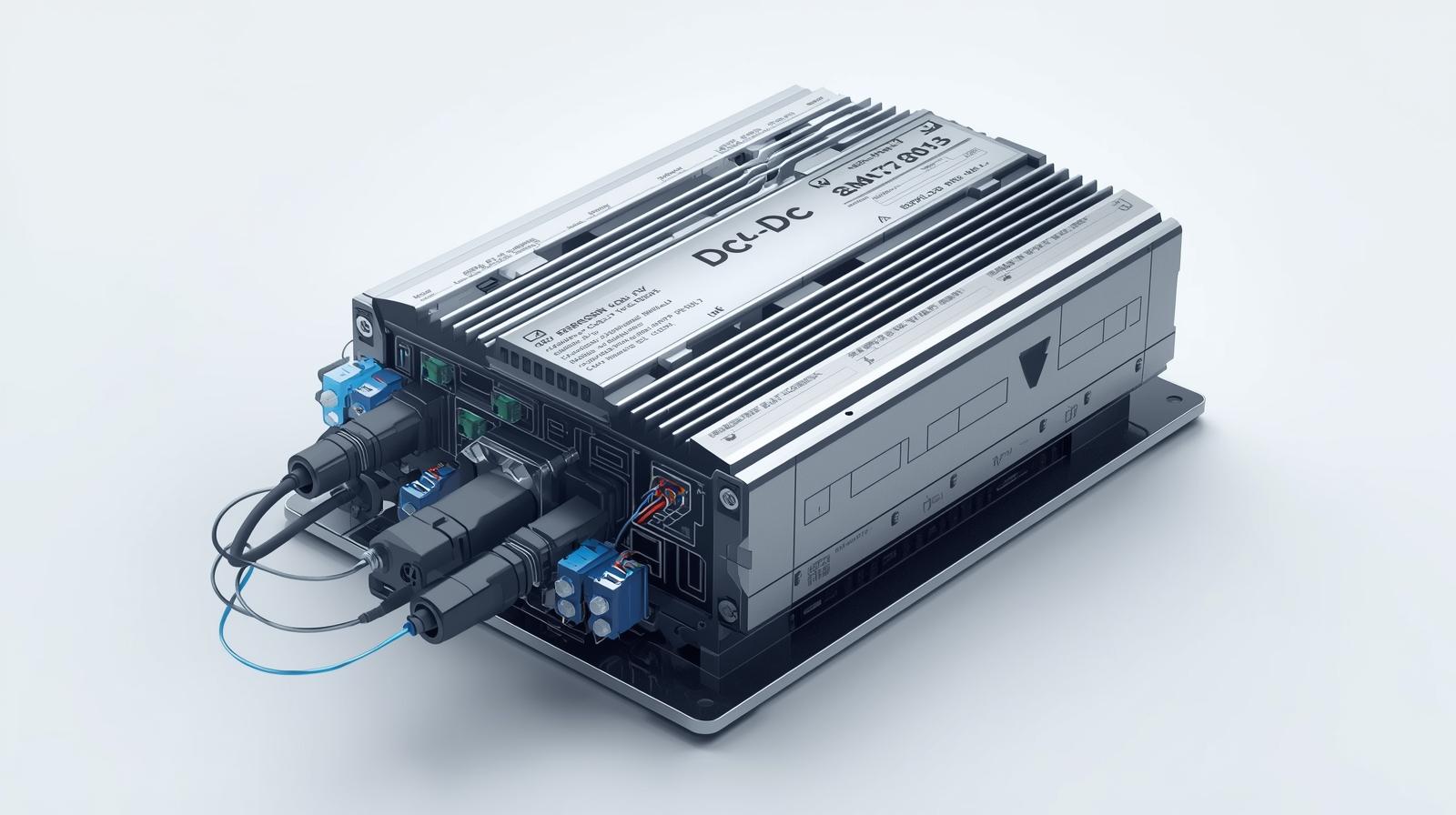
Electric vehicles (EVs) are reshaping the future of transportation by offering cleaner mobility, advanced technology, and higher energy efficiency compared to traditional internal combustion engine vehicles. While components like batteries, motors, and charging systems often dominate discussions, one crucial component quietly ensures smooth and safe operation—the DC to DC converter.
Understanding the advantages of DC to DC converter in electric vehicle systems is essential for anyone looking to grasp how EVs function reliably on a daily basis. This component plays a critical role in power management, safety, efficiency, and the overall driving experience. Without it, modern electric vehicles simply could not operate as designed.
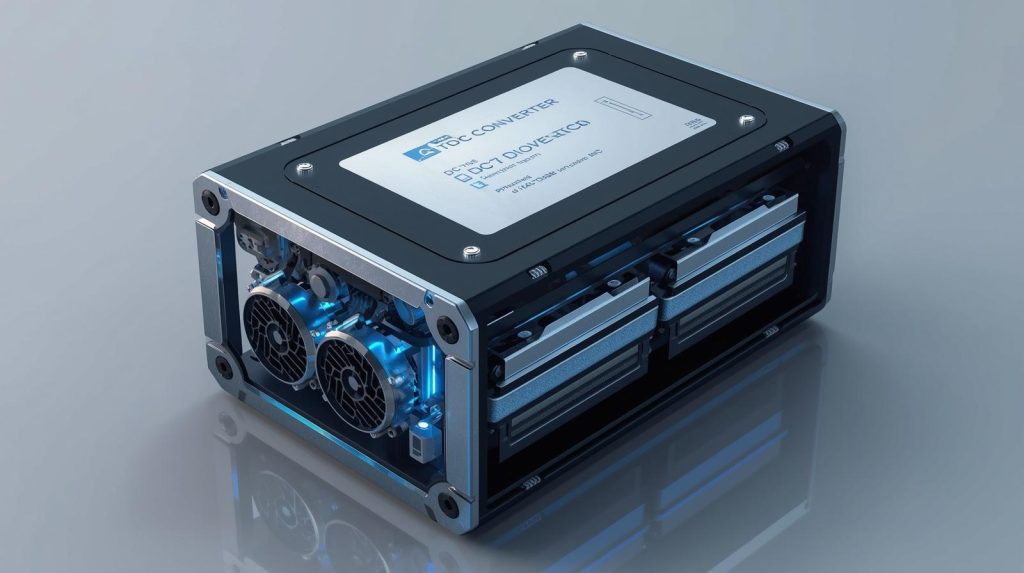
Understanding the Electrical Architecture of Electric Vehicles
To fully appreciate the advantages of DC to DC converter in electric vehicle, it is important to understand how EV electrical systems are structured.
Dual-Voltage System in Electric Vehicles
Electric vehicles operate using two primary voltage levels:
- High-voltage system (400V–800V)
Powers the traction motor, inverter, and high-power components. - Low-voltage system (12V or 48V)
Powers lights, infotainment, sensors, ECUs, safety systems, and auxiliary electronics.
Bridging these two systems efficiently and safely is one of the biggest challenges in EV design—this is where DC to DC converters become essential.
What Is a DC to DC Converter in an Electric Vehicle?
A DC to DC converter is an electronic device that converts one DC voltage level into another DC voltage level. In electric vehicles, it typically converts high-voltage DC from the main battery into low-voltage DC required by onboard systems.
Unlike fuel-powered vehicles that use alternators, EVs rely entirely on DC to DC converters to supply low-voltage power.
This fundamental role sets the stage for understanding the advantages of DC to DC converter in electric vehicle applications.
Why DC to DC Converters Are Essential in EVs
Electric vehicles contain dozens of electronic systems that must operate reliably under all conditions. The DC to DC converter ensures:
- Stable voltage delivery
- Electrical isolation for safety
- Efficient power usage
- Continuous operation of critical systems
These capabilities directly translate into multiple benefits, discussed in detail below.
Advantages of DC to DC Converter in Electric Vehicle
Reliable Power Supply for Low-Voltage Systems
One of the most important advantages of DC to DC converter in electric vehicle systems is its ability to provide a stable and reliable low-voltage power supply.
Low-voltage systems power:
- Headlights and taillights
- Dashboard displays
- Infotainment systems
- Sensors and cameras
- Control modules and ECUs
A DC to DC converter ensures these systems receive consistent voltage regardless of driving conditions.
Continuous Charging of the Auxiliary Battery
Even though EVs are electric, they still rely on a 12V auxiliary battery for startup and backup operations.
The DC to DC converter:
- Keeps the 12V battery charged
- Prevents overcharging
- Extends auxiliary battery lifespan
Maintaining auxiliary battery health is another major advantage of DC to DC converter in electric vehicle systems.
Lightweight and Compact Design
Modern DC to DC converters are:
- Compact
- Lightweight
- Highly integrated
Reducing size and weight contributes to:
- Better vehicle efficiency
- More flexible packaging
- Improved interior and design options
Increased System Reliability
DC to DC converters have no moving parts, which makes them:
- Highly reliable
- Resistant to mechanical wear
- Suitable for long vehicle lifespans
This durability is a significant advantage of DC to DC converter in electric vehicle applications.
Compatibility with Bidirectional Power Flow
Advanced EVs use bidirectional DC to DC converters that allow energy to flow both ways.
This enables:
- Vehicle-to-Load (V2L)
- Vehicle-to-Grid (V2G)
- Vehicle-to-Home (V2H)
These emerging technologies highlight future-focused advantages of DC to DC converter in electric vehicle systems.
Compliance with Automotive Safety Standards
DC to DC converters are designed to meet strict automotive standards such as:
- ISO 26262 (functional safety)
- Automotive EMC regulations
Compliance enhances trust and reliability, reinforcing the advantages of DC to DC converter in electric vehicle manufacturing.
Lower Maintenance Requirements
Because DC to DC converters:
- Have no belts or moving components
- Are sealed electronic systems
They require minimal maintenance compared to alternators in traditional vehicles.
DC to DC Converter vs Alternator: A Comparison
| Feature | DC to DC Converter | Alternator |
|---|---|---|
| Power Source | High-voltage battery | Engine |
| Efficiency | Very high | Moderate |
| Maintenance | Minimal | Regular |
| Noise | Silent | Mechanical noise |
| Reliability | High | Moderate |
This comparison clearly illustrates the advantages of DC to DC converter in electric vehicle design.
Role of DC to DC Converter in EV Power Management
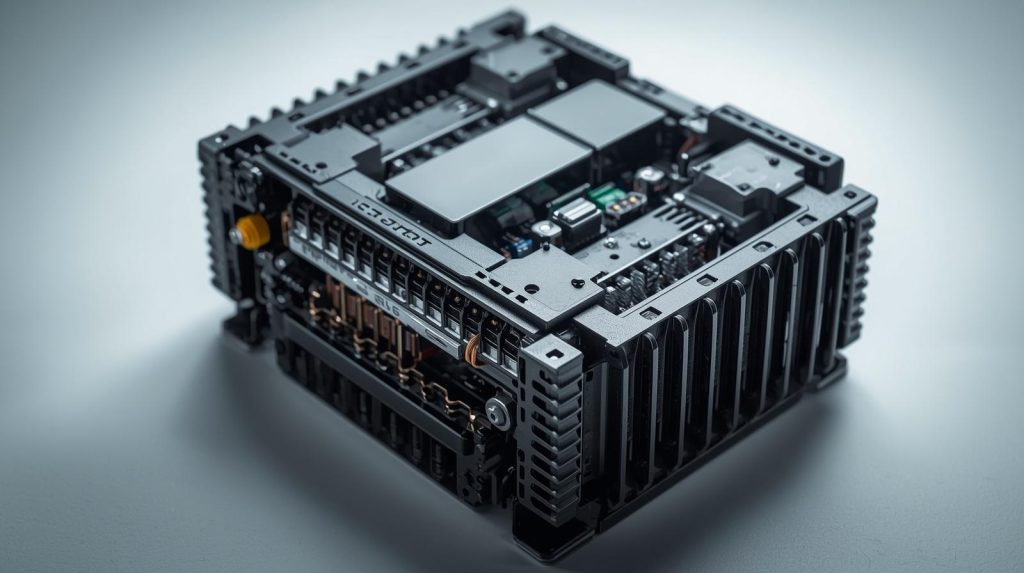
DC to DC converters are central to:
- Power distribution
- Voltage regulation
- System coordination
They ensure that every electrical component receives the correct power level at the right time.
Challenges and Continuous Improvements
While the advantages of DC to DC converter in electric vehicle systems are significant, manufacturers continue to improve:
- Power density
- Thermal management
- Cost efficiency
Advances in semiconductor materials such as silicon carbide (SiC) and gallium nitride (GaN) are driving further innovation.
Future of DC to DC Converters in Electric Vehicles
Looking ahead, DC to DC converters will:
- Become smaller and more powerful
- Support higher voltages
- Enable smarter energy management
- Play a key role in smart grid integration
Their importance will only increase as EV technology evolves.
Advantages of DC to DC Converter in Electric Vehicle
The advantages of DC to DC converter in electric vehicle systems include:
- Efficient voltage conversion
- Enhanced safety
- Improved battery health
- Support for advanced technologies
- Reduced maintenance
- Greater system reliability
Together, these benefits make DC to DC converters an indispensable component of modern electric vehicles.
Conclusion
While often overlooked, the DC to DC converter is one of the most critical components in an electric vehicle. It ensures reliable power delivery, protects sensitive electronics, enhances safety, and supports future-ready features such as bidirectional energy flow.
Understanding the advantages of DC to DC converter in electric vehicle systems helps drivers, engineers, and enthusiasts appreciate the complexity and sophistication behind electric mobility. As EV adoption grows worldwide, DC to DC converters will continue to play a foundational role in shaping the future of transportation.
Frequently Asked Questions (FAQs)
1. What are the advantages of DC to DC converter in electric vehicle?
The advantages of DC to DC converter in electric vehicle include efficient voltage conversion, improved safety, reliable low-voltage power supply, and better battery management.
2. Why is a DC to DC converter important in electric vehicles?
A DC to DC converter is important because it converts high-voltage battery power into low-voltage electricity needed for electronics, lighting, and safety systems.
3. How does a DC to DC converter improve EV efficiency?
It minimizes energy loss during voltage conversion, reduces heat generation, and helps extend the overall driving range of an electric vehicle.
4. Does a DC to DC converter replace the alternator in EVs?
Yes, in electric vehicles, the DC to DC converter replaces the alternator by supplying low-voltage power and charging the 12V auxiliary battery.
5. What systems are powered by a DC to DC converter in an EV?
It powers infotainment systems, lighting, control units, sensors, safety electronics, and other low-voltage vehicle components.
6. Is a DC to DC converter safe for electric vehicles?
Yes, DC to DC converters include safety features such as electrical isolation, overcurrent protection, and thermal management for safe operation.
7. Does a DC to DC converter help with regenerative braking?
Yes, it helps stabilize voltage during regenerative braking and ensures uninterrupted power to low-voltage systems.
8. Can DC to DC converters support future EV technologies?
Yes, advanced DC to DC converters support bidirectional power flow, enabling vehicle-to-load (V2L) and vehicle-to-grid (V2G) applications.
9. Do DC to DC converters require maintenance?
DC to DC converters have no moving parts and generally require little to no maintenance over the vehicle’s lifetime.
10. How do DC to DC converters improve EV reliability?
By providing stable voltage, reducing electrical stress, and protecting sensitive components, DC to DC converters significantly enhance EV reliability.