

Electric vehicles (EVs) are revolutionizing transportation, offering sustainable mobility, lower running costs, and advanced technology. But as EV adoption grows, many new owners wonder: “Are fast charger harmful to an EV battery?”
With the growing availability of DC fast-charging networks across highways, cities, and rest stops, EV owners now enjoy greater convenience than ever before. However, questions about battery longevity and the potential impact of frequent fast charging have sparked debates among experts and drivers alike.
This comprehensive guide breaks down how fast chargers work, their effects on EV batteries, and how to charge smartly to maintain your battery’s health for years.
Understanding the Basics: What Are Fast Chargers?
Before answering the key question — “Are fast charger harmful to an EV battery?” — it’s essential to understand what fast charging really means.
EV charging comes in three main levels:
1. Level 1 Charging (Standard Outlet, 120V)
- Uses a regular home outlet.
- Adds 2–5 miles of range per hour.
- Best for overnight or light daily charging.
2. Level 2 Charging (240V Home or Public Charger)
- Requires a 240V outlet.
- Adds 10–60 miles of range per hour.
- Ideal for home setups or public parking lots.
3. Level 3 Charging (DC Fast Charging)
- The fastest type, found mostly in public charging networks.
- Delivers direct DC power to the battery, bypassing the vehicle’s onboard converter.
- Can charge an EV from 20% to 80% in 20–40 minutes.
It’s this DC fast charging — also known as “rapid charging” — that raises the question: “Are fast charger harmful to an EV battery?”
How Fast Charging Works
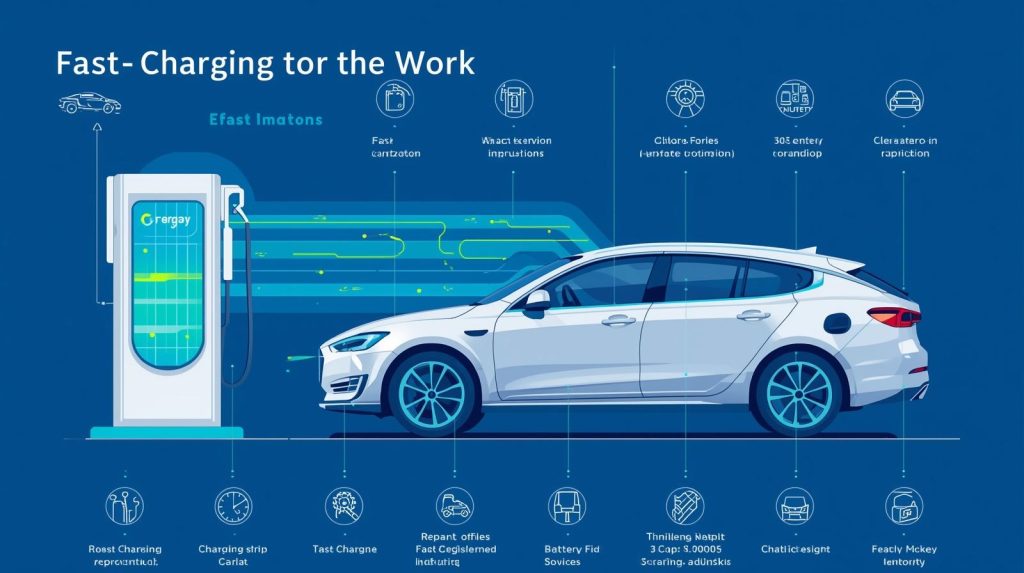
Fast chargers deliver high-voltage DC (direct current) electricity straight to the vehicle’s battery.
In regular home charging, AC (alternating current) passes through the EV’s onboard charger, which converts it into DC before storing it in the battery. This conversion limits the charging speed.
However, public fast chargers skip that conversion step by supplying direct current, which flows straight into the battery. This process dramatically increases charging speed — but also increases heat generation, which can influence battery chemistry if not properly managed. This is why many EV owners often ask, “Will public chargers damage my EV battery? ” The answer depends on how often and under what conditions you use them, as proper thermal management and charging practices play a key role in maintaining long-term battery health.
Are Fast Charger Harmful to an EV Battery?
Let’s get straight to the point.
No, fast chargers are not inherently harmful to an EV battery — but frequent and excessive use can accelerate natural battery wear over time.
Modern EVs are designed to handle fast charging safely. Advanced Battery Management Systems (BMS) carefully control voltage, current, and temperature during charging to prevent damage.
However, consistently pushing your battery to charge at very high rates can cause slightly faster degradation compared to slower charging methods.
So, while fast chargers won’t “damage” your EV battery outright, how often and how long you use them can influence long-term health.
Why Fast Charging Affects Battery Health Over Time
To fully understand whether fast chargers are harmful to an EV battery, let’s explore what happens inside the battery during rapid charging.
EV batteries use lithium-ion technology, where ions move between the anode and cathode through an electrolyte solution. During fast charging:
- High current pushes lithium ions to move at greater speed.
- This generates extra heat and chemical stress inside the cells.
- If uncontrolled, it can lead to minor structural wear known as lithium plating, where lithium deposits form on the anode.
Over many years of frequent high-speed charging, this can slightly reduce the battery’s maximum capacity and efficiency.
However, the good news is that modern EVs and chargers are designed with protective measures to minimize these effects.
Battery Management System (BMS): Your EV’s Guardian
One of the biggest reasons fast chargers don’t harm your battery significantly is your car’s Battery Management System (BMS).
This intelligent system continuously monitors and adjusts:
- Charging rate (amperage)
- Battery voltage
- Internal temperature
- Charge level (state of charge)
If your EV’s battery becomes too hot during charging, the BMS will automatically slow or stop charging until the temperature is safe.
So even at a high-power fast charger, your EV is never exposed to unsafe conditions.
How Much Battery Wear Does Fast Charging Cause?
Battery degradation is a natural process — it happens with age, temperature changes, and usage patterns.
According to studies from the U.S. Department of Energy and battery analytics firm Recurrent Auto:
- EVs that rely heavily on DC fast charging show around 5–10% more degradation over 8 years compared to those primarily using Level 2 home chargers.
- However, this difference is minor and often doesn’t significantly affect real-world driving range.
In other words, occasional fast charging won’t harm your EV battery — but relying on it as your daily charging method might reduce your battery’s lifespan slightly faster.
Factors That Determine Battery Wear During Fast Charging
The impact of fast charging depends on several conditions:
1. Temperature
Heat is the biggest factor affecting battery health. Charging at high speeds generates heat — especially in hot climates.
Most EVs use liquid cooling systems to regulate temperature, but parking in shade and avoiding charging right after driving can help further.
2. State of Charge (SOC)
Charging from 0% to 100% puts more strain on your battery.
Fast charging from 20% to 80% is much gentler and more efficient.
3. Frequency of Use
Using fast chargers daily will wear the battery faster than occasional use. For most drivers, charging once or twice a week at a public fast charger is perfectly fine.
4. Battery Chemistry
Different EVs use different battery types.
- Lithium Iron Phosphate (LFP) batteries handle frequent full charges better.
- Nickel Manganese Cobalt (NMC) batteries prefer mid-level charging.
5. Charger Quality
Not all chargers are equal. Poorly maintained or uncertified public chargers can cause inconsistent voltage. Always use trusted networks like Tesla Superchargers, Electrify America, or ChargePoint.
Signs of Battery Health Decline
If you’re worried fast chargers are harmful to your EV battery, keep an eye out for these signs of degradation:
- Reduced total driving range
- Slower charging speeds
- Inconsistent state-of-charge readings
- Battery warning lights
Most EVs show detailed battery health reports in their apps or dashboards, helping you track long-term performance.
Tips to Protect Your EV Battery While Using Fast Chargers
You don’t have to avoid fast chargers — you just have to use them wisely.
Here are expert-backed tips to keep your battery healthy:
1. Limit Fast Charging to Occasional Use
Use home Level 2 charging for daily needs. Reserve fast chargers for long trips or emergencies.
2. Avoid Charging to 100%
Charging to full frequently stresses the battery. Stick to 80–90% for daily driving.
3. Let the Battery Cool Before Charging
After a long drive, wait a few minutes before plugging in to avoid charging while the battery is hot.
4. Use Preconditioning Features
Most modern EVs allow you to precondition (warm or cool) your battery before fast charging for optimal efficiency.
5. Park in the Shade
Heat accelerates degradation. Try to charge in cool or shaded areas when possible.
6. Update Vehicle Software
Manufacturers regularly release software updates that optimize charging performance and battery safety.
7. Choose Certified Chargers
Always use reliable, well-maintained public fast chargers from reputable networks.
Are Fast Charger Harmful to an EV Battery During Long Trips?
Absolutely not — fast chargers are designed for road trips!
They enable long-distance EV travel by offering quick top-ups along highways. Even during long trips, occasional use of DC fast chargers won’t harm your battery when managed properly.
For best results:
- Charge to around 80%, not full.
- Combine fast charging with Level 2 overnight stops at hotels or rest areas.
- Monitor your car’s temperature and follow manufacturer guidelines.
Battery Warranties and Fast Charging
Many EV owners wonder, “Do You Need a Special Panel for EV Charging?” — especially when installing home chargers and considering long-term battery health. Most EV manufacturers provide battery warranties lasting 8 to 10 years or up to 100,000 miles, which cover defects or major capacity loss. While fast charging offers quick convenience, frequent use can increase battery wear due to heat generation. However, with proper electrical setup and modern thermal management systems, EVs are built to handle fast charging safely without voiding the warranty. Ensuring your home’s electrical panel meets EV charging standards helps maintain both battery performance and warranty protection over time.

All major automakers, including Tesla, Hyundai, Ford, and BMW, design their batteries to withstand fast charging.
Battery warranties typically cover 8 years or 100,000 miles, regardless of how often you use fast chargers — as long as you follow manufacturer recommendations.
This proves that fast charging is within safe, expected use of an EV and doesn’t void warranty coverage.
What the Experts Say
Research and real-world data continue to support the conclusion that fast chargers are safe for EV batteries when used sensibly.
- Tesla reports minimal long-term degradation in vehicles that frequently use Superchargers.
- Recurrent Auto found less than a 2% difference in degradation between fast-charging and home-charging EVs after years of use.
- Nissan recommends moderate fast-charging frequency but confirms it’s safe within normal operation.
These findings clearly answer the question: “Are fast charger harmful to an EV battery?” — No, not when used correctly.
The Future of Fast Charging: Smarter and Safer
EV charging technology is rapidly advancing to make fast charging even safer.
Emerging trends include:
- Adaptive charging algorithms that automatically slow down at higher battery levels.
- Solid-state batteries that tolerate higher currents with less heat generation.
- AI-powered Battery Management Systems that learn your driving and charging habits to optimize performance.
With these advancements, concerns about fast chargers harming EV batteries will soon become obsolete.
Environmental Impact of Fast Charging
Fast charging doesn’t just offer convenience — it promotes sustainability.
Public networks are increasingly powered by renewable energy sources, meaning each charge helps reduce carbon emissions.
Additionally, efficient fast-charging infrastructure supports greater EV adoption, pushing us toward a greener, cleaner future.
When Should You Avoid Fast Charging?
While safe, there are a few instances where it’s better to avoid using fast chargers:
- Extreme heat or cold: Charging in extreme temperatures can stress the battery.
- Battery already warm: After long drives, wait a few minutes before plugging in.
- Non-urgent charging needs: Use slower home charging for better long-term health.
Conclusion
So, are fast charger harmful to an EV battery?
No — they are not harmful when used properly.
Fast chargers are designed to be safe, efficient, and convenient. Modern EVs include advanced battery management systems that regulate heat, voltage, and current to prevent damage.
However, frequent fast charging, especially to 100%, can slightly accelerate natural battery wear. The best approach is balance — use fast chargers when needed, but rely on home Level 2 charging for your daily routine.
By following best practices and understanding how your EV’s battery works, you can enjoy fast charging without sacrificing performance or longevity.
Your EV is built for it — just charge smart, and drive clean.
FAQs About Fast Charging and EV Battery Health
1. Are fast chargers harmful to EV batteries long term?
Only slightly, if used excessively. Occasional fast charging is perfectly safe.
2. Can I use a fast charger every day?
You can, but daily use may cause minor long-term degradation. Home charging is better for daily needs.
3. Does fast charging void my battery warranty?
No. All EV manufacturers design batteries for fast charging and include it under warranty.
4. Is fast charging safe for all EV models?
Yes, as long as your EV supports DC fast charging and you follow the manufacturer’s guidelines.
5. How can I extend my battery’s lifespan?
Charge between 20%–80%, avoid extreme temperatures, and use fast chargers moderately.