

Electric vehicles (EVs) are transforming how we move — combining efficiency, innovation, and sustainability in a way traditional cars never could. But one common question still puzzles many EV owners: “Can I plug my EV into a regular outlet while traveling?”
If you’re hitting the road for a long trip, staying at a friend’s house, or exploring new places with limited charging stations, knowing how and where to charge your EV is crucial. In this complete guide, we’ll explain whether you can safely plug your electric vehicle into a standard outlet, how it works, what to expect in terms of charging speed, and expert tips for charging your EV while traveling.
Let’s get started!
Understanding the Basics — Can I Plug EV Into Regular Outlet While Traveling?
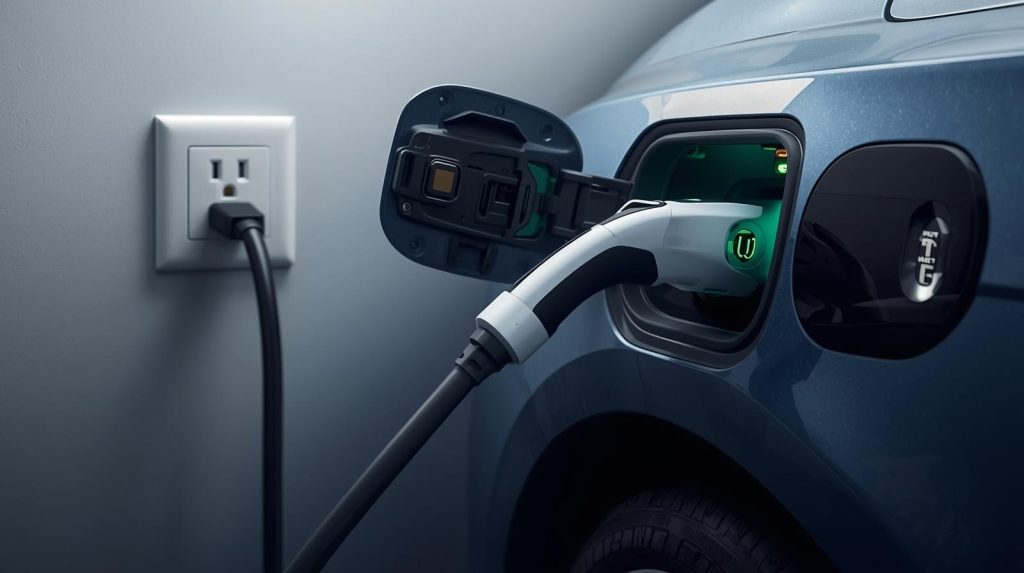
The short answer is yes, you can plug your EV into a regular outlet while traveling — but there are important limitations and safety considerations to understand.
Most electric vehicles come equipped with a Level 1 charging cable, which plugs directly into a standard 120-volt household outlet (the same one you use for your phone charger or laptop). This is often referred to as “trickle charging,” and it’s the slowest charging method available for EVs.
So, while it’s technically possible and completely safe under the right conditions, it may not always be practical for road trips or long journeys.
How Does It Work — What Happens When You Plug Your EV Into a Regular Outlet?
When you plug your EV into a standard wall socket, the charger draws electricity at 120 volts and transfers it into your car’s battery through the onboard converter.
Here’s a quick breakdown of what happens during this process:
- The Plug Connection:
You insert your Level 1 charger into a standard outlet. This cable connects to your EV’s charging port. - Current Conversion:
The charger’s onboard system converts alternating current (AC) from the wall into direct current (DC) suitable for the battery. - Battery Management:
The car’s system monitors voltage, temperature, and charge levels to ensure safe charging. - Slow Energy Transfer:
Because of the low voltage, your EV gains about 3 to 5 miles of range per hour of charging — making it a very slow but steady way to power up your car.
So, can I plug my EV into a regular outlet while traveling? Absolutely. But you need patience — and a good plan.
How Long Does It Take to Charge an EV From a Regular Outlet While Traveling?
Charging your EV from a standard 120V outlet is slow. Depending on your battery size and vehicle type, it could take 20 to 40 hours to fully charge.
Here’s an example:
- Tesla Model 3 (50 kWh battery): Around 40–45 hours
- Nissan Leaf (40 kWh): Around 30–35 hours
- Chevy Bolt (66 kWh): Around 50–60 hours
This makes regular outlet charging best suited for:
- Overnight top-ups
- Short daily drives
- Emergency situations when other charging options aren’t available
If you’re on a long trip, this method is more of a backup option than a primary one.
Is It Safe to Plug EV Into a Regular Outlet While Traveling?
Safety first! Plugging your EV into a regular outlet can be completely safe — if done correctly.
Here are some safety guidelines to follow:
- Use a Dedicated Outlet:
Always plug your EV into an outlet that’s not shared with other high-power appliances (like a microwave or heater). - Check Wiring and Condition:
Older homes or travel cabins may have outdated wiring. If an outlet feels warm or discolored, do not use it for charging. - Use a Grounded Outlet:
A properly grounded outlet ensures that excess electrical current has a safe path to discharge. - Avoid Extension Cords:
Never use an extension cord to charge your EV. It increases fire risk and voltage drop. - Monitor the Charging Cable:
Use only manufacturer-approved Level 1 chargers, and ensure the cable and plug remain cool during use.
So, yes — you can plug your EV into a regular outlet while traveling, but always prioritize proper setup, wiring, and monitoring.
What Are the Different EV Charging Levels?
To understand why regular outlets are slow, it helps to know the three levels of EV charging.
| Charging Level | Voltage | Range per Hour | Common Use |
|---|---|---|---|
| Level 1 | 120V | 3–5 miles | Home or travel outlet |
| Level 2 | 240V | 15–30 miles | Home, hotels, public chargers |
| Level 3 (DC Fast Charging) | 480V+ | 150–300 miles in 30–45 mins | Highways, commercial stations |
When traveling, Level 2 and DC fast chargers are ideal because they’re much faster. But in rural areas or small towns, you may only find regular outlets — and that’s where your Level 1 charger becomes a lifesaver.
Can I Plug Into a Regular Outlet While Traveling at a Hotel or Airbnb?
Yes — and this is one of the most convenient travel charging hacks!
Many hotels, motels, and Airbnbs allow guests to plug their EVs into outdoor or garage outlets overnight.
Tips for Charging at Hotels or Airbnbs:
- Ask for permission: Always confirm with the property owner or manager.
- Inspect the outlet: Make sure it’s in good condition and grounded.
- Bring your own cable: Don’t rely on hosts having one available.
- Charge overnight: 8–10 hours can add 30–50 miles of range.
- Be courteous: Don’t block other guests or common driveways.
This approach works best if your next destination is close or if you’ll be staying multiple nights.
Can I Plug EV Into a Regular Outlet While Traveling Across States or Countries?
If you’re planning a road trip that crosses regions or countries, you can still use regular outlets, but you’ll need to consider plug types and voltage differences.
Key Points to Remember:
- Voltage Variations:
In the U.S., outlets use 120V. In Europe and Asia, it’s often 220–240V. Check your vehicle’s charging capability — most EVs support both. - Plug Adapters:
You may need a travel adapter or converter for foreign outlets. Always use certified adapters designed for EVs. - Weather Conditions:
Outdoor outlets should be covered and weatherproof to prevent electrical hazards. - Charging Compatibility:
Ensure your EV’s onboard charger can handle local voltage and frequency differences.
So yes, you can plug your EV into a regular outlet while traveling internationally — but preparation is key!
Pros and Cons of Plugging Your EV Into a Regular Outlet While Traveling
Pros:
Easy to find — every home or hotel has at least one outlet
Requires no special setup or tools
Great for overnight charging or emergencies
Ideal backup when chargers are unavailable
Cons:
Very slow — can take 30–50 hours for a full charge
May overload old electrical systems
Not suitable for daily long-distance travel
Weather and outlet quality can affect safety
Bottom line:
A regular outlet is reliable but slow — perfect as a backup, not a primary travel charging method.
What to Do If You Can’t Find a Charging Station While Traveling
If you’re stuck on the road with low battery and no fast charger nearby, here’s what to do:
1. Locate a Regular Outlet
Search for RV parks, motels, or rest areas — many have 120V or 240V outlets.
2. Use a Portable Charger
Some brands offer portable Level 2 chargers that plug into 240V dryer outlets or RV sockets — perfect for road trips.
3. Find Public Charging Networks
Use apps like PlugShare, ChargePoint, or Electrify America to find the nearest station.
4. Emergency Roadside Assistance
If you completely run out of charge, many insurance providers and EV manufacturers (like Tesla, Nissan, and Ford) offer EV towing or mobile charging services.
Expert Tips for Efficient EV Charging While Traveling
- Plan Your Route Ahead:
Map charging stations before your trip. Apps can estimate energy use and charging stops. - Travel During Cooler Hours:
Heat increases battery drain, so driving early or late helps conserve range. - Use Regenerative Braking:
Use Eco or Brake mode to recapture energy while slowing down. - Pack a Charging Kit:
Bring cables, adapters, gloves, and a voltage tester. - Avoid Full or Empty Battery States:
Keep your battery between 20–80% for longevity.
Can I Plug EV Into a Regular Outlet While Traveling in Remote Areas?
Yes — with caution. In remote or rural areas, regular outlets might be your only option.
Make sure to:
- Ask locals or property owners for permission.
- Check that outlets are properly wired.
- Use weatherproof covers and surge protectors.
- Limit charging time if outlets feel hot.
While it’s not ideal, this method can help you reach the next fast charger safely.
The Future of EV Charging — Convenience While Traveling
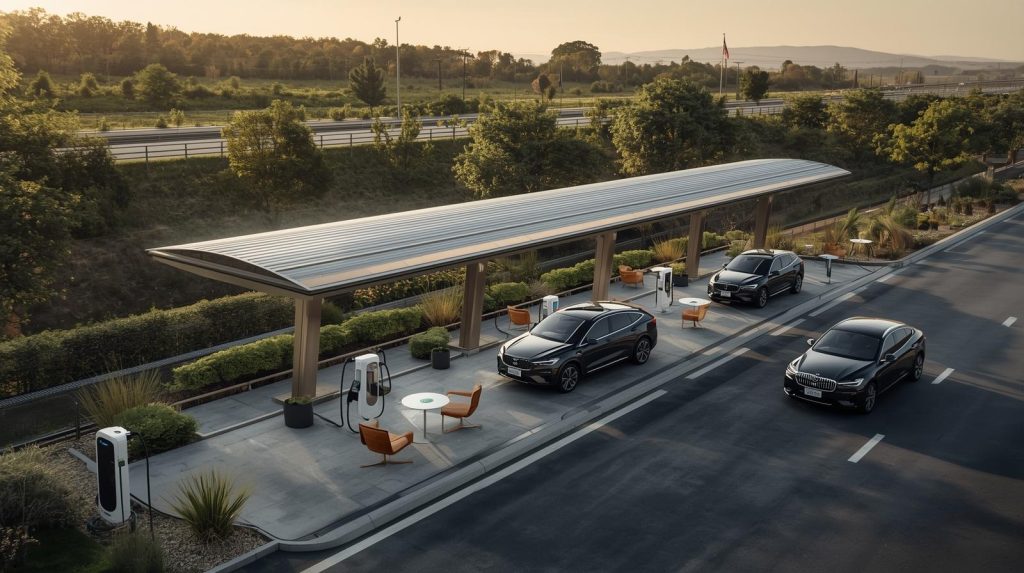
The EV charging landscape is evolving rapidly. Companies like Tesla, Rivian, and ChargePoint are expanding fast-charging networks nationwide.
But for travelers asking, “Can I plug my EV into a regular outlet while traveling?”, the answer will always be “yes” — because that universal 120V plug ensures your car can charge anywhere, anytime, even without specialized infrastructure.
In the near future, portable solar chargers and wireless charging pads may make on-the-go charging even easier, giving EV owners true freedom on the road.
Conclusion
Electric vehicles have revolutionized the way we travel, offering sustainability and efficiency like never before. Knowing how to charge your EV in different scenarios — including through a regular outlet while traveling — gives you confidence and flexibility.
While it’s not the fastest solution, charging from a standard outlet ensures you’re never completely stranded. With proper safety measures, patience, and planning, it can keep your journey smooth and worry-free.
So next time you’re on a trip and ask yourself, “Can I plug my EV into a regular outlet while traveling?” — you’ll know exactly what to do, how it works, and how to do it safely.
FAQs About Plugging an EV Into a Regular Outlet While Traveling
1. Can I charge my EV at any outlet?
Yes, as long as it’s a grounded 120V outlet and in good condition.
2. How long will it take to charge my EV on a regular outlet?
It can take 20–50 hours depending on your EV’s battery size.
3. Is it safe to leave my EV charging overnight?
Yes, if the outlet is dedicated, properly wired, and your charger is in good condition.
4. Can I use an extension cord?
No, it’s not recommended. It increases fire risk and power loss.
5. What’s the best way to charge while traveling?
Use Level 2 or DC fast chargers when available, and use regular outlets as backup.