

The automotive industry is witnessing a major shift toward electric mobility, with all-electric cars (also known as Battery Electric Vehicles or BEVs) leading the charge. Unlike conventional vehicles that rely on internal combustion engines (ICEs), all-electric cars operate entirely on electric power, providing a cleaner, quieter, and more efficient driving experience.
To understand how these vehicles work and why they are revolutionizing transportation, it’s essential to explore the key components of an all-electric car, their functions, and their roles in delivering a smooth, sustainable, and high-performance driving experience.
What is an All-Electric Car?
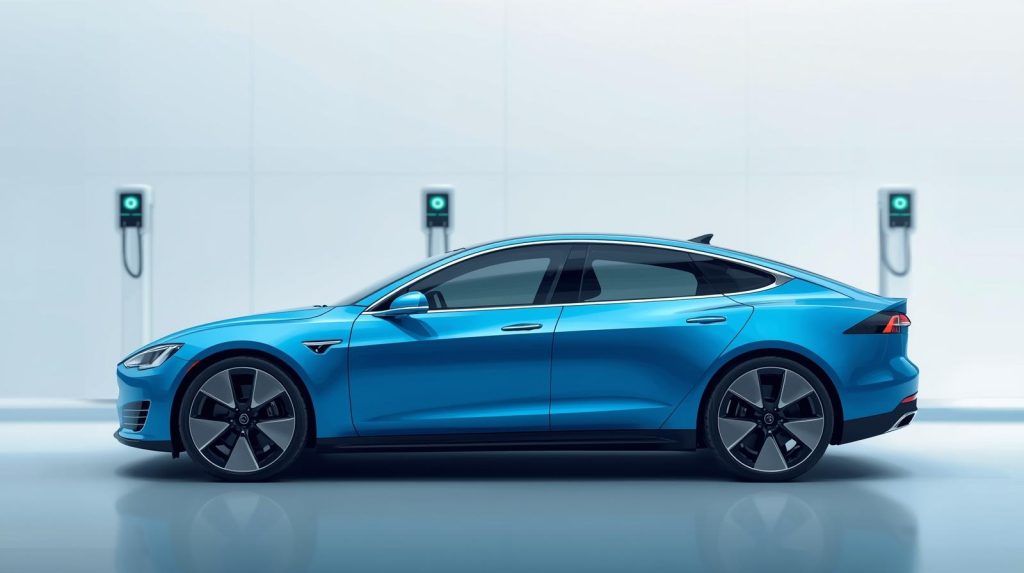
An all-electric car is a vehicle that runs solely on electricity stored in high-capacity batteries. Unlike hybrid or plug-in hybrid cars, BEVs do not use gasoline or diesel engines. Their power comes from electric motors, which are supplied energy from rechargeable batteries.
All-electric cars are considered zero-emission vehicles, as they do not release tailpipe pollutants. They are also quieter, smoother, and more efficient than conventional vehicles. Popular examples include Tesla Model S, Nissan Leaf, Chevrolet Bolt EV, and Hyundai Kona Electric.
Key Components of an All-Electric Car
An All-Electric Car (EV) operates entirely on electric power, using advanced technology to deliver clean and efficient driving. The main components include the battery pack, which stores electricity; the electric motor, which converts electrical energy into motion; the inverter, which controls power flow; and the onboard charger, which manages charging from external power sources. These elements work together to provide smooth acceleration, zero emissions, and lower maintenance costs. Understanding these key components of an all-electric car helps you appreciate how EVs are shaping the future of electric vehicle and driving the future of sustainable transportation.
Understanding the key components of an all-electric car helps explain how these vehicles operate efficiently and sustainably.
1. Battery Pack
The battery pack is the heart of any all-electric car. It stores electrical energy that powers the electric motor. Key details include:
- Type of Batteries: Most BEVs use Lithium-ion (Li-ion) batteries for their high energy density, durability, and efficiency.
- Capacity: Battery capacity is measured in kilowatt-hours (kWh). Higher capacity means a longer driving range.
- Thermal Management: Batteries include cooling systems to prevent overheating and maintain performance.
The battery pack determines the vehicle’s range, performance, and charging requirements.
2. Electric Motor
The electric motor converts electrical energy from the battery into mechanical energy to drive the wheels. Key features include:
- Instant Torque: Electric motors provide instant torque, offering smooth and responsive acceleration.
- Efficiency: Electric motors are more efficient than internal combustion engines, converting more energy into motion.
- Motor Types:
- AC Induction Motors – Common in Tesla vehicles.
- Permanent Magnet Synchronous Motors (PMSM) – Found in many modern EVs for high efficiency.
- AC Induction Motors – Common in Tesla vehicles.
The electric motor is crucial for acceleration, regenerative braking, and overall driving performance.
3. Power Electronics Controller
The power electronics controller manages the flow of electricity between the battery and electric motor. Its main functions include:
- Controlling Motor Speed: Adjusts voltage and current to control acceleration and deceleration.
- Energy Conversion: Converts DC power from the battery to AC power for the motor (in AC motor systems).
- Safety Management: Monitors voltage, current, and temperature to prevent damage.
This component ensures smooth and efficient operation of the electric drivetrain.
4. Charging System
All-electric cars require a charging system to replenish the battery. The charging system includes:
- Onboard Charger: Converts AC electricity from a wall outlet or charging station into DC power for the battery.
- Charging Ports: Allow connection to Level 1 (120V), Level 2 (240V), and DC fast chargers.
- Regenerative Charging: Some energy is recovered during braking and stored in the battery.
Efficient charging systems reduce downtime and extend battery life.
5. Thermal Management System
The thermal management system ensures that the battery, electric motor, and power electronics operate at optimal temperatures. Key aspects include:
- Cooling: Uses liquid or air-cooling to prevent overheating.
- Heating: Maintains battery efficiency in cold climates.
- Energy Efficiency: Proper thermal management increases battery life and vehicle performance.
This system is critical for safety, reliability, and consistent driving performance.
6. Transmission or Gearbox
Most all-electric cars use a single-speed transmission, as electric motors can deliver torque across a wide RPM range. Features include:
- Simplified Design: Fewer moving parts than traditional transmissions.
- Direct Power Delivery: Ensures smooth acceleration without gear shifts.
- Efficiency: Reduces energy loss compared to multi-speed gear systems.
Some high-performance EVs may use multi-speed transmissions for optimized speed and torque.
7. Regenerative Braking System
The regenerative braking system recaptures kinetic energy during braking and converts it back into electricity to recharge the battery. Key benefits include:
- Energy Efficiency: Extends driving range by recovering energy.
- Reduced Wear: Less reliance on mechanical brakes reduces wear and maintenance.
- Driving Experience: Provides smooth deceleration and can enhance one-pedal driving.
Regenerative braking is a key feature that distinguishes EVs from conventional vehicles.
8. Vehicle Control Unit (VCU)
The Vehicle Control Unit is the central brain of an all-electric car, coordinating all systems:
- Battery Management System (BMS): Monitors battery health and prevents overcharging or deep discharge.
- Motor Control: Regulates torque and efficiency.
- Safety Systems: Integrates crash detection, traction control, and stability systems.
The VCU ensures that all components work harmoniously for optimal performance and safety.
Advantages of All-Electric Cars
Understanding the components helps highlight why all-electric cars are transforming transportation:
- Zero Emissions – No tailpipe pollutants, reducing air pollution.
- High Efficiency – Electric motors convert more energy into motion than internal combustion engines.
- Low Operating Costs – Fewer moving parts mean less maintenance.
- Smooth and Quiet Driving – Instant torque provides responsive acceleration with minimal noise.
- Renewable Energy Integration – Can be powered by solar or wind electricity, enhancing sustainability.
Challenges of All-Electric Cars
Despite their advantages, BEVs face several challenges:
- Battery Cost and Replacement – High-capacity batteries are expensive, and replacement can be costly.
- Charging Infrastructure – Limited public charging stations in some regions.
- Range Anxiety – Drivers worry about running out of battery on long trips.
- Charging Time – While fast chargers exist, charging still takes longer than refueling gasoline vehicles.
Awareness of these challenges helps consumers make informed choices when switching to electric mobility.
Types of All-Electric Cars
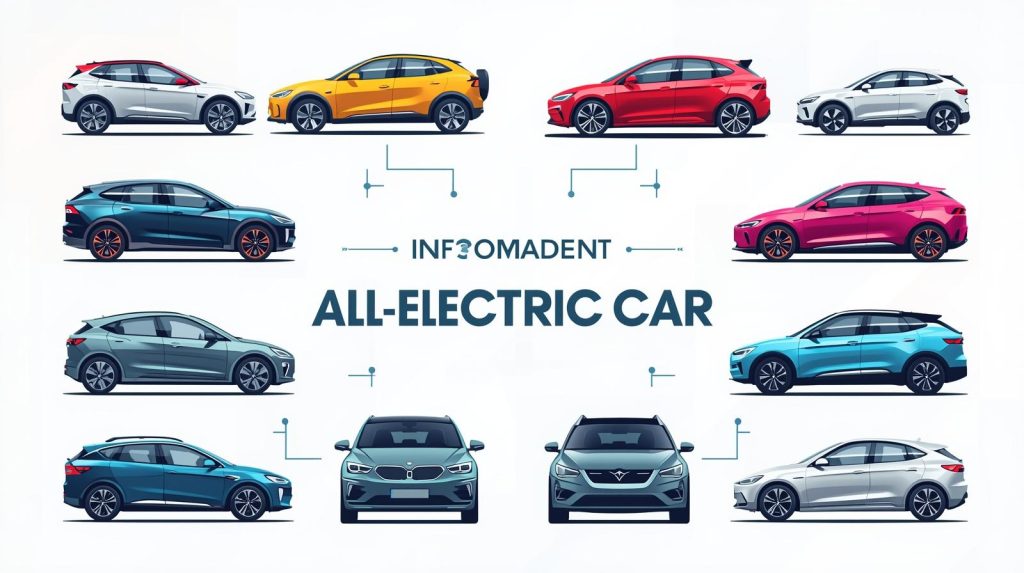
All-electric cars vary depending on battery size, motor configuration, and intended use:
- Compact and City EVs – Small, efficient vehicles for urban commuting (e.g., Nissan Leaf).
- Sedans – Comfortable and spacious, suitable for daily commuting and long trips (e.g., Tesla Model 3).
- SUVs and Crossovers – Larger batteries for longer range and higher capacity (e.g., Hyundai Kona Electric).
- High-Performance EVs – Sports and luxury EVs with advanced motors and faster acceleration (e.g., Tesla Model S Plaid).
- Commercial EVs – Delivery vans and trucks for logistics and fleet purposes.
Future of All-Electric Cars
The future of all-electric cars looks promising due to:
- Improved Battery Technology – Solid-state batteries and higher energy density for longer ranges.
- Faster Charging – Ultra-fast chargers reducing charging times to minutes.
- Autonomous Driving Integration – Combining EVs with self-driving technology.
- Smart Grid and Vehicle-to-Grid (V2G) – EVs supplying energy back to the grid.
- Global Adoption – Expanding infrastructure and incentives encourage worldwide EV adoption.
Frequently Asked Questions (FAQs)
Q1: What are the key components of an all-electric car?
The key components include the battery pack, electric motor, power electronics controller, charging system, thermal management system, transmission, regenerative braking system, and vehicle control unit (VCU). These parts work together to deliver efficient, zero-emission performance.
Q2: How does a BEV battery pack work?
A BEV battery stores electrical energy that powers the electric motor. Most use Lithium-ion batteries with thermal management systems to maintain performance and prolong lifespan. Battery capacity, measured in kilowatt-hours (kWh), determines the vehicle’s range.
Q3: What is regenerative braking in electric cars?
Regenerative braking converts kinetic energy into electricity during deceleration, which is stored in the battery. It improves energy efficiency, reduces brake wear, and supports smooth one-pedal driving.
Q4: How is an all-electric car charged?
All-electric cars use an onboard charger and charging ports for Level 1, Level 2, or DC fast chargers. Some energy is also recovered through regenerative braking. Efficient charging systems reduce downtime and extend battery life.
Q5: What are the main advantages of all-electric cars?
Advantages include zero emissions, high efficiency, low operating costs, quiet and smooth driving, and compatibility with renewable energy. They are also easier to maintain due to fewer moving parts.
Q6: What challenges do BEVs face?
Challenges include battery cost, limited charging infrastructure, range anxiety, and longer charging times compared to gasoline refueling.
Q7: What is the future of all-electric cars?
Future developments include solid-state batteries, ultra-fast charging, autonomous driving integration, vehicle-to-grid (V2G) technology, and global adoption through infrastructure and incentives.
Conclusion
The key components of an all-electric car—battery pack, electric motor, power electronics, charging system, thermal management, transmission, regenerative braking, and vehicle control unit—work together to create efficient, zero-emission, and high-performance transportation.
All-electric cars provide long-term savings, eco-friendly mobility, smooth driving, and compatibility with renewable energy, making them an essential part of the future of transportation. As technology advances, BEVs will become more affordable, efficient, and accessible, transforming how the world moves sustainably.