
As the automotive industry accelerates toward sustainable and zero-emission mobility, Fuel Cell Electric Vehicles (FCEVs) have emerged as one of the most promising technologies. Unlike conventional gasoline vehicles or even battery electric vehicles (BEVs), FCEVs utilize hydrogen as a primary energy source, producing electricity through a chemical reaction in a fuel cell. This innovative approach offers long-range driving, fast refueling, and zero tailpipe emissions, making FCEVs a strong contender in the clean transportation sector.
In this article, we will explore how FCEVs operate, their components, step-by-step working, advantages, challenges, types, comparisons with other vehicles, and future prospects.
What is a Fuel Cell Electric Vehicle (FCEV)?
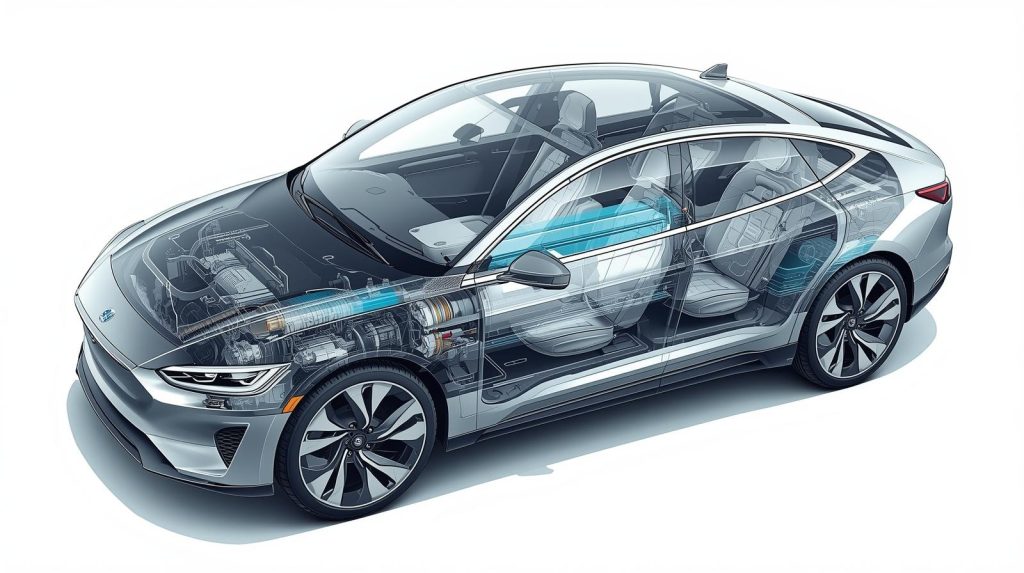
A Fuel Cell Electric Vehicle (FCEV) is a type of electric vehicle powered by a hydrogen fuel cell rather than a traditional battery. The fuel cell generates electricity by combining hydrogen with oxygen from the air, producing electricity, water vapor, and heat.
Unlike BEVs, which rely solely on batteries that require hours to recharge, FCEVs can be refueled with hydrogen in 3–5 minutes, similar to gasoline cars. They are considered zero-emission vehicles because they do not emit carbon dioxide, nitrogen oxides, or other harmful pollutants.
FCEVs provide the benefits of electric propulsion—smooth, quiet, and efficient driving—while maintaining the flexibility and convenience of conventional refueling.
Key Components of an FCEV
To understand how an FCEV operates, it’s important to know its main components:
- Fuel Cell Stack
- Converts hydrogen into electricity through an electrochemical reaction.
- Produces electricity to power the motor and heat as a byproduct.
- Converts hydrogen into electricity through an electrochemical reaction.
- Hydrogen Storage Tank
- Safely stores high-pressure hydrogen (typically 700 bar).
- Provides sufficient fuel for 300–400 miles of driving.
- Safely stores high-pressure hydrogen (typically 700 bar).
- Electric Motor
- Uses electricity from the fuel cell and battery to drive the wheels.
- Offers instant torque, smooth acceleration, and quiet operation.
- Uses electricity from the fuel cell and battery to drive the wheels.
- Battery or Supercapacitor
- Stores excess energy, captures regenerative braking energy, and provides extra power during acceleration.
- Stores excess energy, captures regenerative braking energy, and provides extra power during acceleration.
- Power Electronics / Controller
- Manages electricity flow from the fuel cell and battery to the motor.
- Optimizes efficiency and ensures stable operation.
- Manages electricity flow from the fuel cell and battery to the motor.
- Cooling System
- Maintains ideal operating temperatures for the fuel cell and motor.
- Maintains ideal operating temperatures for the fuel cell and motor.
- Regenerative Braking System
- Captures kinetic energy during braking to recharge the battery or supercapacitor.
- Captures kinetic energy during braking to recharge the battery or supercapacitor.
How Does an FCEV Operate? Step-by-Step
The operation of a Fuel Cell Electric Vehicle involves converting hydrogen into electricity, which powers the electric motor. Here’s a detailed breakdown:
1. Hydrogen Storage and Supply
Hydrogen is stored in a high-pressure tank within the vehicle. The fuel cell draws hydrogen and combines it with oxygen from the atmosphere to generate electricity.
2. Fuel Cell Reaction
Inside the fuel cell stack:
- Hydrogen molecules enter the anode and split into protons and electrons.
- Electrons flow through an external circuit, generating electricity to power the electric motor.
- Protons move through the electrolyte membrane and combine with oxygen at the cathode, producing water vapor and heat.
This process results in zero harmful emissions, with water being the only byproduct.
3. Electric Motor Propulsion
Electricity from the fuel cell powers the electric motor, which drives the wheels:
- Provides instant torque for smooth and responsive acceleration.
- Operates silently compared to gasoline engines.
- Works efficiently in stop-and-go traffic and at highway speeds.
4. Energy Storage and Regeneration
FCEVs typically include a battery or supercapacitor to:
- Store electricity generated during low-power operation.
- Capture energy from regenerative braking.
- Provide additional power during high-demand situations like rapid acceleration or hill climbing.
This ensures maximum efficiency and smooth driving performance.
5. Energy Management
The vehicle controller continuously manages electricity flow between the fuel cell, battery, and motor:
- Optimizes energy usage and efficiency.
- Balances battery charge and fuel cell output.
- Maintains vehicle performance and longevity.
Advanced FCEVs may also have smart driving modes to adapt to city, highway, or eco-driving conditions.
6. Cooling and Safety Systems
FCEVs require robust cooling systems to maintain optimal operating temperatures for the fuel cell stack and motor.
- Prevents overheating and ensures consistent performance.
- Safety systems monitor hydrogen storage, pressure, and leak detection.
Types of Fuel Cell Electric Vehicles
FCEVs can vary depending on vehicle type and fuel cell design:
- Passenger Cars
- Designed for daily commuting with ranges of 300–400 miles.
- Examples: Toyota Mirai, Hyundai Nexo.
- Designed for daily commuting with ranges of 300–400 miles.
- Buses and Public Transit Vehicles
- Provide long-range operation for heavy-duty transport.
- Ideal for urban transit systems with fast refueling requirements.
- Provide long-range operation for heavy-duty transport.
- Trucks and Logistics Vehicles
- Suitable for long-haul transport due to high energy density and rapid refueling.
- Suitable for long-haul transport due to high energy density and rapid refueling.
- Fuel Cell Types
- Proton Exchange Membrane Fuel Cells (PEMFC): Most common in vehicles.
- Solid Oxide Fuel Cells (SOFC): Usually stationary applications.
- Alkaline Fuel Cells (AFC): Early designs, less common today.
- Proton Exchange Membrane Fuel Cells (PEMFC): Most common in vehicles.
Advantages of Fuel Cell Electric Vehicles
FCEVs offer several advantages:
- Zero Emissions
- Only water vapor and heat are emitted.
- Contributes to cleaner air and reduced greenhouse gas emissions.
- Only water vapor and heat are emitted.
- Fast Refueling
- Hydrogen refueling takes 3–5 minutes, similar to gasoline cars.
- Hydrogen refueling takes 3–5 minutes, similar to gasoline cars.
- Long Driving Range
- Typically 300–400 miles, making FCEVs suitable for long trips.
- Typically 300–400 miles, making FCEVs suitable for long trips.
- Smooth and Quiet Driving
- Electric motor delivers silent, instantaneous acceleration.
- Electric motor delivers silent, instantaneous acceleration.
- Sustainable Fuel Options
- Hydrogen can be produced from renewable sources, reducing dependence on fossil fuels.
- Hydrogen can be produced from renewable sources, reducing dependence on fossil fuels.
- Reduced Carbon Footprint
- Integrates well with renewable energy systems for eco-friendly transportation.
- Integrates well with renewable energy systems for eco-friendly transportation.
Challenges of Fuel Cell Electric Vehicles
Despite their benefits, FCEVs face several challenges:
- High Vehicle Cost
- Fuel cell stacks and high-pressure hydrogen tanks are expensive.
- Fuel cell stacks and high-pressure hydrogen tanks are expensive.
- Limited Hydrogen Infrastructure
- Hydrogen fueling stations are scarce, mostly available in select regions.
- Hydrogen fueling stations are scarce, mostly available in select regions.
- Energy Efficiency
- The conversion process from hydrogen to electricity can be less efficient than battery electric vehicles for short-range driving.
- The conversion process from hydrogen to electricity can be less efficient than battery electric vehicles for short-range driving.
- Maintenance and Safety
- Hydrogen storage requires stringent safety measures.
- Fuel cells may require specialized maintenance.
- Hydrogen storage requires stringent safety measures.
- Market Availability
- Currently limited to specific countries and regions.
- Currently limited to specific countries and regions.
FCEVs vs Other Vehicles
| Feature | FCEV | BEV | HEV | Gasoline Car |
| Power Source | Hydrogen fuel cell | Battery electric | Gasoline + Electric | Gasoline |
| Refueling/Charging | 3–5 min hydrogen | Hours of charging | Gasoline only | Gasoline |
| Emissions | Zero (water vapor) | Zero | Low | High |
| Driving Range | 300–400 miles | 150–350 miles | 400–500 miles | 300–500 miles |
| Driving Experience | Smooth, quiet | Quiet, instant torque | Smooth | Standard |
| Infrastructure | Limited | Growing | Widespread | Widespread |
FCEVs offer the range and refueling convenience of conventional cars while maintaining zero-emission benefits similar to BEVs.
Future of Fuel Cell Electric Vehicles
The future of FCEVs is promising due to:
- Green Hydrogen Production
- Hydrogen from renewable energy sources further reduces emissions.
- Hydrogen from renewable energy sources further reduces emissions.
- Fuel Cell Efficiency Improvements
- New materials and catalysts enhance durability and performance.
- New materials and catalysts enhance durability and performance.
- Expansion of Hydrogen Infrastructure
- More fueling stations will make FCEVs viable for daily use.
- More fueling stations will make FCEVs viable for daily use.
- Commercial Adoption
- Heavy-duty trucks, buses, and logistics fleets increasingly adopt FCEV technology.
- Heavy-duty trucks, buses, and logistics fleets increasingly adopt FCEV technology.
- Cost Reduction
- Economies of scale and technological advances will lower vehicle prices.
- Economies of scale and technological advances will lower vehicle prices.
FCEVs are likely to play a key role in sustainable mobility, especially for long-distance travel and heavy-duty applications.
Frequently Asked Questions (FAQs)
Q1: What is a Fuel Cell Electric Vehicle (FCEV)?
A Fuel Cell Electric Vehicle (FCEV) is an electric vehicle powered by a hydrogen fuel cell, which generates electricity by combining hydrogen with oxygen. The only byproduct is water vapor, making it a zero-emission vehicle.
Q2: How does an FCEV operate?
An FCEV converts hydrogen into electricity via a fuel cell. The electricity powers the electric motor, while excess energy is stored in a battery or supercapacitor. Regenerative braking recaptures energy to improve efficiency.
Q3: What are the main advantages of FCEVs?
FCEVs offer zero emissions, long driving range, fast refueling, smooth and quiet driving, and the potential to use hydrogen from renewable sources, making them eco-friendly alternatives to gasoline and diesel vehicles.
Q4: How long does it take to refuel an FCEV?
Refueling a hydrogen fuel cell vehicle typically takes 3–5 minutes, similar to conventional gasoline or diesel vehicles.
Q5: What are the challenges of FCEVs?
Challenges include high vehicle costs, limited hydrogen infrastructure, energy efficiency concerns, and specialized maintenance requirements for fuel cell stacks and high-pressure tanks.
Q6: What is the future of FCEVs?
The future of FCEVs includes green hydrogen production, improved fuel cell efficiency, expanded refueling infrastructure, commercial adoption in trucks and buses, and lower costs through technological advancements.
Conclusion
Fuel Cell Electric Vehicles (FCEVs) operate by converting hydrogen into electricity through a fuel cell, powering an electric motor while emitting only water vapor and heat. This process provides:
- Zero-emission driving
- Long-range capabilities
- Fast refueling times
- Smooth, quiet, and responsive performance
FCEVs face challenges like high costs, limited hydrogen infrastructure, and energy efficiency concerns, but technological advancements and increasing adoption are making them more practical and accessible.
As a bridge between battery electric vehicles and conventional gasoline cars, FCEVs offer a clean, sustainable, and convenient alternative for long-distance travel, heavy-duty transport, and eco-conscious drivers. They are more than just vehicles—they represent the future of clean transportation.