
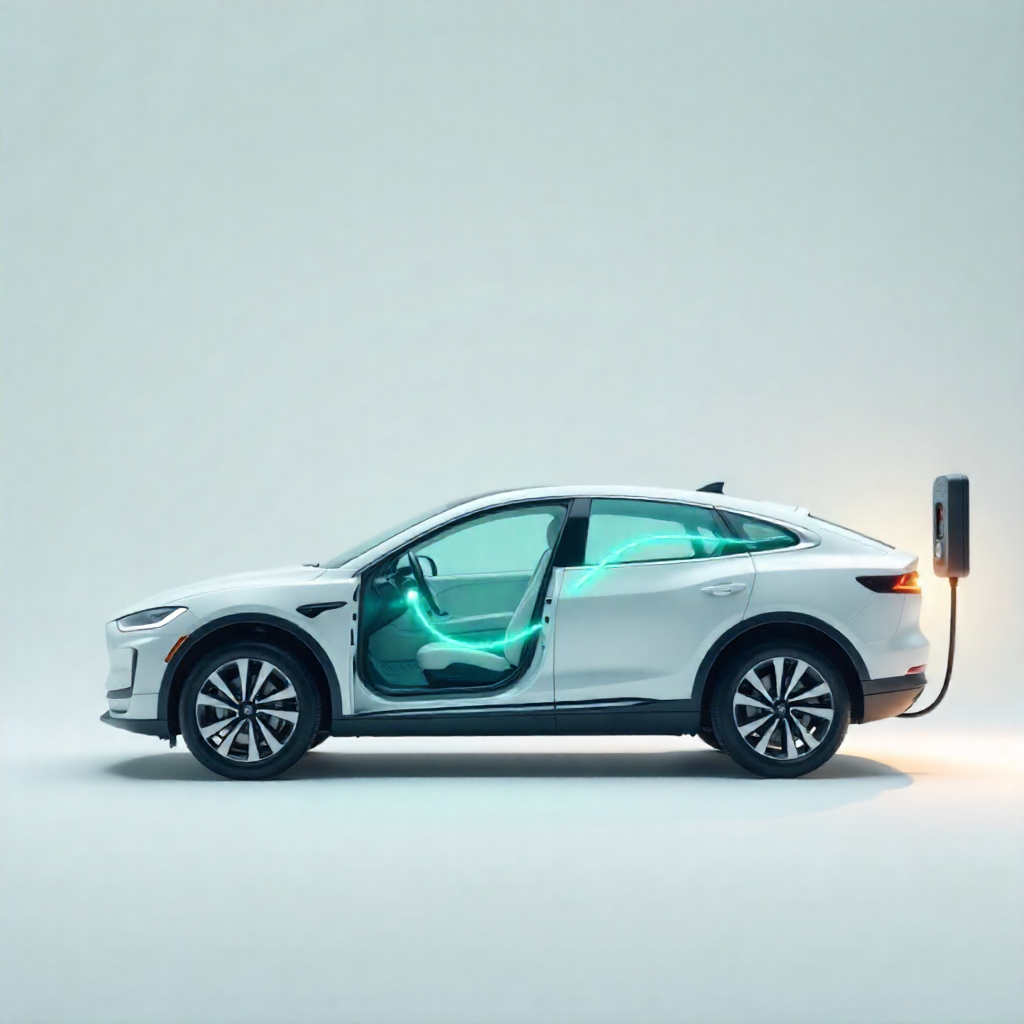
A Battery Electric Vehicle (BEV) operates entirely on electricity stored in a rechargeable battery. When the driver presses the accelerator, electricity flows from the battery to the electric motor, which powers the wheels and moves the car. BEVs use regenerative braking to capture energy while slowing down, sending it back to the battery for efficiency.
Unlike gas-powered cars, BEVs produce zero emissions, have lower running costs, and provide a smooth, quiet driving experience. They can be charged at home chargers or public charging stations, making them a convenient and eco-friendly transportation option.
What is a Battery Electric Vehicle (BEV)?
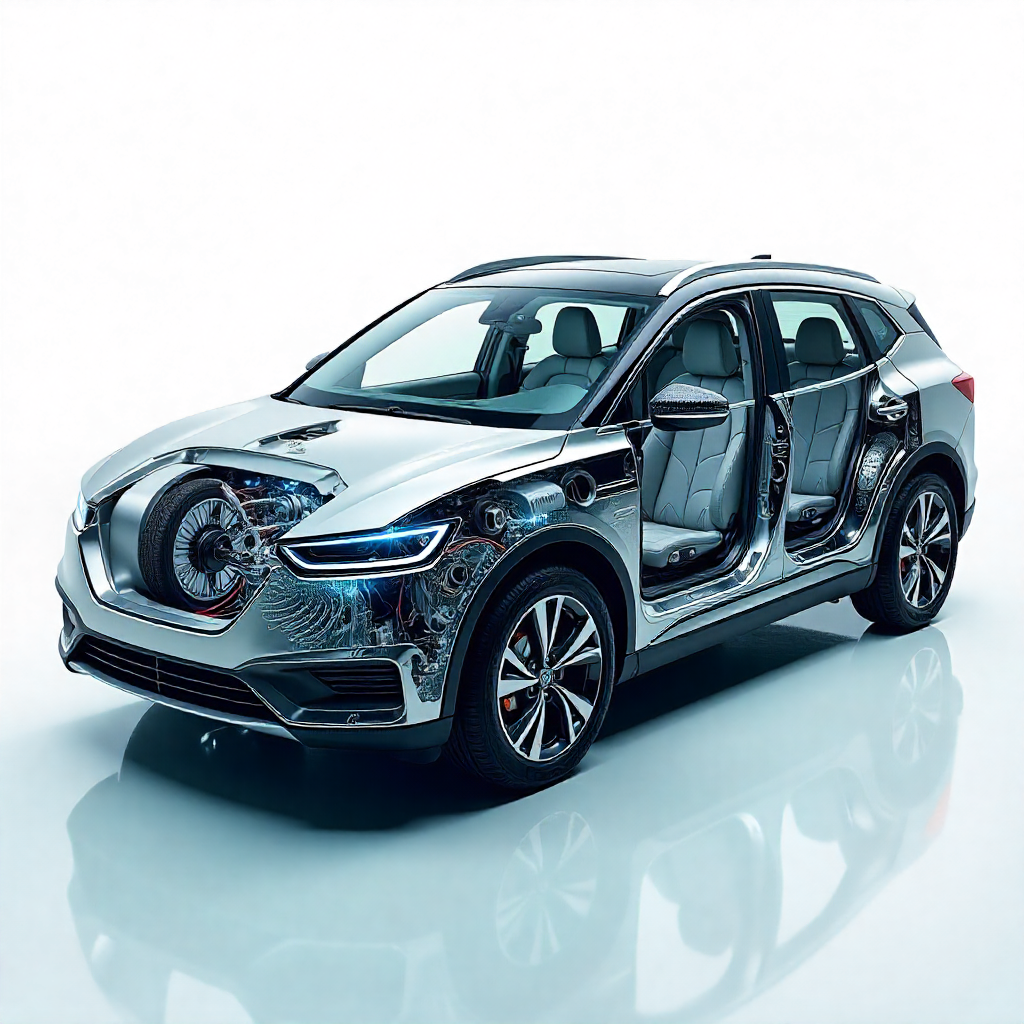
A Battery Electric Vehicle (BEV) is a type of all-electric car that runs solely on electricity. Unlike Hybrid Electric Vehicles (HEVs) or Plug-in Hybrid Electric Vehicles (PHEVs), BEVs do not have a gasoline engine at all. Instead, they rely on a large rechargeable battery pack and an electric motor for propulsion.
This makes BEVs completely emission-free at the tailpipe, contributing to cleaner air and reduced carbon emissions. They can be charged at home charging systems or public charging stations, making them more convenient for daily use.
Key Components of a BEV
The operation of a BEV depends on several essential components that work together seamlessly:
- Battery Pack
- The heart of a BEV, usually made of lithium-ion cells.
- Stores electrical energy that powers the vehicle.
- Determines the vehicle’s range (how far it can travel on a single charge).
- The heart of a BEV, usually made of lithium-ion cells.
- Electric Motor
- Converts electrical energy into mechanical energy.
- Provides instant torque, giving BEVs their smooth and quick acceleration.
- Converts electrical energy into mechanical energy.
- Inverter
- Converts direct current (DC) from the battery into alternating current (AC) for the electric motor.
- Plays a crucial role in regulating energy flow.
- Converts direct current (DC) from the battery into alternating current (AC) for the electric motor.
- Controller (Power Electronics)
- Acts as the “brain” of the BEV.
- Manages power distribution between the motor and battery.
- Adjusts performance based on driving conditions.
- Acts as the “brain” of the BEV.
- Charging Port
- Connects the BEV to external power sources for recharging.
- Supports multiple charging types (slow, fast, rapid).
- Connects the BEV to external power sources for recharging.
- Regenerative Braking System
- Captures energy lost during braking.
- Converts it into electricity and sends it back to the battery.
- Improves efficiency and extends driving range.
- Captures energy lost during braking.
How Does a BEV Operate? Step-by-Step
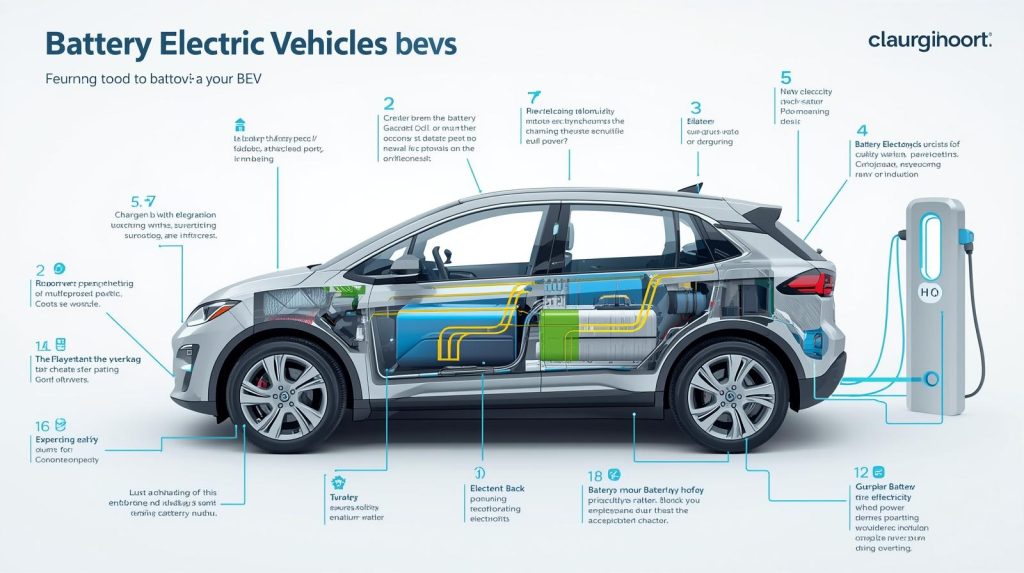
A Battery Electric Vehicle (BEV) operates differently from traditional gasoline cars. It relies entirely on electricity stored in a rechargeable battery pack and uses an electric motor to power the wheels. Here’s a detailed, step-by-step explanation of how a BEV operates:
1. Charging the Battery
The first step in operating a BEV is charging the battery. BEVs use high-capacity lithium-ion batteries that store electrical energy. Charging can be done in several ways:
- Home Chargers (Level 1 or Level 2): Convenient for daily charging overnight.
- Public Charging Stations: Faster charging for longer trips.
- DC Fast Chargers: Provide rapid charging, up to 80% in under an hour for most BEVs.
This stored electricity acts as the vehicle’s main energy source, eliminating the need for gasoline or diesel fuel.
2. Power Flow Management
Once charged, the BEV’s controller and power electronics manage the flow of electricity. The controller acts as the “brain” of the car, deciding how much electricity goes to the electric motor depending on driving conditions and accelerator input.
The electricity from the battery is in direct current (DC), which is converted to alternating current (AC) by an inverter to drive the motor efficiently.
3. Driving the Vehicle
When the driver presses the accelerator pedal:
- The electric motor receives power from the battery.
- The motor converts electrical energy into mechanical energy, which rotates the wheels.
- BEVs deliver instant torque, providing smooth, responsive acceleration from a standstill.
Unlike traditional engines, BEVs usually don’t require a multi-speed transmission, making the driving experience simple and effortless.
4. Regenerative Braking
One of the most efficient features of BEVs is regenerative braking:
- When the driver brakes or decelerates, the motor reverses its function.
- It acts as a generator, converting kinetic energy back into electricity.
- This energy is stored in the battery, extending driving range and reducing energy waste.
5. Energy Monitoring and Efficiency
Throughout operation, the BEV’s onboard system continuously monitors energy usage:
- Tracks battery charge and consumption.
- Optimizes power distribution between motor, battery, and accessories.
- Enhances efficiency for longer driving range.
6. Additional Features Enhancing Operation
Modern BEVs include smart features to improve performance and convenience:
- Eco Mode / Driving Modes: Adjusts power and efficiency.
- Thermal Management System: Maintains optimal battery temperature.
- Smart Charging: Integrates with renewable energy and off-peak hours for cost savings.
Key Takeaways
- A BEV runs entirely on electricity, producing zero tailpipe emissions.
- Charging, power management, and regenerative braking make the vehicle efficient and eco-friendly.
- Instant torque and simple drivetrain provide smooth, quiet, and responsive driving.
Advantages of BEVs
Operating a BEV offers multiple benefits compared to traditional cars:
- Zero Emissions – BEVs produce no tailpipe pollution, making them ideal for reducing greenhouse gases.
- Lower Running Costs – Electricity is cheaper than gasoline, and BEVs are more energy-efficient.
- Low Maintenance – With fewer moving parts and no oil changes, BEVs require less servicing.
- Smooth Driving – Instant torque ensures quick acceleration and a quiet, comfortable ride.
- Government Incentives – Many countries offer tax credits, rebates, and incentives to encourage BEV adoption.
Challenges of BEVs
While Battery Electric Vehicles (BEVs) are eco-friendly and efficient, they face some challenges. One major issue is limited driving range, which can cause range anxiety for some drivers. Charging infrastructure is still developing in many areas, and charging can take longer than refueling a gasoline car.
Other challenges include the higher upfront cost of BEVs due to expensive batteries and concerns around battery recycling and disposal. Despite these challenges, advancements in battery technology, fast charging, and infrastructure expansion are making BEVs increasingly practical and popular.
Despite their advantages, BEVs also face some challenges:
- Limited Driving Range – Many BEVs cannot travel as far as gasoline cars on a single charge, though ranges are improving.
- Charging Infrastructure – Public charging stations are not yet as widespread as gas stations.
- Charging Time – Even with fast chargers, refueling takes longer than filling a gas tank.
- High Upfront Cost – Batteries are expensive, making BEVs pricier upfront (though costs are falling).
- Battery Recycling – End-of-life battery disposal and recycling remain technological and environmental concerns.
BEVs vs Traditional Cars
To understand BEVs better, let’s compare them with gasoline cars:
| Feature | BEVs | Gasoline Cars |
| Fuel | Electricity | Gasoline/Diesel |
| Emissions | Zero | High |
| Maintenance | Low | High (oil, filters, engine parts) |
| Running Costs | Low | Expensive |
| Driving Experience | Quiet, smooth, instant torque | Engine noise, slower response |
Future of BEVs
The future of Battery Electric Vehicles (BEVs) looks bright and innovative. Advancements in battery technology are expected to increase driving ranges, reduce charging times, and lower vehicle costs. Expanding charging infrastructure and government incentives worldwide will make BEVs more accessible to everyday drivers.
BEVs are also being integrated with smart features, renewable energy, and autonomous driving technology, making them a key part of the sustainable transportation revolution. As technology improves, BEVs are set to become the mainstream choice for eco-friendly and cost-efficient mobility.
Several trends are shaping their growth:
- Advanced Battery Technology – Solid-state batteries with longer range and faster charging.
- Wider Charging Infrastructure – More fast-charging stations worldwide.
- Falling Costs – As battery production scales up, BEVs are becoming more affordable.
- Integration with Renewable Energy – Solar-powered EV charging and smart grids.
- Autonomous Driving – Many BEVs are being integrated with self-driving features.
Governments and automakers are heavily investing in BEV technology, ensuring they will dominate the future of mobility.
Conclusion
Understanding how a BEV operates gives us a clear picture of why these vehicles are not just a passing trend but a long-term solution for sustainable mobility. At their core, Battery Electric Vehicles are powered by a rechargeable battery pack that supplies energy to an electric motor. This system, managed by controllers and supported by inverters, enables smooth acceleration, instant torque, and quiet performance—all while eliminating harmful tailpipe emissions.
The process is straightforward yet revolutionary:
- The BEV is charged through home or public stations.
- Electricity is stored in the battery pack.
- The inverter and motor convert that energy into motion.
- Regenerative braking recycles energy back into the system.
This closed-loop energy cycle makes BEVs highly efficient compared to traditional internal combustion engine cars.
From an environmental perspective, BEVs play a critical role in reducing greenhouse gas emissions, improving urban air quality, and supporting the global shift toward renewable energy. For consumers, the advantages include lower operating costs, minimal maintenance, and the convenience of charging at home or work. Governments worldwide are accelerating this transition through tax credits, subsidies, and investments in EV charging infrastructure.