

The automotive industry is undergoing a massive transformation. As concerns about climate change, rising fuel prices, and air pollution grow, Hybrid Electric Vehicles (HEVs) are emerging as a practical and sustainable solution. Combining a gasoline engine with an electric motor, HEVs provide fuel efficiency, reduced emissions, and smooth driving performance.
But many drivers still ask: How does an HEV operate? This guide explores the working mechanism of HEVs, their key components, advantages, challenges, and the future of hybrid technology.
What is HEV? How does a Hybrid Electric Vehicle (HEV) Operate.

A Hybrid Electric Vehicle (HEV) is a vehicle that combines two sources of power: a conventional internal combustion engine (ICE) and an electric motor powered by a battery. The system is designed to optimize energy use, reduce fuel consumption, and lower emissions.

Unlike Battery Electric Vehicles (BEVs) or Plug-in Hybrid Electric Vehicles (PHEVs), HEVs cannot be plugged in to charge. The battery is charged automatically through the internal combustion engine and regenerative braking, which recaptures energy while braking.
HEVs can switch seamlessly between the electric motor and gasoline engine depending on the driving conditions. For example:
- City driving: The electric motor is primarily used at low speeds.
- Highway driving: The gasoline engine powers the car and assists the electric motor when needed.
Key Components of a Hybrid Electric Vehicle
Understanding how an HEV operates requires knowing its main components:
- Internal Combustion Engine (ICE)
- Powers the vehicle at higher speeds and longer distances.
- Works alongside the electric motor to optimize fuel efficiency.
- Powers the vehicle at higher speeds and longer distances.
- Electric Motor
- Provides power during acceleration and low-speed driving.
- Reduces fuel consumption and enhances smooth driving performance.
- Provides power during acceleration and low-speed driving.
- Battery Pack
- Stores energy generated from regenerative braking and the gasoline engine.
- Supplies electricity to the motor as needed.
- Stores energy generated from regenerative braking and the gasoline engine.
- Power Electronics / Controller
- Manages energy flow between the battery, motor, and engine.
- Ensures smooth switching between gasoline and electric power.
- Manages energy flow between the battery, motor, and engine.
- Regenerative Braking System
- Captures energy that would otherwise be lost during braking.
- Converts it into electrical energy stored in the battery.
- Captures energy that would otherwise be lost during braking.
- Transmission System
- HEVs may use conventional or specialized transmissions to handle dual power sources efficiently.
- HEVs may use conventional or specialized transmissions to handle dual power sources efficiently.
How Does a Hybrid Electric Vehicle (HEV) Operate. Step-by-Step
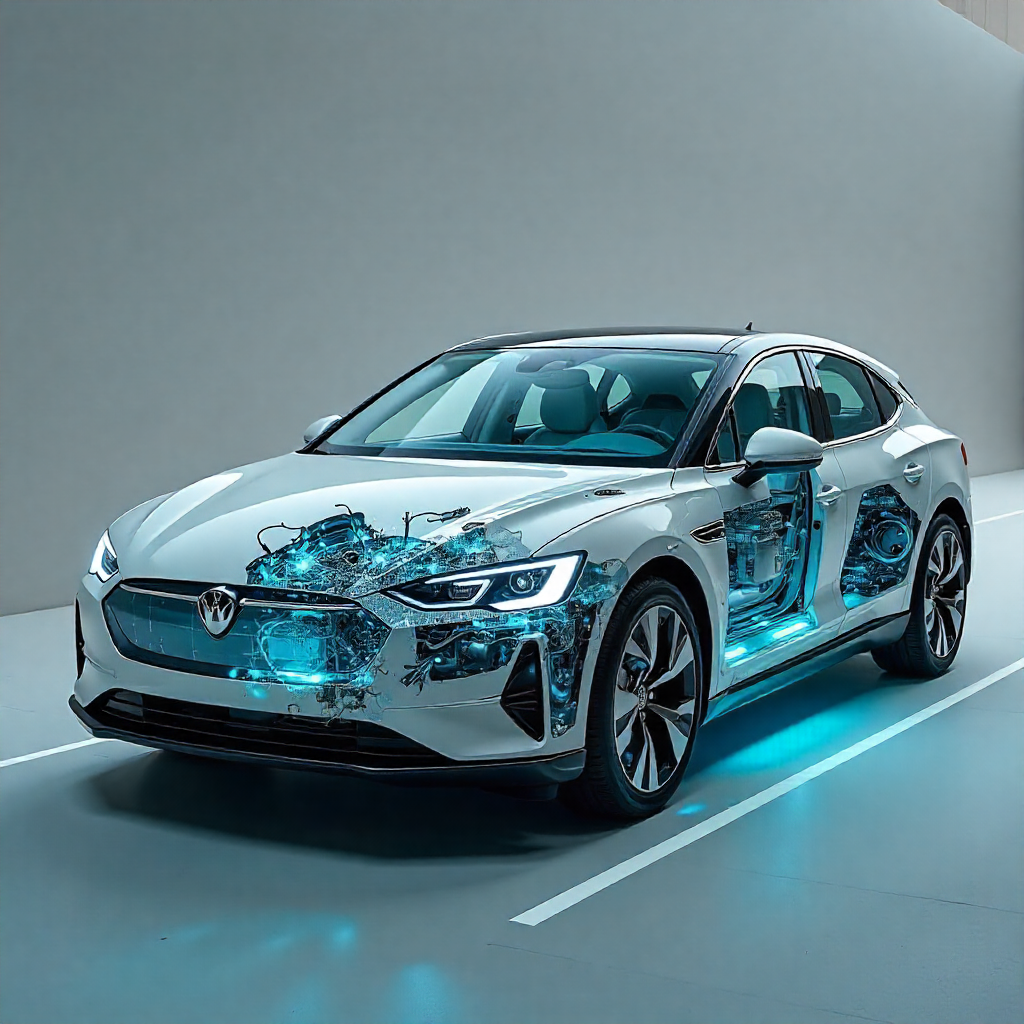
:1. Starting the Vehicle
When the driver starts an HEV, the electric motor powers the vehicle at low speeds, such as in stop-and-go traffic. This reduces fuel consumption and emissions during city driving.
2. Switching Between Power Sources
- The controller decides which power source to use based on driving conditions.
- Electric motor is used for low speeds and short distances.
- Gasoline engine powers the vehicle at higher speeds and charges the battery when needed.
This automatic switching ensures maximum efficiency without driver intervention.
3. Acceleration
During acceleration, both the gasoline engine and electric motor may work together. The electric motor provides instant torque, enhancing acceleration while reducing the engine’s fuel demand.
4. Regenerative Braking
When the vehicle slows down:
- The electric motor acts as a generator.
- Kinetic energy is converted into electricity and stored in the battery.
- This reduces energy waste and increases overall efficiency.
5. Energy Management
The controller continuously monitors energy flow:
- Balances power between the motor, battery, and engine.
- Optimizes fuel consumption and battery usage.
- Maintains smooth driving performance in all conditions.
6. Stop-Start Functionality
Many HEVs have a stop-start feature:
- The engine automatically shuts off at traffic lights or idle conditions.
- The electric motor powers the vehicle for brief moments, saving fuel.
Types of HEV Powertrains
Hybrid vehicles come in different powertrain configurations:
- Series Hybrid
- The gasoline engine only charges the battery.
- The electric motor drives the wheels directly.
- The gasoline engine only charges the battery.
- Parallel Hybrid
- Both the gasoline engine and electric motor can drive the wheels.
- Most common HEV configuration.
- Both the gasoline engine and electric motor can drive the wheels.
- Series-Parallel Hybrid
- Combines both series and parallel setups.
- Offers flexibility for maximum efficiency across driving conditions.
- Combines both series and parallel setups.
Advantages of Hybrid Electric Vehicles
HEVs offer several benefits for drivers and the environment:
- Better Fuel Efficiency: Reduced gasoline consumption, especially in city traffic.
- Lower Emissions: Produces fewer greenhouse gases than conventional vehicles.
- No Plug-in Required: The battery charges automatically, offering convenience.
- Smooth Driving Experience: Electric motor provides quiet and responsive acceleration.
- Government Incentives: Some regions offer tax benefits and rebates for HEV owners.
HEVs are ideal for drivers seeking a balance between eco-friendliness and convenience, especially in urban areas.
Challenges of Hybrid Electric Vehicles
Despite their benefits, HEVs also face certain challenges:
- Higher Upfront Cost: Dual power systems make HEVs more expensive than standard cars.
- Battery Replacement Costs: Over time, battery maintenance or replacement can be costly.
- Moderate Fuel Savings: While better than gasoline cars, HEVs are less efficient than fully electric vehicles (BEVs).
- Complex Maintenance: Dual powertrain systems require skilled servicing, sometimes increasing maintenance costs.
Understanding these challenges helps drivers make informed decisions when choosing an HEV.
HEVs vs Other Vehicles
| Feature | HEV | BEV | Gasoline Car |
| Power Source | Gasoline + Electric | Fully Electric | Gasoline |
| Emissions | Lower | Zero | High |
| Fuel Cost | Moderate | Low | High |
| Maintenance | Moderate | Low | Moderate |
| Driving Experience | Smooth, responsive | Quiet, instant torque | Standard |
HEVs serve as a transition technology between conventional gasoline cars and fully electric vehicles, offering both fuel efficiency and convenience.
Future of Hybrid Electric Vehicles
The future of HEVs looks promising as manufacturers improve battery technology, regenerative braking, and energy management systems. Key trends include:
- Improved Efficiency: Smaller, lighter batteries with higher energy density.
- Smart Features: Integration with apps, smart charging, and connectivity.
- Eco-Friendly Designs: Reduced carbon footprint and lower emissions.
- Transition Technology: HEVs remain vital in regions where full EV infrastructure is not yet developed.
HEVs will continue to bridge the gap between traditional internal combustion vehicles and fully electric cars, helping drivers adopt cleaner transportation without sacrificing convenience.
Conclusion
Hybrid Electric Vehicles (HEVs) operate using a dual power system that combines a gasoline engine with an electric motor. This design allows HEVs to provide fuel-efficient, low-emission, and smooth driving, making them an excellent choice for eco-conscious drivers who want convenience without fully switching to electric vehicles.
The process of operation includes:
- Using the electric motor for low-speed and city driving.
- Switching to the gasoline engine at higher speeds or when more power is needed.
- Capturing energy with regenerative braking to recharge the battery.
- Efficient energy management through advanced controllers.
While HEVs face challenges like higher upfront costs, battery maintenance, and moderate fuel savings, ongoing advancements in technology are making them more accessible, efficient, and reliable.
As the automotive industry continues its shift toward sustainable mobility, HEVs play a crucial role in reducing emissions while maintaining convenience and performance. They serve as a practical bridge for drivers moving from traditional gasoline vehicles toward fully electric transportation, shaping a greener, cleaner, and smarter future for mobility worldwide.
In short, understanding how an HEV operates helps consumers make informed choices, highlighting the balance between environmental responsibility, efficiency, and practicality. For anyone looking to reduce their carbon footprint without fully relying on electric vehicles, HEVs are an ideal solution.