
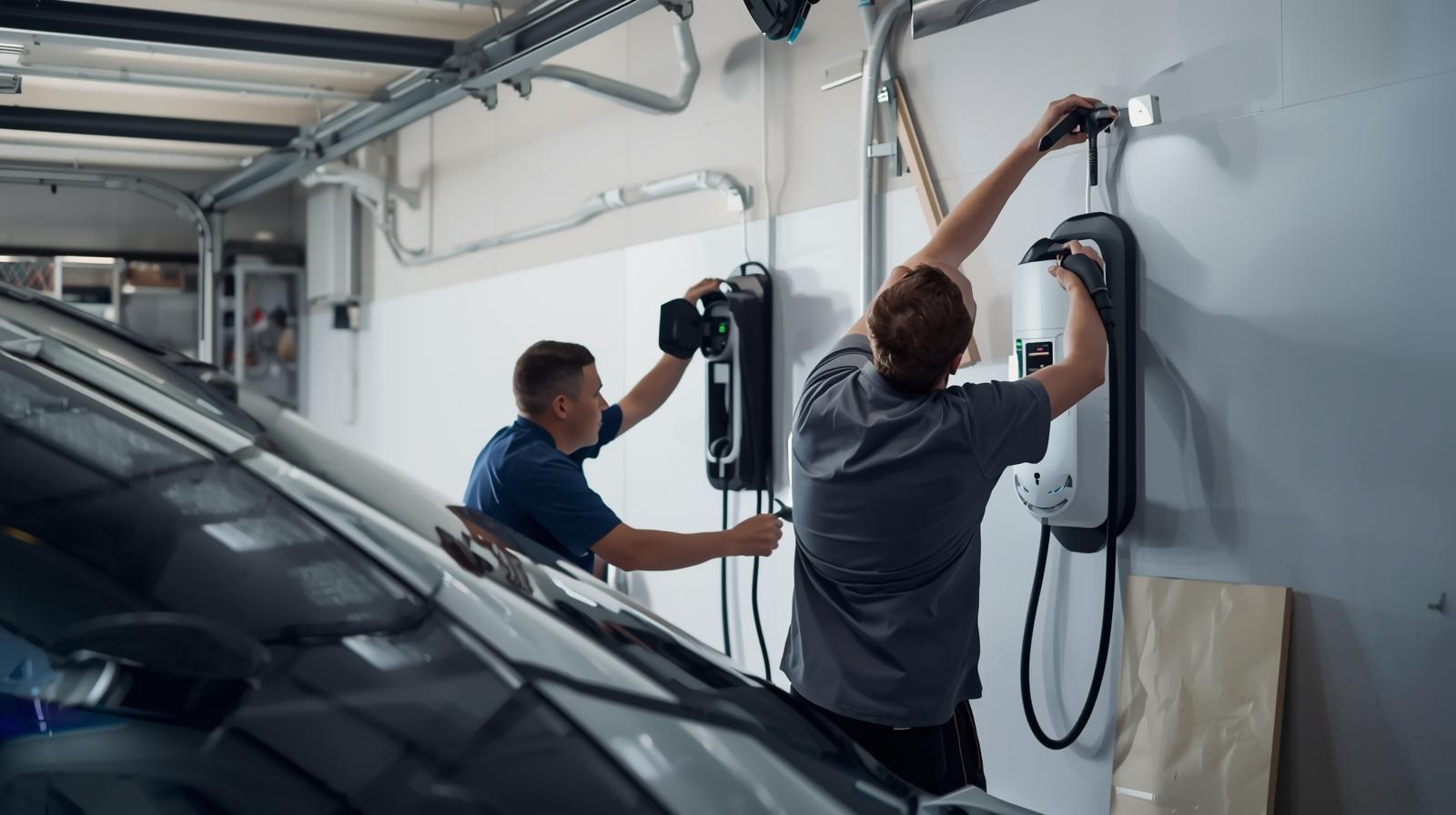
As electric vehicles continue to grow in popularity, more drivers are switching from public charging to home charging for convenience, cost savings, and long-term efficiency. One of the most common questions new EV owners ask is: How Much Does It Cost to Install EV Charger at Home? Understanding installation costs, equipment types, labor fees, permits, incentives, and electrical upgrades helps you make an informed decision and avoid unexpected expenses.
In this detailed, expert-level guide, we break down everything from charger types to installation cost factors, permitting fees, tax credits, and real examples. If you’re preparing to transition to home charging or evaluating options before purchasing an EV, this article gives you everything you need to know about the true cost of installing an EV charger at home in 2026.
How Much Does It Cost to Install EV Charger at Home? (Complete Breakdown)
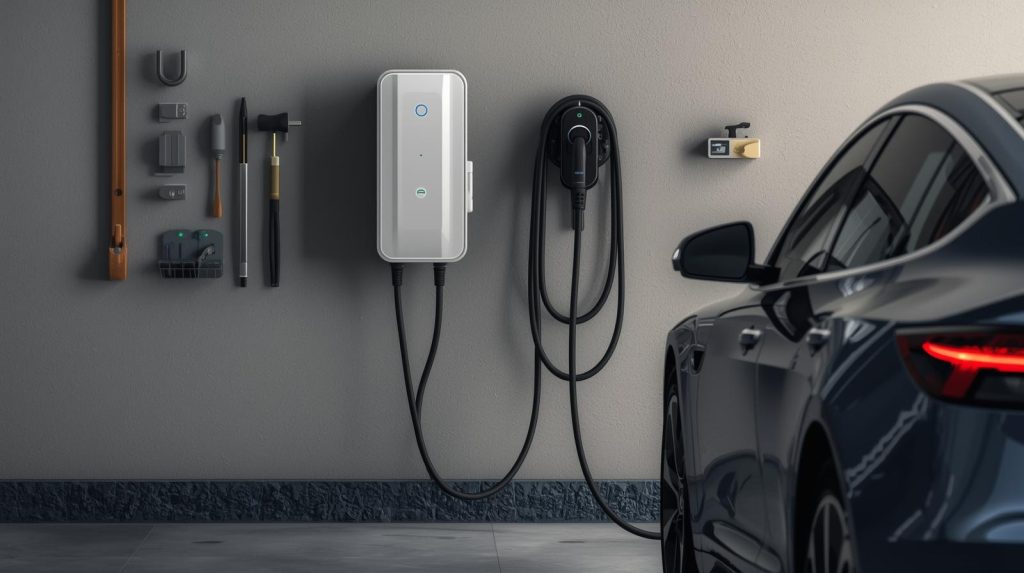
So, How Much Does It Cost to Install EV Charger at Home? The short answer:
Home EV charger installation costs typically range from $500 to $2,500, depending on:
- Charger type (Level 1 or Level 2)
- Your home’s electrical system
- Distance from your panel to the charger location
- Labor rates in your area
- Permits, inspections, and additional upgrades
For most drivers, a Level 2 home charger is the ideal choice because it offers much faster charging and better convenience.
But let’s break down each factor step by step so you understand exactly what influences the final price.
Types of EV Chargers and Their Costs
Before understanding how much it costs to install an EV charger at home, you need to know the types of chargers available.
Level 1 Chargers (Standard Included Charger)
- Uses 120V household outlet
- Adds 3–5 miles of range per hour
- Installation cost: $0–$200 (if outlet is nearby)
- Best for: light-duty driving, plug-in hybrids, overnight charging
Since Level 1 chargers plug into an existing outlet, installation costs are minimal. However, charging is extremely slow.
Level 2 Chargers (Recommended for EV Owners)
- Uses 240V outlet
- Adds 20–50 miles of range per hour
- Equipment cost: $300–$800
- Installation cost: $400–$2,000
- Best for: daily EV use, long-range EVs, multi-vehicle households
This is the most common choice because it allows full charging overnight.
Smart EV Chargers (Wi-Fi Enabled)
- Remote monitoring
- Energy usage tracking
- Charge scheduling
- Equipment cost: $500–$1,000
Smart chargers add to the upfront equipment cost but save money long-term by optimizing electricity usage.
Average Cost Breakdown – How Much Does It Cost to Install EV Charger at Home?
A typical EV charger installation includes:
| Expense Category | Cost Range |
|---|---|
| Level 2 charger equipment | $300 – $800 |
| Labor for installation | $300 – $1,200 |
| Permits | $50 – $300 |
| Wire, conduit, breaker | $100 – $400 |
| Electrical panel upgrade (if needed) | $800 – $3,000 |
| Trenching or wall work | $500 – $2,000 (if required) |
Total Average Cost: $500 – $2,500
And in more complex scenarios, the price can reach $3,000–$6,000.
What Affects Home EV Charger Installation Costs?
To answer How Much Does It Cost to Install EV Charger at Home?, you need to understand the factors that influence total pricing.
Electrical Panel Capacity
Your home must have enough electrical capacity to support a Level 2 charger (40–60 amps).
If you have enough capacity:
- Cost: $0 – $200 additional
- Simple breaker addition
If your panel is at capacity:
- Costs increase significantly:
- Panel upgrade: $800 – $3,000
- New main service line: $1,000 – $4,000
This is the biggest variable in installation pricing.
Distance From Electrical Panel
The farther the charger location is from the panel, the higher the cost.
Typical distances:
- 0–10 feet: $200 – $400
- 10–30 feet: $400 – $800
- 30–50 feet: $800 – $1,500
- Over 50 feet: $1,500 – $3,000
Longer distances require more conduit, wire, labor, and drilling.
Indoor vs. Outdoor Installation
Outdoor installations require:
- Weatherproof conduit
- GFCI breaker
- Heavy-duty materials
This adds $100–$300 on average.
Wall Drilling, Trenching, or Concrete
If the wiring path is complex:
Required Work:
- Drilling through walls: $150 – $400
- Trenching underground: $500 – $2,000
- Concrete cutting: $600 – $1,500
Homes without easy access from the panel to the garage often require this work.
Permits and Inspection Fees
Permits ensure safety and compliance.
Typical Permit Costs:
- $50 – $300 depending on local requirements
Some cities also require:
- Load calculations
- Final inspection fees
Labor Rates in Your Area
Electrician labor costs vary by location.
National averages:
- Low-cost regions: $50 – $80/hr
- Mid-range areas: $80 – $120/hr
- High-cost states (CA, NY, WA): $120 – $200/hr
Labor can represent 30–60% of total installation cost.
Charger Model and Features
Premium chargers with smart features cost more:
- Wi-Fi: +$50–$100
- App control: +$50–$100
- Load balancing: +$100–$200
- Tesla Wall Connector: $475+
- ChargePoint / Wallbox: $600–$1,000
Real Home Installation Cost Examples
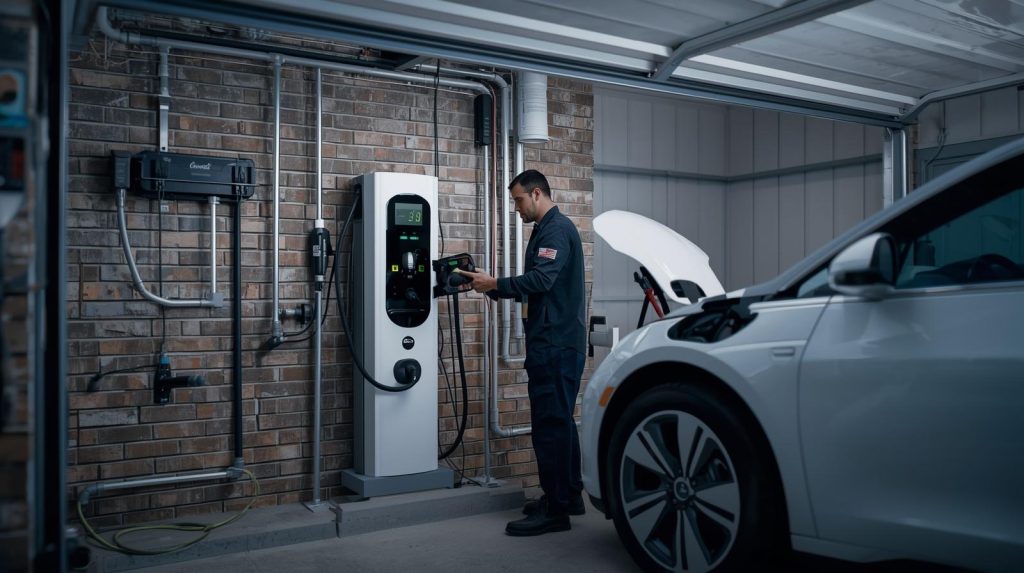
To illustrate how much it costs to install EV charger at home, here are real-world examples:
Example 1: Simple Installation
- Charger cost: $400
- Breaker installation: $150
- Labor: $200
- Distance: 5 feet
Total: $750
Example 2: Standard Garage Installation
- Charger: $600
- 240V outlet installation: $250
- Labor: $500
- Permit: $100
Total: $1,450
Example 3: Complex Installation with Panel Upgrade
- Charger: $700
- Panel upgrade: $2,000
- Labor: $900
- Materials: $300
- Permit + inspection: $250
Total: $4,150
Do You Really Need a Level 2 Charger at Home?
A Level 2 charger is not mandatory for every EV owner, but it can significantly improve your daily charging experience. Unlike a standard Level 1 charger that offers slow charging speeds, a Level 2 charger can fully recharge most electric vehicles in just a few hours. This makes it ideal for drivers with long commutes, busy schedules, or limited access to public charging stations. If you want faster, more convenient, and energy-efficient home charging, a Level 2 charger can be a worthwhile upgrade.
Many new EV owners ask whether home installation is worth it.
Level 1 Charger
- Very slow
- Suitable if you drive fewer than 20 miles/day
Level 2 Charger
- Full overnight charging
- Ideal for most EV drivers
- Best long-term investment
Even though installation costs more upfront, Level 2 charging offers:
- Convenience
- Faster charging
- Better battery health
- Higher resale value
- Lower dependence on public chargers
EV Charger Installation vs Public Charging — Cost Comparison
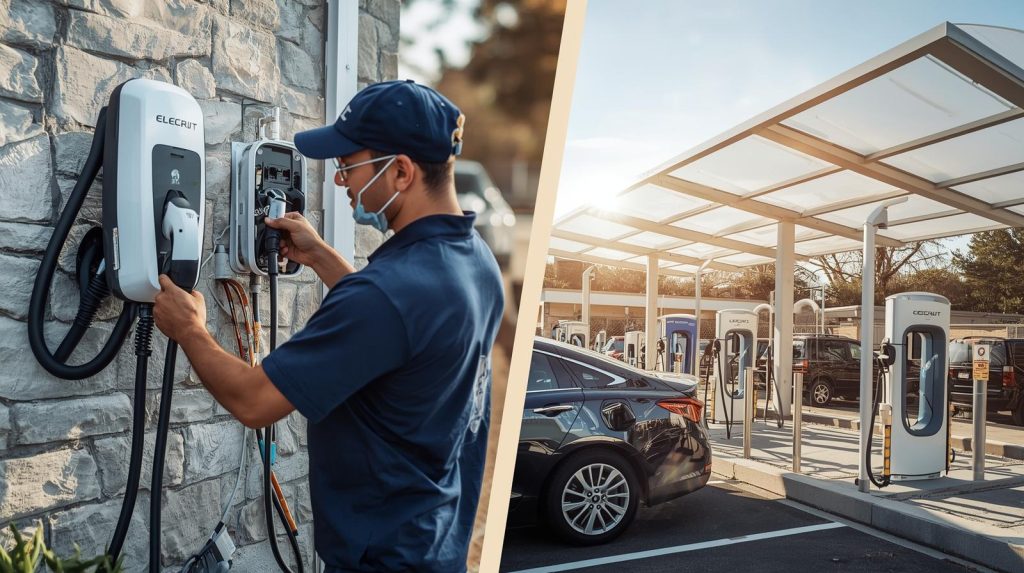
Installing a home charger is significantly cheaper over time.
Home Charging Cost:
- $0.10–$0.28 per kWh
- Equivalent to paying $1–$2 per gallon of gasoline
Public DC Fast Charging Cost:
- $0.40–$0.65 per kWh
- Equivalent to paying $5–$8 per gallon of gasoline
If you frequently use public chargers, home installation pays for itself within 6–18 months.
Does Installing an EV Charger Increase Home Value?
Yes—homebuyers increasingly prefer homes with EV charging capabilities.
Benefits include:
- Higher resale value
- Better appeal to EV owners
- Faster sale time
- Future-proofing your home
- Reduced long-term expenses
Studies show home EV charger installations may increase home value by 1–3%.
Rebates, Tax Credits, and Incentives That Reduce Costs
One of the most important parts of understanding How Much Does It Cost to Install EV Charger at Home? is knowing that many incentives can significantly lower your cost.
Federal Tax Credit (US)
- Up to 30% of installation cost
- Max credit: $1,000 for homeowners
Utility Company Rebates
Many utilities offer:
- $200–$1,000 rebates
- Free smart chargers
- Reduced electricity rates
State and Local Incentives
States like CA, NY, CO, MA, and NJ offer:
- Cost rebates
- Time-of-use rate discounts
- Installation subsidies
Your total install price may drop from $2,000 to $500 after rebates.
Steps to Install EV Charger at Home
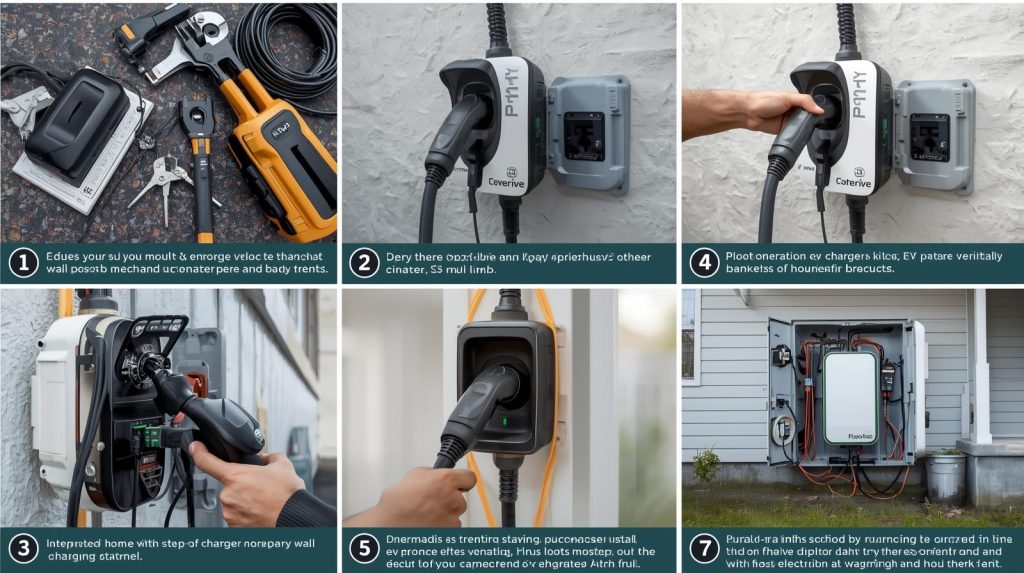
Here’s what the installation process typically looks like.
Step 1: Choose Your Installer
Hire a licensed electrician with EV charger experience.
Step 2: Site Assessment
Electrician inspects:
- Electrical panel
- Garage layout
- Charger location
- Required upgrades
Step 3: Permit Application
Required in most cities for safety compliance.
Step 4: Installation
Electrician installs:
- Circuit breaker
- Wiring and conduit
- Charger unit
- Outdoor equipment (if needed)
Step 5: Final Inspection
A city inspector approves the installation.
Step 6: Activation and Setup
Connect charger to:
- Home Wi-Fi
- Smartphone app
- Smart scheduling features
How to Reduce the Cost of EV Charger Installation
To lower your total installation cost:
1. Install charger near electrical panel
Reduces wiring cost.
2. Avoid unnecessary upgrades
Only upgrade panel if load calculations require it.
3. Use available rebates
Can reduce cost by 30–70%.
4. Compare electrician quotes
Get at least 3 estimates.
5. Choose a mid-range charger
Avoid overpaying for unnecessary features.
Conclusion
So, How Much Does It Cost to Install EV Charger at Home? The cost depends on equipment, electrical upgrades, labor, and permits, but on average, homeowners can expect to spend $500–$2,500 for full setup. With available tax credits, utility rebates, and long-term energy savings, installing a home charger is one of the smartest investments for EV owners. It provides convenience, reduces charging costs, adds home value, and prepares your household for the growing future of electric mobility.
If you’re planning to purchase an EV or upgrade your home charging setup, this comprehensive guide gives you all the details needed to make the best decision.
FAQs:
1. How Much Does It Cost to Install EV Charger at Home?
The average cost to install a home EV charger ranges from $500 to $2,500, depending on charger type, electrical panel capacity, installation complexity, and labor rates in your area. More complex installations, such as those requiring panel upgrades or long wiring distances, can cost $3,000–$6,000.
2. What is the cheapest way to install an EV charger at home?
The cheapest installation option is placing the charger close to your electrical panel (within 5–10 feet). This reduces wiring, conduit, and labor costs. Choosing a basic Level 2 charger (around $300–$500) and using available rebates can bring the total cost under $600–$800.
3. Do I need a permit to install a home EV charger?
Yes, most cities and local governments require a permit for 240V EV charger installations. Permit fees typically range from $50 to $300, and an inspection is usually needed to ensure electrical safety and building code compliance.
4. Is it worth installing a Level 2 charger at home?
Absolutely. A Level 2 charger provides much faster charging—adding 20 to 50 miles of range per hour. It offers:
- Overnight full charging
- Long-term cost savings
- Better convenience
- Higher home resale value
For most EV owners, Level 2 charging is considered the best long-term investment.
5. Do I need to upgrade my electrical panel?
You may need a panel upgrade if your current electrical system does not have enough capacity for a 40–60 amp circuit. Panel upgrades cost $800–$3,000. A licensed electrician can perform a load calculation to determine whether an upgrade is necessary.
6. Can I install a home EV charger myself?
Installing a Level 2 EV charger should not be a DIY project. It involves high-voltage wiring, circuit breakers, and code compliance. Always hire a licensed electrician to ensure safety and avoid voiding warranties or failing inspections.
7. How long does it take to install an EV charger?
Simple installations take 2–3 hours, while more complex setups with panel upgrades or long wiring routes may take 4–8 hours. If permits or inspections are required, the process may extend to 2–7 days depending on your city’s approval timeline.
8. Does installing an EV charger increase home value?
Yes. Homes equipped with Level 2 chargers appeal more to EV buyers and may increase property value by 1–3%. Many buyers see EV charging as a premium, future-ready feature.
9. What government incentives can reduce installation costs?
Homeowners may qualify for:
- Federal tax credit: 30% of installation cost (up to $1,000)
- State incentives (varies by region)
- Utility company rebates: $200–$1,000
- Discounted time-of-use electricity rates
These incentives can reduce your cost by 30–70%.
10. Do all EVs use the same home charger?
Most EVs are compatible with a standard J1772 Level 2 charger. Tesla vehicles require an adapter (included with the car). Tesla Wall Connectors can also charge non-Tesla EVs with the right adapter. Always check compatibility before buying.