

Introduction
Electric vehicles are becoming mainstream, and governments are supporting this transition with generous incentives. One of the most significant benefits for U.S. car buyers is the EV federal tax credit, which can reduce the cost of a new electric vehicle by up to $7,500.

But with updated 2024–2025 rules under the Inflation Reduction Act (IRA), buyers often ask: “What cars qualify for the EV tax credit?”
Eligibility rules have changed dramatically — battery sourcing requirements, assembly locations, price caps, and income limits all determine whether an EV qualifies. This comprehensive guide explains everything you need to know, from which cars meet the criteria to how you can claim the credit
What Cars Qualify for the EV Tax Credit? – Understanding the Basics
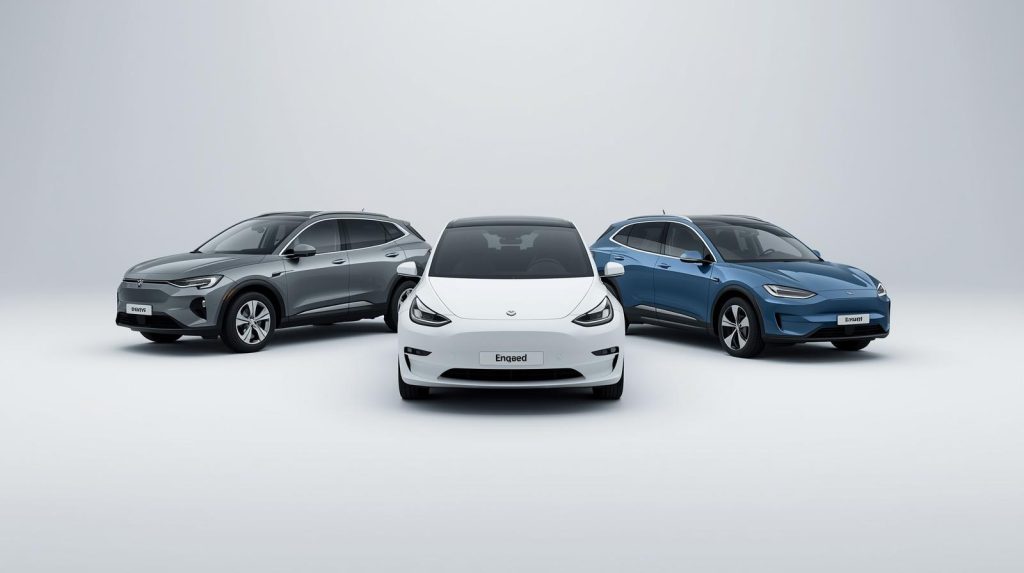
Before we look at the list of qualifying vehicles, consumers must understand how the EV tax credit works. Not every electric car qualifies — even popular models like Tesla, Ford Mustang Mach-E, and Hyundai Ioniq 5 may or may not qualify depending on updates to battery sourcing rules.
To determine what cars qualify for the EV tax credit, you must evaluate five main factors:
1. Final Assembly Must Be in North America
Under the IRA, the vehicle’s final assembly must occur in the U.S., Canada, or Mexico.
2. Price Cap Applies
- Sedans: must be under $55,000 MSRP
- SUVs, pickup trucks, vans: must be under $80,000 MSRP
3. Income Limits for Buyers
- Single filers: less than $150,000
- Head of household: less than $225,000
- Married filing jointly: less than $300,000
4. Battery Sourcing Requirements (Critical Minerals & Components)
This is the most complicated part. To qualify for full credit, EV manufacturers must follow strict U.S. or Free Trade Agreement (FTA) sourcing rules.
5. Must Be Purchased for Personal Use (Not for Resale)
The vehicle must be used primarily in the United States.
If any one of these conditions fails, the EV will not qualify.
What Cars Qualify for the EV Tax Credit? – 2025 Eligible Models
Here is a detailed list of EVs most likely to qualify under the latest IRS and Department of Energy updates. (Note: Always verify at the official fueleconomy.gov website because eligibility changes frequently.)
Tesla
Tesla models now qualify depending on battery sourcing:
- Tesla Model 3 Performance – Eligible for partial or full credit
- Tesla Model Y (All trims) – Eligible under SUV category
- Tesla Model X – Some trims may qualify
Tesla constantly updates manufacturing processes, so availability may change month to month.
Ford
Ford has made several adjustments to meet sourcing requirements.
- Ford F-150 Lightning (Select trims)
- Ford Mustang Mach-E (2025 updated trims)
- Ford E-Transit (Commercial van)
Ford models often qualify for the full $7,500 credit depending on battery source.
General Motors (GM)
GM has heavily localized battery production to qualify.
- Chevrolet Bolt EUV (2023 models still sold as fleet stock)
- Chevrolet Silverado EV
- GMC Hummer EV (mostly eligible)
- Cadillac Lyriq – qualifies under most conditions
GM is one of the strongest participants in U.S.-made EVs.
Chrysler / Jeep / Dodge
- Chrysler Pacifica Hybrid (PHEV) – Almost always qualifies
- Jeep Wrangler 4xe (PHEV)
- Jeep Grand Cherokee 4xe (PHEV)
Rivian
- Rivian R1T (Truck under $80,000 trims)
- Rivian R1S (SUV under $80,000 trims)
Rivian builds all its vehicles in Illinois, qualifying them for assembly requirements.
Volkswagen
- Volkswagen ID.4 (U.S.-built trims)
VW now assembles many ID.4 models in Tennessee to meet IRA rules.
Nissan
- Nissan Leaf (All trims) – Typically qualifies
Although the Leaf is older, its U.S. assembly gives it tax credit advantages.
Hyundai / Kia
Hyundai and Kia are building new U.S. facilities. Most imported models don’t yet qualify unless sourced from North America.
However:
- Hyundai Kona Electric (select U.S.-built models)
- Kia EV9 (new U.S. production starting)
Eligibility improves each year.
Lucid, Polestar, BMW, Volvo & Others
Some trims may qualify, especially plug-in hybrids assembled in North America.
Plug-In Hybrids That Qualify for the EV Tax Credit

Not only fully electric vehicles qualify — plug-in hybrids (PHEVs) can also earn a partial or full credit.
Examples include:
- Toyota Prius Prime
- Toyota RAV4 Prime
- Kia Niro PHEV
- Hyundai Tucson PHEV
- Volvo S60 Recharge
PHEVs must have a battery of at least 7 kWh to qualify.
How Much Credit Can You Get? ($3,750 or $7,500)
$3,750 Credit
Given if either:
- Battery critical minerals requirement is met OR
- Battery components requirement is met
$7,500 Credit
Given only if BOTH requirements are met.
This is why consumers constantly ask:
“What cars qualify for the EV tax credit?”
Because even within one model, different trims may qualify differently.
How to Check Whether a Specific Car Qualifies
The IRS provides an official, updated tool:
Visit fueleconomy.gov → Tax Credits → Eligible Vehicles
Enter: Make, Model, Year
You’ll see whether your specific trim qualifies.
Dealerships must also provide a Tax Credit Eligibility Certificate.
Why Many EVs Do NOT Qualify
The main reasons are:
1. Battery Made in China
The IRA restricts EVs using battery components from “foreign entities of concern.”
2. Vehicle Assembled Outside North America
EVs built in South Korea, Japan, Germany, or China typically do not qualify.
3. Exceeding Price Cap
Luxury EVs over $55,000–$80,000 are excluded.
4. Buyer Income Too High
Consumers exceeding income caps cannot claim the credit.
How the New 2025 Point-of-Sale Credit Works
You can now receive the EV tax credit instantly at the dealership, instead of waiting until your tax return.
Benefits:
Lowers the sale price immediately
No need for large upfront cash
More affordable financing
The dealership handles the paperwork electronically with the IRS.
Frequently Asked Questions About EV Tax Credit
1. Can I claim the EV tax credit twice?
Yes — if you purchase two qualifying EVs in different tax years.
2. Does leasing an EV qualify for the tax credit?
Yes. The leasing company receives the credit but may pass the savings to you through lower monthly payments.
4. Are used EVs eligible?
Yes. A used EV can earn a credit up to $4,000 or 30% of the price, whichever is lower.
5. Are commercial vehicles eligible?
Yes — commercial EV tax credits have fewer restrictions.
6. What if my income is too high?
You will not qualify for the personal EV tax credit.
Tips to Ensure Your EV Qualifies
Before purchasing, follow these steps to avoid losing your tax credit:
1. Confirm North America Assembly
Check the vehicle’s VIN.
2. Verify Battery Sourcing
Ask the dealer or check the IRS database.
3. Check Manufacturer MSRP
Ensure your trim does not exceed the price cap.
4. Review Your Income Eligibility
Compare your modified adjusted gross income (MAGI) with IRS guidelines.
5. Use the Point-of-Sale Credit
Get the tax credit instantly to avoid surprises.
Why the EV Tax Credit Matters
Understanding what cars qualify for the EV tax credit is essential because:
- It reduces the cost of EV ownership
- Encourages eco-friendly transportation
- Supports U.S. manufacturing
- Makes EVs affordable for middle-class families
Government incentives are shifting to reward clean energy and domestic manufacturing — and buyers benefit the most.
Conclusion
The EV tax credit landscape has changed significantly in 2024–2025. Strict rules now focus on battery sourcing, North American assembly, price caps, and income limitations. Because of these changes, many popular models qualify while others do not.
Knowing what cars qualify for the EV tax credit helps you make a smarter, more affordable decision when buying your next electric vehicle. Always check the official IRS website or consult your dealership before finalizing your purchase, as eligibility updates frequently.
If you’re planning to buy an EV soon, this guide ensures you are fully prepared, informed, and confident about your potential savings.