
Electric cars, also called EVs (Electric Vehicles), are changing the way people drive around the world. Instead of using gasoline or diesel, EVs run on electricity stored in a battery. They are quieter, cheaper to run, and better for the environment compared to traditional cars.
In the USA, EV adoption is growing fast. From teenagers buying their first car to families switching to cleaner transportation, more drivers are asking: “What is an EV, and is it the right choice for me?”
This complete beginner guide explains everything you need to know about EVs — how they work, the different types, benefits, challenges, and the future of electric driving.
What is an EV?
An EV (Electric Vehicle) is a car that uses an electric motor for power instead of a gasoline or diesel engine. Electricity is stored in a rechargeable battery, which supplies energy to the motor.
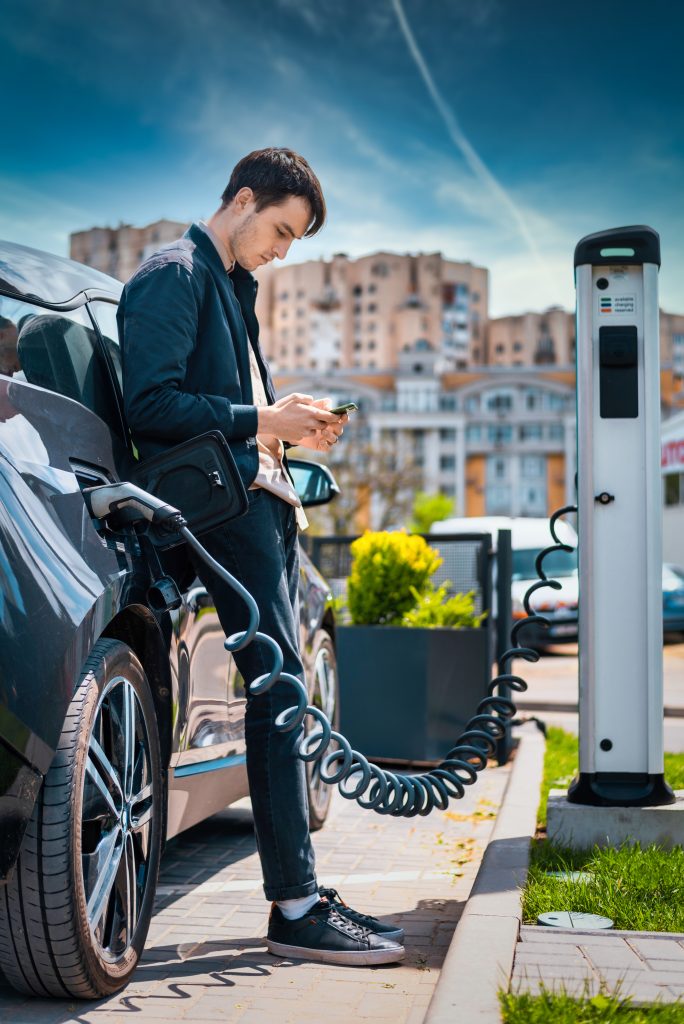
Unlike gas-powered cars, EVs produce zero tailpipe emissions, which means they don’t release harmful gases like CO₂ or nitrogen oxides. This makes them an important solution for reducing air pollution and fighting climate change.
Types of Electric Vehicles (EVs)
There are four main types of EVs available today. Each one works differently and is designed for different drivers.
1. Battery Electric Vehicles (BEVs)
Battery Electric Vehicles (BEVs) are fully electric cars that run only on a rechargeable battery and electric motor — no gasoline engine at all. Drivers charge BEVs at home, work, or public charging stations, and most models today offer a range of 200–400+ miles per charge.
BEVs are popular because they produce zero tailpipe emissions, are cheaper to maintain, and qualify for federal tax credits and state incentives in the USA. Popular examples include the Tesla Model 3, Chevrolet Bolt, and Nissan Leaf.
- Fully electric cars powered only by a battery.
- Charged by plugging into home chargers or public charging stations.
- Driving range: 200–400+ miles per charge.
Examples: Tesla Model 3, Nissan Leaf, Ford Mustang Mach-E.
Pros: Zero emissions, low running cost, fewer maintenance needs.
Cons: Dependent on charging stations, longer charging times.
2. Plug-in Hybrid Electric Vehicles (PHEVs)
Plug-in Hybrid Electric Vehicles (PHEVs) combine a rechargeable battery with a traditional gasoline engine. They can drive short distances (usually 20–50 miles) on pure electricity, and when the battery runs out, the gasoline engine takes over for longer trips.
PHEVs give drivers the flexibility of electric driving for daily commutes while keeping the convenience of gasoline for longer journeys. They also qualify for government incentives and produce fewer emissions than regular gas cars.
Popular examples of PHEVs in the USA include the Toyota Prius Prime, Ford Escape PHEV, and Hyundai Tucson Plug-in Hybrid.
PHEVs are a great choice for drivers who want to enjoy both electric and gasoline power without worrying about charging on long trips.
- Combine a battery-powered motor with a gasoline engine.
- Short trips (20–50 miles) use electricity, longer trips switch to gas.
Examples: Toyota Prius Prime, Ford Escape PHEV.
Pros: Flexibility for city + highway driving.
Cons: Small electric range, more expensive than hybrids.
3. Hybrid Electric Vehicles (HEVs)
Hybrid Electric Vehicles (HEVs) use both a gasoline engine and a small electric motor to improve fuel efficiency. Unlike plug-in hybrids, HEVs cannot be charged from an outlet — instead, their battery recharges automatically through regenerative braking and the gasoline engine.
HEVs are popular in the USA because they offer better mileage, lower emissions, and smooth performance without the need for charging stations. They are affordable, widely available, and ideal for drivers who want to save fuel without changing their driving habits.
Popular examples include the Toyota Camry Hybrid, Honda Accord Hybrid, and Hyundai Elantra Hybrid.
HEVs are a smart choice for drivers looking for improved fuel economy and eco-friendly driving without worrying about charging.
- Gasoline engine + small electric motor.
- Cannot be plugged in; battery recharges while driving.
Examples: Toyota Camry Hybrid, Honda Accord Hybrid.
Pros: Better mileage than gas cars, no charging needed.
Cons: Still relies on gasoline, not zero-emission.
4. Fuel Cell Electric Vehicles (FCEVs)
Fuel Cell Electric Vehicles (FCEVs) run on hydrogen fuel cells that generate electricity to power the motor. Instead of gasoline, they use hydrogen stored in a tank, and the only emission is water vapor, making them one of the cleanest vehicle options available today.
FCEVs offer a long driving range (300–400 miles) and can be refueled in just 3–5 minutes, similar to gas cars. However, hydrogen fueling stations are still limited in the USA, mainly found in California.
Popular models include the Toyota Mirai and Hyundai Nexo.
FCEVs are best for eco-conscious drivers who want zero-emission driving with the convenience of quick refueling — especially in regions with hydrogen infrastructure.
- Powered by hydrogen fuel cells that create electricity.
- Emission = only water vapor.
Examples: Toyota Mirai, Hyundai Nexo.
Pros: Fast refueling, long range.
Cons: Limited hydrogen stations, expensive technology.
How Do EVs Work?
Electric Vehicles (EVs) work by using an electric motor powered by a rechargeable battery instead of a gasoline engine. The battery stores electricity, which is delivered to the motor to move the wheels. EVs can be charged at home, workplace, or public charging stations using regular or fast chargers.

Some EVs also feature regenerative braking, which recovers energy while slowing down and sends it back to the battery. Since EVs don’t burn fuel, they produce zero tailpipe emissions, making them eco-friendly, cost-effective, and efficient for both city and highway driving.
EVs use several key components:
- Battery Pack: Stores electricity.
- Electric Motor: Converts electricity into motion.
- Inverter: Sends power from the battery to the motor.
- Onboard Charger: Manages electricity flow when plugged in.
When you press the accelerator, electricity flows from the battery to the motor, making the car move. It’s simple, quiet, and efficient compared to gasoline engines.
Benefits of EVs
Electric Vehicles (EVs) come with many benefits that make them a smart choice for modern drivers. They are cheaper to run since charging costs less than buying gasoline, and maintenance is lower because EVs have fewer moving parts. EVs also produce zero tailpipe emissions, helping reduce air pollution and fight climate change.
In addition, many EV buyers in the USA qualify for federal tax credits and state incentives, making them more affordable. With a growing network of charging stations and advanced features like regenerative braking, EVs offer convenience, savings, and eco-friendly driving.
EVs are becoming popular because they provide several benefits:
- Lower Running Costs – Electricity is cheaper than gasoline.
- Environmental Benefits – Zero tailpipe emissions = cleaner air.
- Less Maintenance – No oil changes, fewer moving parts.
- Government Incentives – Federal tax credits up to $7,500 and state rebates.
- Convenience – Charge at home, avoid gas stations.
- Performance – Instant torque = smooth and fast acceleration.
Challenges of EVs
While Electric Vehicles (EVs) offer many benefits, they also come with some challenges. One major concern is limited driving range, which makes some drivers worry about running out of charge on long trips. Charging infrastructure is still growing in the USA, so finding fast chargers in rural areas can be difficult.
Another challenge is the higher upfront cost compared to gasoline cars, although government incentives help reduce this. Charging time can also be longer than refueling with gas, even with fast chargers. Lastly, battery production depends on critical materials like lithium, which affects supply and cost.
EVs aren’t perfect. Drivers should consider these limitations:
- Higher upfront cost (though prices are falling).
- Range anxiety — fear of running out of charge.
- Charging times (30 min to several hours depending on charger).
- Limited charging stations in rural areas.
EV Market Trends in the USA
The EV market in the USA is growing rapidly as more drivers switch from gasoline cars to electric vehicles. In recent years, EV sales have reached record highs, with models like the Tesla Model 3, Ford F-150 Lightning, and Hyundai Ioniq 5 leading the market. Government goals aim for 50% of all new car sales to be electric by 2030, supported by tax credits and rebates.
The charging infrastructure is also expanding, with over 160,000 public chargers now available across the country, and billions invested in building more. While challenges like battery supply and range anxiety remain, the trend shows that EVs are moving from a niche option to a mainstream choice for American drivers.
The U.S. EV market is expanding quickly:
- In 2016, EVs were less than 1% of car sales.
- In 2024, sales crossed 1 million units.
- The U.S. government’s goal: 50% of new car sales electric by 2030.
Top EV brands in the USA: Tesla, Ford, General Motors, Hyundai, Kia, Toyota, Honda.
Charging Infrastructure
Charging infrastructure is the backbone of the electric vehicle (EV) revolution. It refers to the network of charging stations where EV owners can recharge their cars. In the USA, there are now over 160,000 public charging stations, including Level 2 chargers for daily use and fast chargers for long-distance travel.
Companies like Tesla (Superchargers), Electrify America, and ChargePoint are expanding networks nationwide. The U.S. government is also investing billions to build chargers along highways and in cities, making EV ownership more convenient.
There are 3 main types of charging:
- Level 1: Standard home outlet (slow).
- Level 2: Faster charging (common in homes & workplaces).
- DC Fast Charging: Charges up to 80% in 30 minutes.
The USA now has 160,000+ public chargers, with Tesla Superchargers leading the way.
Cost of Owning an EV
- Purchase Price: Higher than gas cars, but falling.
- Fuel Savings: EV drivers save $800–$1,000 per year on fuel.
- Maintenance Savings: No oil changes, fewer repairs.
- Incentives: Federal tax credit + state rebates reduce upfront costs.
Future of Electric Cars
The EV industry is rapidly advancing:
- Longer driving ranges (500–700 miles).
- Faster charging (10–15 minutes).
- Affordable EVs under $25,000.
- More renewable energy use.
- EVs as home backup power.
- Self-driving technology integrated with EVs.
FAQs About EVs
Q1: What does EV stand for?
EV stands for Electric Vehicle.
Q2: Are EVs cheaper to run than gas cars?
Yes, electricity is cheaper than gasoline, and EVs need less maintenance.
Q3: How long does it take to charge an EV?
Anywhere from 30 minutes (fast charger) to 8+ hours (home charging).
Q4: How long do EV batteries last?
Most EV batteries last 8–15 years or over 100,000 miles.
Q5: Do EVs really help the environment?
Yes, EVs reduce emissions and air pollution, especially when powered by renewable energy.
Conclusion
An EV (Electric Vehicle) is a modern car that runs on electricity instead of gasoline. With four main types — BEVs, PHEVs, HEVs, and FCEVs — drivers in the USA now have many options to choose from.
EVs offer lower running costs, government incentives, and zero emissions, but challenges like charging availability and higher upfront costs remain.
As technology improves and charging networks expand, EVs are set to become the future of transportation. For new drivers, switching to an EV means saving money, reducing pollution, and driving into a cleaner, smarter future.