
Electric vehicles (EVs) are becoming more popular every year. As more drivers switch to electric mobility, one question keeps coming up: What is the 80/20 rule for EV charging?
If you’ve recently bought an EV—or are planning to—you’ve probably heard advice like “Don’t charge to 100% every day” or “Keep your battery between 20% and 80%.” This is commonly known as the 80/20 rule for EV charging, and it plays an important role in battery health and long-term performance.
In this detailed guide, we’ll explain what the 80/20 rule means, why it matters, how it affects battery life, and whether you should follow it.
What Is the 80/20 Rule for EV Charging?
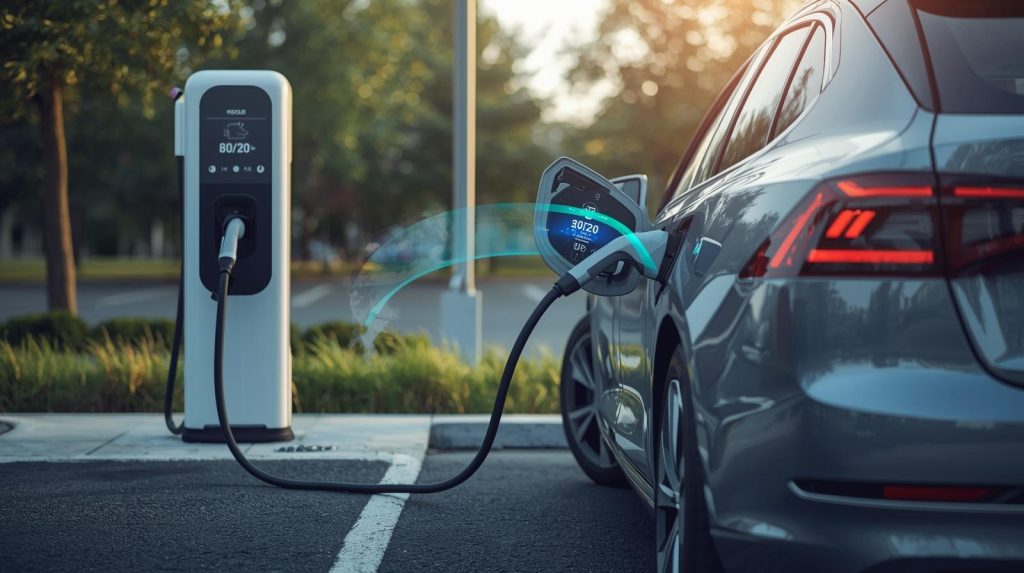
The 80/20 rule for EV charging refers to the recommendation that EV owners should keep their battery charge level between 20% and 80% for daily use.
Instead of charging your EV from 0% to 100% regularly, the rule suggests:
- Avoid letting the battery drop below 20%
- Avoid charging above 80% for everyday driving
This charging strategy helps reduce battery stress and extend overall battery lifespan.
Why Does the 80/20 Rule Matter?
To understand the importance of the 80/20 rule for EV charging, we need to look at how EV batteries work.
Most modern electric vehicles use lithium-ion batteries. These batteries are efficient and powerful, but they are sensitive to:
- Extreme charge levels (very low or very high)
- Heat buildup
- Frequent full charge cycles
Charging to 100% or letting the battery drop close to 0% increases chemical stress inside the battery cells. Over time, this can accelerate battery degradation.
The 80/20 rule minimizes that stress.
The Science Behind the 80/20 Rule
Lithium-ion batteries operate best within a mid-range state of charge.
Why Avoid Charging to 100%?
When a battery reaches 100%:
- Voltage levels are at their highest
- Chemical reactions inside the battery intensify
- Long-term cell wear increases
If the battery remains at 100% for extended periods, it may degrade faster.
Why Avoid Dropping Below 20%?
When the battery charge is very low:
- Voltage drops significantly
- Cells experience additional strain
- Risk of deep discharge damage increases
Keeping the battery between 20% and 80% maintains stable voltage levels and reduces long-term stress.
Does Every EV Need the 80/20 Rule?
Most EV manufacturers recommend limiting daily charging to around 80–90% unless you need a full range.
Automakers such as:
- Tesla
- Nissan
- BMW
- Hyundai
have built-in charging limit settings that allow drivers to set a maximum charge percentage.
This shows that the 80/20 rule for EV charging is not just a theory—it’s supported by real-world engineering practices.
Is It Bad to charge to 100%?
Charging to 100% occasionally is completely fine.
You may need 100% charge for:
- Long road trips
- Extended travel
- Remote routes with limited charging stations
The key is to avoid making 100% charging a daily habit unless necessary.
Modern EV battery management systems (BMS) are designed to protect the battery, but smart charging habits still make a difference over time.
Benefits of Following the 80/20 Rule for EV Charging
1. Longer Battery Lifespan
Staying within the 20–80% range reduces wear and helps maintain battery capacity for more years.
2. Improved Long-Term Resale Value
Healthier batteries retain more capacity, increasing vehicle resale value.
3. Better Thermal Management
Extreme charge levels generate more heat. The 80/20 range keeps the temperature more stable.
4. Reduced Charging Stress
Moderate charging cycles are less aggressive on battery chemistry.
Does the 80/20 Rule Affect Driving Range?
For daily commuting, most drivers don’t need 100% battery capacity.
If your EV has a 300-mile range:
- 80% charge still gives you around 240 miles
- Most daily commutes are under 50 miles
This makes the 80/20 rule practical for everyday use.
80/20 Rule and Fast Charging
DC fast charging generates more heat than AC charging. When combined with charging to 100%, battery stress increases.
For best results:
- Use fast charging mainly for road trips
- Avoid charging to 100% frequently with DC fast chargers
- Stick to 80% during regular use
This balanced approach protects long-term battery health.
When Should You Charge to 100%?
There are situations when full charging makes sense:
- Long-distance travel
- Cold weather conditions
- Battery calibration (occasionally)
- Extended driving days
The 80/20 rule for EV charging is a guideline—not a strict limitation.
What About New Battery Technologies?
Battery technology continues to evolve. Some newer EV batteries are more resistant to degradation. However, lithium-ion chemistry still benefits from moderate charge levels.
Future solid-state batteries may reduce the need for strict charging limits, but for now, the 80/20 rule remains a smart practice.
Practical Tips to Follow the 80/20 Rule
1. Use Charging Limit Settings
Most EVs allow you to set a maximum charge percentage in the app or dashboard.
2. Schedule Charging Overnight
Charge during off-peak hours and stop at 80%.
3. Avoid Leaving the Battery at 100%
If you charge to 100% for a trip, drive soon after reaching full charge.
4. Don’t Stress About Perfection
Occasional full or low charges won’t ruin your battery.
Consistency matters more than perfection.
Common Myths About the 80/20 Rule
Myth 1: Charging to 100% Once Will Damage the Battery
False. Occasional full charging is safe.
Myth 2: EV Batteries Must Be Fully Discharged
False. Unlike older battery types, lithium-ion batteries do not require full discharge cycles.
Myth 3: The 80/20 Rule Is Mandatory
False. It’s a recommended best practice—not a strict rule.
Is the 80/20 Rule Necessary for Everyone?
If you lease your EV or plan to keep it for only a few years, battery degradation may not be a major concern.
However, if you:
- Plan to keep your EV long-term
- Drive frequently
- Want maximum battery longevity
Following the 80/20 rule for EV charging is a smart choice.
Conclusion: What Is the 80/20 Rule for EV Charging?
So, what is the 80/20 rule for EV charging?
It’s a practical guideline that recommends keeping your EV battery between 20% and 80% for daily use to reduce stress, improve longevity, and maintain performance.
While modern EVs are designed with advanced battery management systems, good charging habits can make a noticeable difference over time.
The best strategy is simple:
- Use 20–80% for everyday driving
- Charge to 100% when needed
- Avoid frequent deep discharges
- Use fast charging strategically
By following the 80/20 rule, you protect your investment, improve long-term performance, and enjoy a more reliable EV ownership experience.
FAQs: What Is the 80/20 Rule for EV Charging?
1. What is the 80/20 rule for EV charging?
The 80/20 rule for EV charging suggests keeping your battery level between 20% and 80% for daily use to reduce battery stress and extend lifespan.
2. Why should I avoid charging my EV to 100% every day?
Charging to 100% regularly can increase battery voltage and heat, which may accelerate long-term battery degradation. It’s better to charge to 100% only when needed.
3. Is it bad to let my EV battery drop below 20%?
Occasionally dropping below 20% is fine, but frequent deep discharges can increase battery stress and reduce long-term health.
4. Does the 80/20 rule really extend battery life?
Yes. Keeping the battery within the 20–80% range reduces chemical stress inside lithium-ion cells, which can help maintain battery capacity over time.
5. Can I charge to 100% before a long trip?
Absolutely. Charging to 100% is recommended before long-distance travel. Just avoid leaving the battery at full charge for extended periods.
6. Does fast charging affect the 80/20 rule?
Yes. Frequent DC fast charging combined with charging to 100% can increase heat and stress. It’s best to fast charge up to 80% during regular use.
7. Do all EV manufacturers recommend the 80/20 rule?
Most modern EV manufacturers recommend limiting daily charging to around 80–90% to support battery longevity.
8. Is the 80/20 rule mandatory?
No. It’s a best-practice guideline, not a strict requirement. Modern EVs have battery management systems that protect against extreme damage.
9. Will following the 80/20 rule reduce my driving range?
For daily commuting, most drivers don’t need 100% range. Charging to 80% usually provides more than enough range for everyday use.
10. Should I follow the 80/20 rule if I lease my EV?
If you lease your EV short-term, battery degradation may be less of a concern. However, following the rule is still a good charging habit.