
As electric vehicles (EVs) become part of everyday life, understanding how different charging methods operate is essential for safe and efficient use. One of the most commonly used and often misunderstood methods is Mode 2 charging. Many EV owners ask the same question: how mode 2 EV charging works?
Mode 2 EV charging is popular because it offers a balance between convenience, safety, and affordability. In this detailed guide, we’ll explain how mode 2 EV charging works, its components, safety features, charging speed, real-world use cases, and whether it’s the right solution for you.
What Is Mode 2 EV Charging?
Before understanding how mode 2 EV charging works, it’s important to know what it actually is.
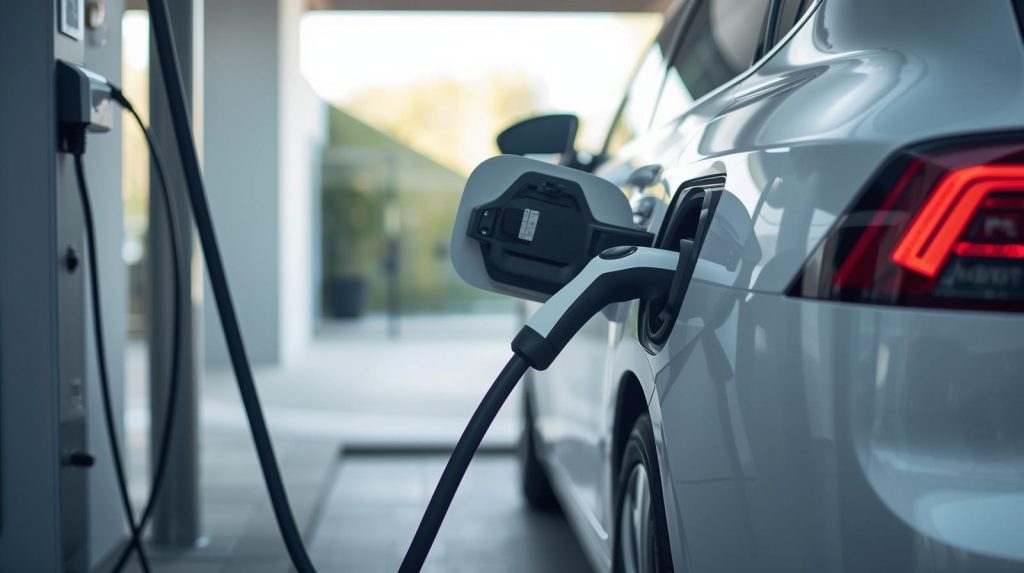
Mode 2 EV charging allows an electric vehicle to be charged from a standard household AC power socket, using a portable charging cable equipped with an in-cable control and protection device (IC-CPD).
Unlike basic socket charging, Mode 2 includes built-in safety systems that protect both the vehicle and the electrical supply.
How Mode 2 EV Charging Works: Step-by-Step Explanation
To clearly answer how mode 2 EV charging works?, let’s break the process down into simple steps.
Step 1: Plugging into the Power Source
The charging cable is plugged into a regular household outlet (typically 120V or 230V, depending on the country).
Step 2: Activation of the In-Cable Control Device
The IC-CPD located on the cable activates and checks:
- Power supply stability
- Ground connection
- Temperature levels
Step 3: Communication with the Vehicle
The charging cable communicates with the EV to confirm:
- Compatibility
- Maximum allowable current
- Safe charging conditions
Step 4: Controlled Power Delivery
Once safety checks are complete, power begins flowing to the vehicle at a controlled rate to prevent overload.
Step 5: Continuous Monitoring
Throughout the charging session, the IC-CPD continuously monitors:
- Voltage
- Current
- Heat buildup
If any abnormal condition is detected, charging automatically stops.
Step 6: Automatic Shutdown
Charging stops when the battery is full or if a fault occurs, ensuring safe operation.
Key Components Involved in Mode 2 EV Charging
Understanding the components further explains how mode 2 EV charging works in real-world conditions.
1. Standard AC Power Socket
- Common household outlet
- No dedicated charger installation required
2. Mode 2 Charging Cable
- Portable and lightweight
- Easy to carry in the vehicle
3. In-Cable Control and Protection Device (IC-CPD)
- Overcurrent protection
- Overvoltage protection
- Temperature sensing
- Ground fault detection
Charging Speed: How Fast Does Mode 2 EV Charging Work?
When people ask how mode 2 EV charging works, they also want to know how fast it is.
- Typical Power Output: 1.4 kW to 3.7 kW
- Estimated Charging Time:
- Small battery EVs: 8–12 hours
- Larger battery EVs: 12–24 hours
Mode 2 charging is best suited for overnight or emergency charging, rather than rapid top-ups.
Safety Features: Why Mode 2 EV Charging Is Reliable
Safety plays a critical role in explaining how mode 2 EV charging works.
Key safety features include:
- Automatic power cutoff during faults
- Protection against overheating
- Electrical surge protection
- Continuous vehicle-to-cable communication
These features make Mode 2 far safer than directly plugging an EV into a socket without a protection device.
Mode 2 EV Charging vs Other Charging Modes
Comparing charging modes further clarifies how mode 2 EV charging works in context.
| Charging Mode | Power Source | Speed | Safety Level |
|---|---|---|---|
| Mode 1 | Standard socket | Very slow | Low |
| Mode 2 | Socket + IC-CPD | Slow | High |
| Mode 3 | Dedicated wall charger | Fast | Very High |
| Mode 4 | DC fast charger | Very fast | Professional |
When Should You Use Mode 2 EV Charging?
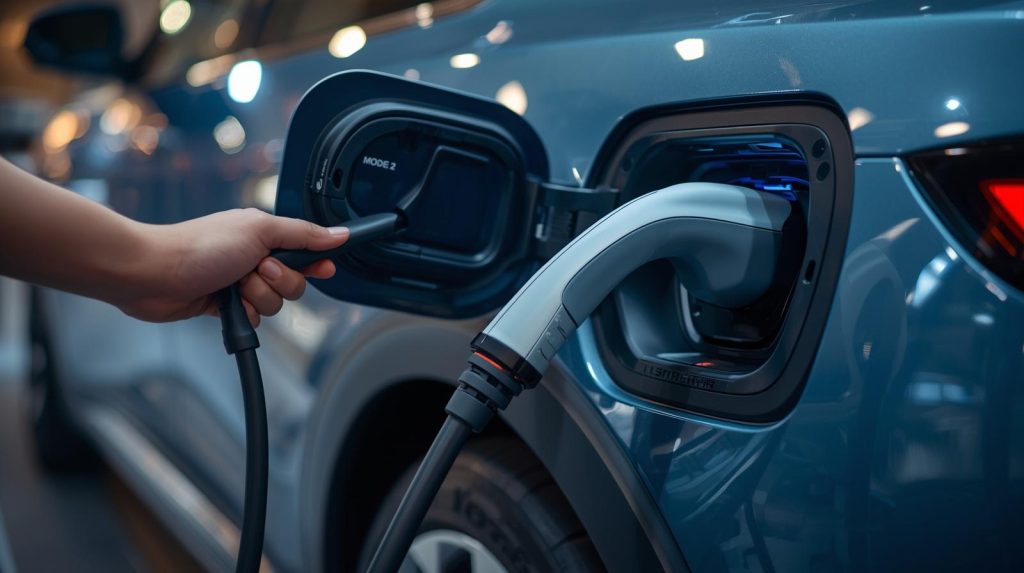
Mode 2 EV charging is ideal when:
- Charging overnight at home
- Traveling without access to wall chargers
- Needing a backup charging option
- Living in rented or temporary housing
Real-World Example of Mode 2 EV Charging
Imagine returning home after work and plugging your EV into a standard outlet using your Mode 2 cable. Overnight, the IC-CPD carefully manages power flow, and by morning your car is sufficiently charged—without stressing your electrical system.
This real-world practicality explains why many EV owners rely on Mode 2 charging.
Conclusion: How Mode 2 EV Charging Works?
So, how mode 2 EV charging works?
It works by using a standard household power socket combined with a smart, protected charging cable that controls power delivery, communicates with the vehicle, and ensures safe charging at all times.
While it may not be the fastest option, Mode 2 EV charging remains a reliable, affordable, and practical solution for many EV owners.
Frequently Asked Questions (FAQs)
1. How mode 2 EV charging works?
Mode 2 EV charging works by supplying electricity from a standard household socket through a portable charging cable that includes an in-cable control and protection device to manage power safely.
2. Is Mode 2 EV charging safe for regular use?
Yes, Mode 2 EV charging is safe for regular use because the built-in control device protects against overheating, overcurrent, and electrical faults during charging.
3. How long does Mode 2 EV charging take?
Mode 2 EV charging usually takes between 8 and 24 hours, depending on the vehicle’s battery size, the power output, and the condition of the electrical socket.
4. Can I use Mode 2 EV charging at home?
Yes, Mode 2 EV charging is commonly used at home since it does not require a dedicated wall charger and works with standard household power outlets.
5. What equipment is needed for Mode 2 EV charging?
You only need a Mode 2 charging cable with an in-cable control and protection device and access to a properly grounded household power socket.
6. How is Mode 2 EV charging different from Mode 1 charging?
Unlike Mode 1 charging, Mode 2 EV charging includes built-in safety and communication features that significantly reduce electrical risks.
7. Is Mode 2 EV charging suitable for daily charging?
Mode 2 EV charging is suitable for light daily driving and overnight charging, but drivers with long daily commutes may prefer faster Mode 3 charging.
8. Can Mode 2 EV charging damage household wiring?
When used with a properly installed and grounded socket, Mode 2 EV charging is safe; however, older wiring should be checked before frequent use.