

The automotive industry is undergoing a once-in-a-century shift, and Electric Vehicles (EVs) are at the center of it. As governments, automakers, and consumers push for sustainability, EVs are quickly becoming more than just an alternative—they’re shaping the future of transportation.
This in-depth guide explores what lies ahead for electric cars, from technological breakthroughs and market growth to environmental impacts and global adoption trends.
Why Electric Vehicles Represent the Future
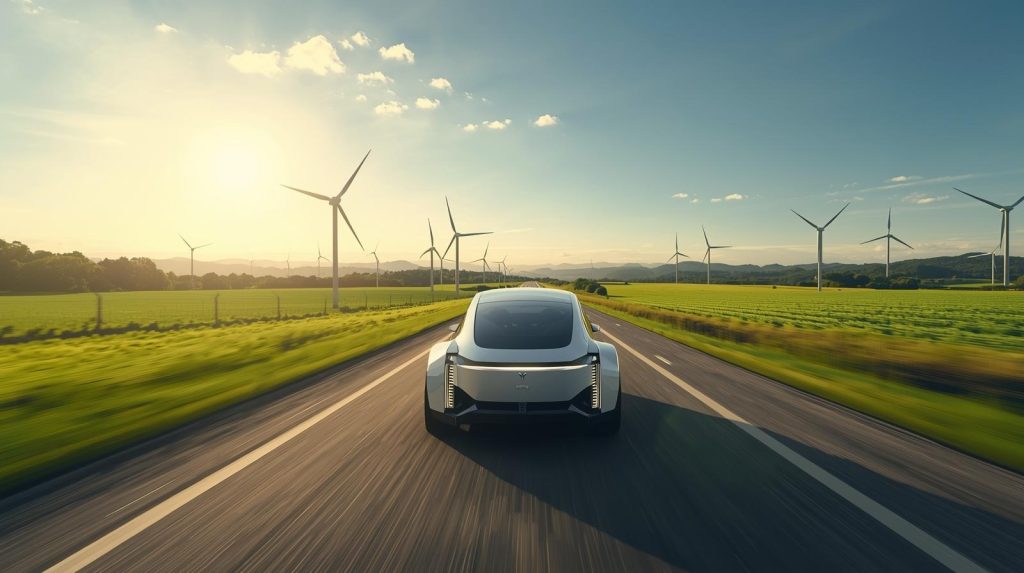
Electric vehicles are not simply another type of car—they’re a response to global challenges. Climate change, rising oil prices, and stricter emissions regulations make it clear that internal combustion engine (ICE) vehicles cannot dominate forever.
Key reasons EVs are the future of Electric Vehicles:
- Environmental Necessity: With transportation accounting for over 20% of global CO₂ emissions, EVs help cut pollution.
- Consumer Demand: Buyers increasingly want sustainable, tech-forward cars.
- Government Pressure: Countries are setting deadlines to ban new gas-powered cars (e.g., UK by 2035, EU by 2035, California by 2035).
- Automaker Transition: Major brands like General Motors, Ford, Mercedes-Benz, and Volkswagen have pledged all-electric lineups within the next two decades.
In short, EVs aren’t optional—they’re inevitable.
Technological Innovations Shaping the future of Electric Vehicles
Technology is at the core of the EV revolution. The next two decades will see dramatic changes in how electric cars are designed, powered, and connected.
Battery Technology
- Solid-State Batteries: These promise 2x the energy density of current lithium-ion cells, making EVs lighter, safer, and faster to charge. Toyota and Samsung are leading the charge in this research.
- Ultra-Fast Charging: Charging an EV could soon take 5–10 minutes, similar to refueling a gas car. Tesla’s V4 Superchargers and Ionity’s network in Europe are early examples.
- Longer Range: Future EVs may drive 600–800 miles on a single charge, eliminating range anxiety.
Autonomous Driving Integration
EVs and self-driving technology are evolving together. Autonomous EVs will:
- Reduce accidents caused by human error.
- Enable ride-hailing fleets without drivers.
- Integrate with smart cities for traffic efficiency.
Tesla’s Autopilot, Waymo, and Mercedes-Benz’s Drive Pilot are early steps toward this vision.
Vehicle-to-Grid (V2G) Technology
V2G will turn EVs into mobile energy storage units. For example:
- Your EV can store solar energy during the day.
- At night, it can supply electricity back to your home or the grid.
This innovation makes EVs not just vehicles but energy solutions.
Lightweight Materials & Efficiency
Future EVs will use aluminum, carbon composites, and even recycled plastics to reduce weight. This improves performance, extends range, and lowers energy use per mile.
Charging Infrastructure: The Backbone of EV Adoption
Charging infrastructure plays a crucial role in the widespread adoption of electric vehicles (EVs). A strong and accessible charging network ensures that EV drivers can conveniently recharge their vehicles at home, work, or on the go, reducing range anxiety and boosting confidence in electric mobility. Governments and private companies are rapidly expanding public charging stations, including fast and ultra-fast chargers, across cities and highways. The complete guide to EV charging in the US highlights how this growing network supports the transition to clean transportation. As the infrastructure continues to expand, the shift toward electric mobility becomes easier, more practical, and truly the backbone of EV adoption, powering the future of sustainable travel.
For EVs to dominate, charging must become as convenient as gas stations.
Expansion of Charging Stations
Governments and companies are investing billions:
- The U.S. plans to install 500,000 public chargers by 2030.
- Europe already has over 600,000 chargers and is expanding rapidly.
- China leads globally, with millions of chargers installed in cities and highways.
Wireless & Smart Charging
- Wireless Charging: Imagine parking your car on a pad and it charges automatically—already being tested in South Korea and Norway.
- Smart Charging: AI will optimize charging times to reduce energy costs and avoid grid overloads.
Renewable-Powered Charging
As more stations run on solar and wind power, EVs will move closer to being 100% carbon neutral.
Environmental Impact and Sustainability
One of the strongest reasons for EV adoption is sustainability.
Reduced Carbon Emissions
Studies show EVs produce 40–60% fewer lifetime emissions compared to gas cars. Even in countries where electricity grids use fossil fuels, EVs are still cleaner.
Improved Air Quality
Cities like Oslo (Norway) and Amsterdam (Netherlands), where EV adoption is high, report significantly cleaner air and reduced noise pollution.
Recycling and Circular Economy
Future EVs will:
- Use second-life applications for batteries (e.g., storing solar energy for homes).
- Be manufactured in carbon-neutral factories (Volvo and Polestar are leading here).
- Shift toward 100% recyclable vehicle parts.
Global Market Growth of Electric Vehicles
The global market growth of electric vehicles (EVs) is accelerating rapidly as demand for sustainable transportation rises. Governments worldwide are promoting EV adoption through incentives, stricter emission regulations, and improved charging infrastructure. Major automakers are investing heavily in electric technology, leading to more affordable and efficient models. The benefits of electric cars, such as zero emissions, lower running costs, and reduced dependence on fossil fuels, are key drivers of this growth. With advancements in battery capacity and renewable energy integration, the EV market is projected to dominate the automotive industry in the coming years, marking a shift toward a cleaner, greener, and more energy-efficient future in global mobility.
The EV market is one of the fastest-growing industries in the world.
Current Trends
- In 2024, global EV sales surpassed 14 million units, a 35% increase from 2023.
- China controls over 50% of the EV market, followed by Europe and the U.S.
- Affordable EVs like BYD’s Dolphin are driving mass adoption in Asia.
Predictions for 2030–2050
- By 2030, half of all cars sold may be electric.
- By 2040, EVs could make up 90% of new sales.
- By 2050, almost every car on the road will likely be electric.
This growth will reshape industries from oil and gas to automotive and energy.
Economic and Social Benefits of EVs
Cost Savings for Consumers
EVs save money long-term through:
- 40–70% cheaper “fuel” (electricity vs. gasoline).
- Fewer maintenance needs (no oil changes, fewer parts).
Job Creation
The EV industry is creating millions of jobs in battery factories, renewable energy, and infrastructure. Tesla’s Gigafactories and Europe’s battery hubs are prime examples.
Energy Independence
Countries can rely less on imported oil by using locally produced renewable energy to power EVs. This reduces geopolitical risks and strengthens national security.
Challenges Facing the Future of EVs
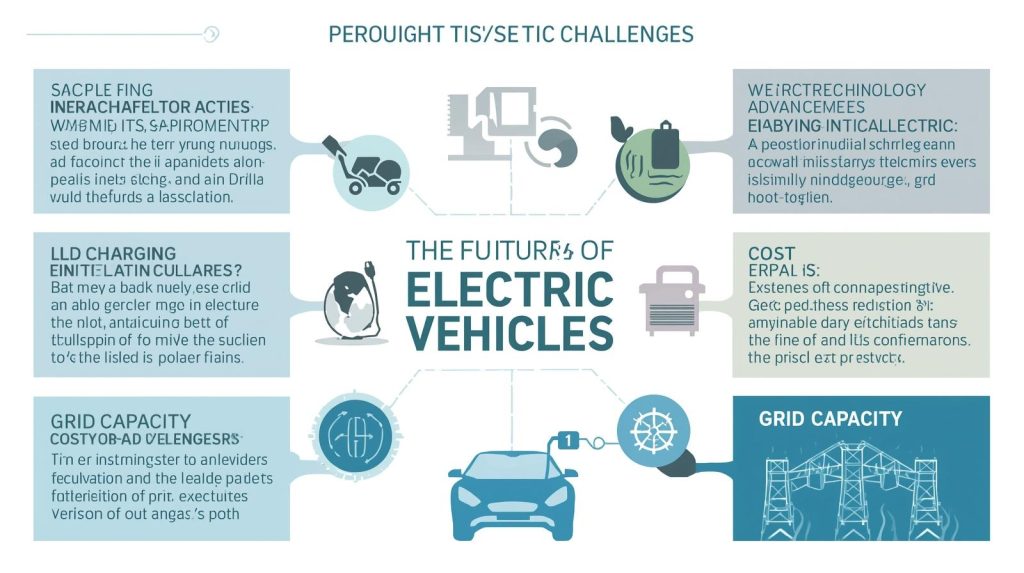
Even with rapid progress, EVs face hurdles.
Battery Production and Recycling
Mining lithium, cobalt, and nickel raises ethical and environmental concerns. The future depends on:
- Recycling technologies.
- Alternative battery chemistries (like sodium-ion).
Charging Infrastructure Gaps
Urban centers are covered, but rural areas and developing countries still lack access. Expanding infrastructure globally is a challenge.
High Initial Costs
While EV prices are falling, many buyers still see them as expensive. More affordable models are needed.
Consumer Awareness and Trust
Some people worry about range anxiety, charging speed, and battery life. Education and better technology are solving this slowly.
Future Predictions for Electric Vehicles
EVs as Mainstream Vehicles
By the 2030s, EVs will be the default car purchase, not the alternative.
Smart Cities and EV Integration
In smart cities, EVs will:
- Communicate with traffic systems.
- Optimize routes to reduce congestion.
- Charge using dynamic pricing models.
Shared Mobility & EV Fleets
Uber, Lyft, and logistics companies are transitioning to all-electric fleets, reducing urban emissions.
Beyond Cars: Electric Mobility
The EV future extends to:
- Electric buses and trucks for public transport and shipping.
- Electric bikes and scooters for last-mile commuting.
- Electric airplanes for short-haul flights.
FAQs: The Future of Electric Vehicles
Q1. Will electric cars replace gas cars completely?
Yes, by 2040–2050, most new sales will be EVs, and gas cars will phase out.
Q2. Are EVs eco-friendly even if the grid uses fossil fuels?
Yes. EVs still emit less CO₂ over their lifetime compared to ICE cars.
Q3. How fast will future EVs charge?
Ultra-fast chargers will reduce charging times to under 10 minutes.
Q4. Will EVs become cheaper?
Yes. Falling battery costs will make EVs as cheap as or cheaper than gas cars by 2030.
Q5. What’s the biggest challenge?
Expanding global charging networks and reducing battery production’s environmental footprint.
10. Final Thoughts
The future of electric vehicles is unstoppable. With technological breakthroughs, global adoption, and strong government support, EVs will transform how we drive, live, and interact with energy.
They’re not just cars—they’re part of a bigger sustainable ecosystem. By adopting EVs, we move closer to a world that’s cleaner, smarter, and more energy-independent.
The road ahead is clear: the future is electric.