

Why EV Charging Matters in the U.S.
The rise of Electric Vehicles (EVs) in the U.S. is more than a trend—it’s a revolution. According to the Department of Energy, EV sales grew by over 60% between 2022 and 2024, and as of 2025, more than 4 million EVs are on U.S. roads. With this surge, charging availability and accessibility have become the top concern for drivers considering the switch.
Unlike gasoline cars, which can refuel in just a few minutes at millions of gas stations, EVs rely on a growing but uneven charging network. Charging matters because it impacts:
- Convenience – Drivers need chargers at home, work, and public locations.
- Travel freedom – Availability of fast chargers determines whether long trips are practical.
- Cost savings – Charging at home can be 3–4 times cheaper than filling up a gas tank.
- Sustainability – Charging with renewable energy sources reduces the carbon footprint of EVs.
In short, charging infrastructure is the backbone of EV adoption in the U.S. Without it, the transition to clean mobility would stall.
Types of EV Charging in the U.S.
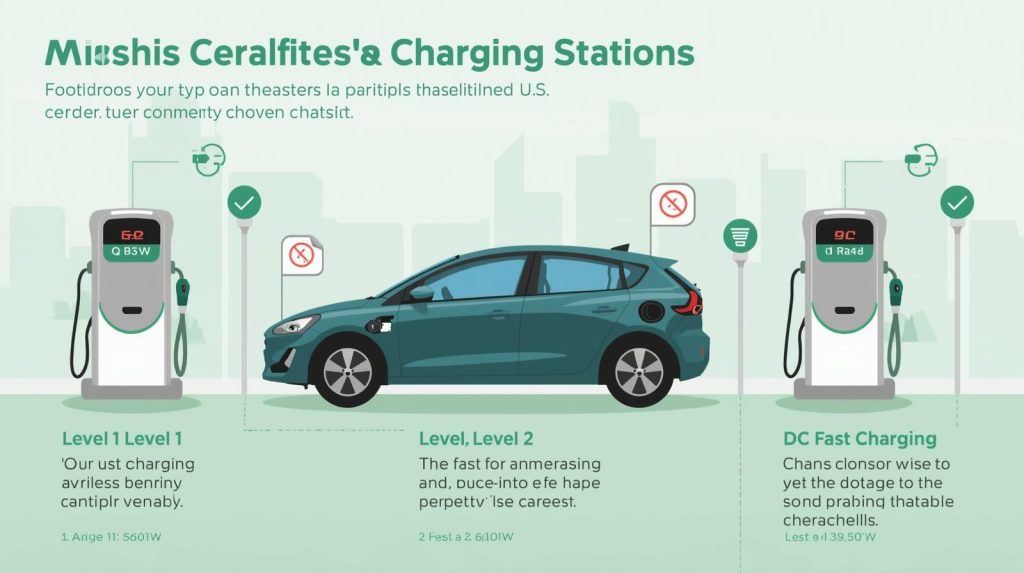
Not all chargers are created equal. The charging level determines how fast an EV gains range.
Level 1 Charging (Standard Outlet Charging)
- Uses a 120-volt household outlet.
- Adds 2–5 miles of range per hour.
- Suitable for plug-in hybrid electric vehicles (PHEVs) or drivers with low daily mileage.
- Pros: No installation cost (comes with most EVs).
- Cons: Extremely slow—takes 20–40 hours for a full EV battery.
Example: A commuter who drives 20 miles daily can easily recharge overnight with Level 1 at home.
Level 2 Charging (Faster Residential & Public Charging)
- Uses a 240-volt outlet (like one used for dryers or ovens).
- Adds 10–60 miles of range per hour.
- The most common charging type for home installation and public locations (workplaces, malls, hotels).
- Costs $500–$2,000 for installation at home, depending on wiring.
- Ideal for daily charging, providing a full charge in 4–10 hours.
Example: A Tesla Model 3 can go from 0–100% overnight using Level 2 at home, making it highly practical.
DC Fast Charging (Public High-Speed Charging)
- Uses direct current (DC) and bypasses the car’s onboard charger.
- Adds 100–250 miles of range in 20–45 minutes depending on the vehicle’s battery capacity.
- Found along highways, city centers, and travel routes.
- Common networks: Tesla Superchargers, Electrify America, EVgo, ChargePoint.
- Costs more than Level 2 but is essential for long-distance travel.
Example: A road trip from Los Angeles to San Francisco can be completed with just two 30-minute DC fast-charging stops.
EV Charging Networks in the U.S.
Multiple private and public companies operate charging stations, making it important to understand which networks dominate.
- Tesla Superchargers: Over 20,000 fast chargers nationwide, now opening to non-Tesla EVs. Known for reliability and speed.
- Electrify America: Backed by Volkswagen, with 4,000+ DC fast chargers along highways. Compatible with nearly all EVs.
- EVgo: Focused on urban charging hubs. Uses 100% renewable energy.
- ChargePoint: The largest U.S. Level 2 network, popular at workplaces, apartments, and retail locations.
- Rivian Adventure Network: Expanding in outdoor travel destinations, targeting adventure-focused EV drivers.
Each network has apps, memberships, and pricing models, so drivers often mix and match depending on travel needs.
Cost of EV Charging in the U.S.
Understanding costs helps drivers plan effectively.
Home Charging Costs
- Average U.S. electricity price: $0.15 per kWh.
- A 60 kWh battery (250 miles of range) costs about $9.00 to fully charge.
- Equivalent gas car: $35–$45 for the same distance.
- Overnight charging often uses off-peak rates, making it even cheaper.
Public Level 2 Charging Costs
- Many are free (especially workplace or shopping mall chargers).
- Paid stations cost $0.20–$0.30 per kWh, averaging $5–$10 per session.
- DC Fast Charging Costs
- Higher costs: $0.30–$0.60 per kWh.
- A full charge may cost $20–$30, but still less than a gas fill-up.
- Some networks offer subscriptions for cheaper rates.
Federal and State Incentives for EV Charging
The U.S. government and states are heavily investing in charging infrastructure.
Federal Support
- NEVI Program (National Electric Vehicle Infrastructure): $5 billion allocated for highway charging stations.
- IRS Tax Credit: Up to 30% of installation cost (max $1,000) for home EV chargers.
State-Level Incentives
- California: Rebates up to $2,000 for home charging installation.
- New York: Covers up to 50% of commercial charging station costs.
- Colorado, Oregon, and Massachusetts: Similar rebate programs for both homeowners and businesses.
Challenges Facing EV Charging in the U.S.
Despite progress, challenges remain:
- Infrastructure Gaps: Rural areas often lack charging stations.
- Grid Strain: Millions of EVs plugging in at peak hours can stress the electrical grid.
- Standardization Issues: Multiple plug types (CCS, CHAdeMO, NACS) complicate compatibility—though NACS is becoming the U.S. standard.
- Charging Time: Even fast charging takes longer than a gas refill.
- Charger Reliability: Broken or slow chargers frustrate EV drivers.
The Future of EV Charging in the U.S.
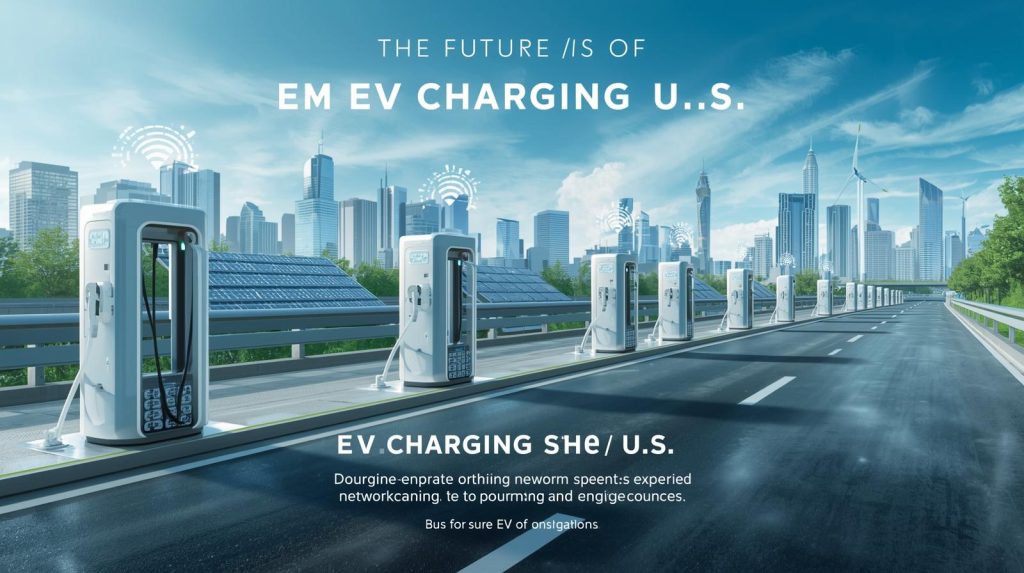
The future looks bright, with rapid innovations reshaping the charging landscape.
- Ultra-Fast Chargers (350 kW+): Expected to reduce charging time to under 10 minutes.
- Wireless Charging: Cities like Detroit and Atlanta are testing inductive charging roads, letting EVs charge while driving.
- Vehicle-to-Grid (V2G): EVs will act as mobile power banks, stabilizing the grid during peak hours.
- Renewable-Powered Charging: Solar and wind-powered stations will make EVs nearly carbon-neutral.
- Nationwide Coverage: The Department of Energy projects millions of public chargers by 2030, ending range anxiety.
EV Charging Etiquette in the U.S.
As the EV community grows, etiquette matters:
- Don’t occupy chargers if not charging.
- Move your car once charging is complete.
- Use fast chargers for travel only, not daily charging.
- Be considerate of others waiting for a charger.
These practices ensure fair use of the growing network.
FAQs About EV Charging in the U.S.
- Q1. How long does it take to charge?
Level 1: 24–48 hrs | Level 2: 4–10 hrs | Fast Charging: 20–45 min. - Q2. Cheapest way to charge?
Home charging is the cheapest, especially overnight with off-peak rates. - Q3. Can I install a charger at home?
Yes, if you have a 240V outlet. Rebates can reduce costs. - Q4. How many chargers are there?
Over 170,000 public chargers in the U.S. as of 2025. - Q5. Will all EVs use the same plug?
Yes, by 2025–2026, most automakers are adopting Tesla’s NACS standard.
Final Thoughts
The future of EV charging in the U.S. is set for massive growth. With federal funding, private investment, and rapid technological advances, EV charging will soon be as convenient as filling up at a gas station.
By 2030, we can expect millions of chargers, ultra-fast technology, and renewable integration, making EVs the practical choice for every American driver.
The road ahead is clear: EV charging will power a sustainable, cleaner, and more efficient transportation future.