
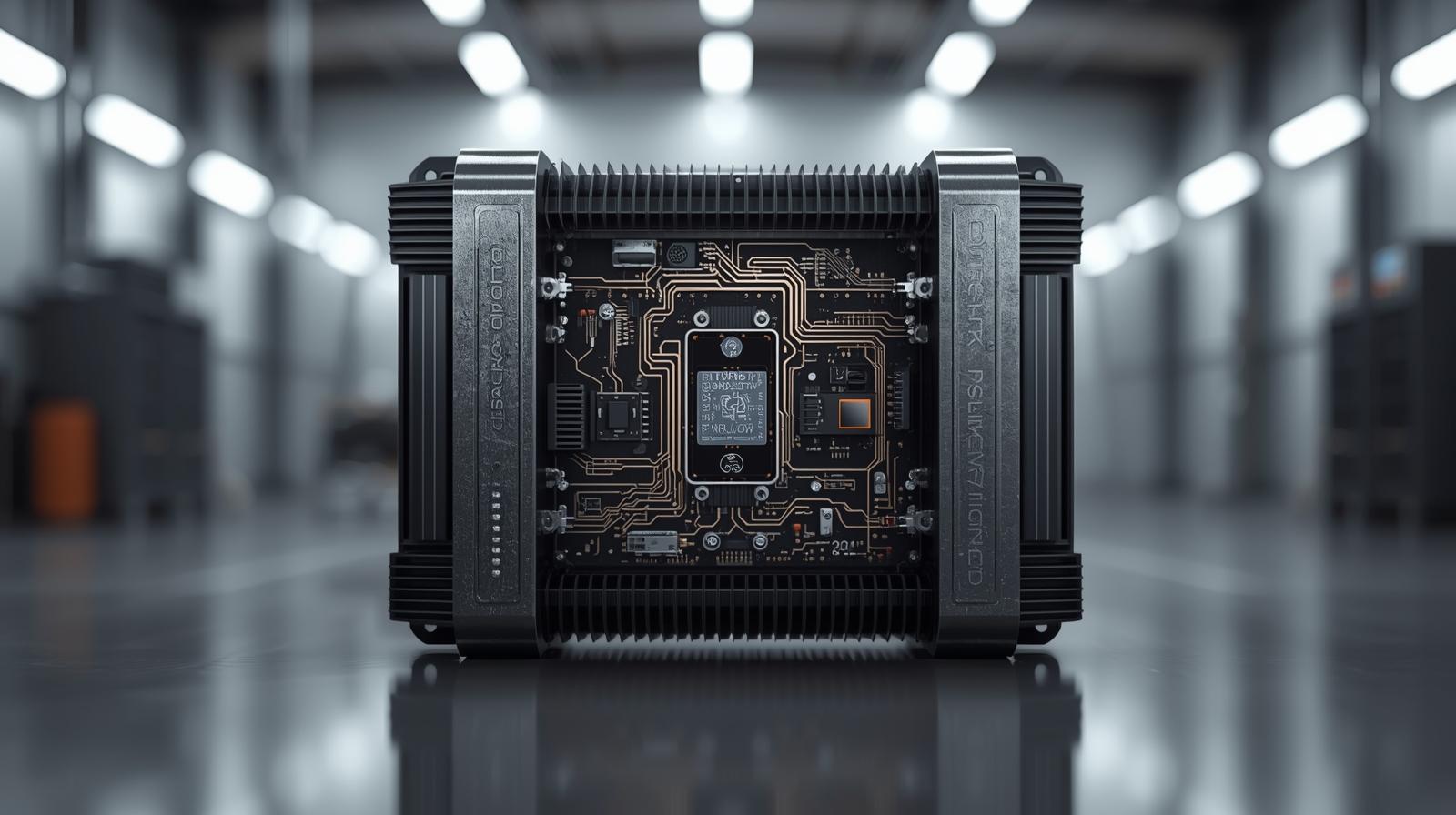
Electric vehicles (EVs) are transforming the global automotive industry by offering cleaner, more efficient, and technologically advanced transportation. While much attention is given to EV batteries, motors, and charging stations, one critical component often goes unnoticed—the DC to DC converter.
Understanding what is DC to DC converter in electric vehicle is essential to fully grasp how EVs operate safely and efficiently. This component plays a vital role in power management, vehicle electronics, and overall system reliability.
In this comprehensive guide, we will explain what is DC to DC converter in electric vehicle, how it works, why it is important, its key components, applications, advantages, limitations, and its future in electric mobility.
Introduction to Electric Vehicle Power Systems
Before diving into what is DC to DC converter in electric vehicle, it’s important to understand how power flows inside an EV.
An electric vehicle typically contains:
- A high-voltage traction battery (400V–800V)
- An electric motor for propulsion
- Power electronics (inverter, onboard charger)
- A low-voltage electrical system (12V or 48V)
While the high-voltage battery powers the motor, many vehicle systems—such as lighting, infotainment, safety sensors, and control units—still require low-voltage DC power. This is where the DC to DC converter becomes essential.
What Is DC to DC Converter in Electric Vehicle?
What is DC to DC converter in electric vehicle?
A DC to DC converter in an electric vehicle is an electronic device that converts high-voltage DC power from the main traction battery into lower-voltage DC power (typically 12V or 48V) to operate the vehicle’s auxiliary systems and charge the low-voltage battery.
In simple terms, it replaces the traditional alternator found in internal combustion engine (ICE) vehicles.
Why DC to DC Converter Is Essential in Electric Vehicles
A DC to DC converter plays a critical role in the operation of electric vehicles (EVs) by converting high-voltage power from the main traction battery into low-voltage electricity needed for onboard systems. This function explains why DC to DC converter is essential in electric vehicles, as most EV electronics—such as lighting, infotainment, safety sensors, and control units—operate on 12V or 48V power.
Understanding what is DC to DC converter in electric vehicle also means understanding why it is absolutely necessary.
Key Reasons:
- EVs do not have engines or alternators
- High-voltage batteries cannot directly power low-voltage electronics
- Sensitive electronics require stable, regulated voltage
- Safety systems must remain operational at all times
Without a DC to DC converter, an electric vehicle simply could not function.
How a DC to DC Converter Works in an Electric Vehicle
To fully understand what is DC to DC converter in electric vehicle, let’s explore how it works step by step.
Step 1: Power Input
The converter receives high-voltage DC power (400V–800V) from the traction battery.
Step 2: Voltage Conversion
Using high-frequency switching circuits, the converter steps down the voltage to 12V or 48V.
Step 3: Regulation and Control
Advanced control circuits regulate output voltage and current to ensure stable power delivery.
Step 4: Power Distribution
The converted low-voltage power:
- Supplies vehicle electronics
- Charges the auxiliary battery
Difference Between DC to DC Converter and DC to DC Charger
Many people confuse converters with chargers. Understanding this distinction is important when learning what is DC to DC converter in electric vehicle.
| Feature | DC to DC Converter | DC to DC Charger |
|---|---|---|
| Primary Function | Voltage conversion | Battery charging |
| Charging Stages | No | Yes |
| Battery Management | Limited | Advanced |
| EV Usage | Power supply | Auxiliary charging (some cases) |
In EVs, the DC to DC converter primarily acts as a power supply, not a traditional charger.
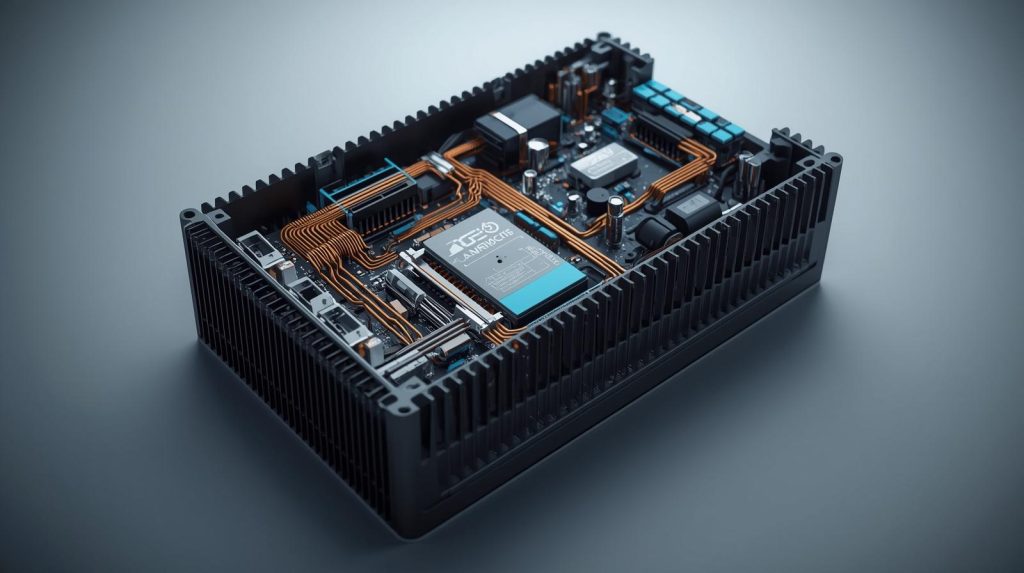
Key Components of a DC to DC Converter in Electric Vehicle
Understanding the internal structure helps clarify what is DC to DC converter in electric vehicle.
1. Input Power Stage
- Accepts high-voltage DC
- Filters noise and spikes
- Protects against surges
2. Switching Devices
- MOSFETs or IGBTs
- Enable high-frequency switching
- Improve efficiency
3. Inductors and Transformers
- Store and transfer energy
- Step voltage down
- Provide isolation (in some designs)
4. Control Unit
- Monitors voltage, current, temperature
- Adjusts switching frequency
- Ensures safe operation
5. Output Filtering Stage
- Removes voltage ripple
- Delivers clean, stable DC power
6. Protection Circuits
- Overvoltage protection
- Overcurrent protection
- Thermal shutdown
- Short-circuit protection
Voltage Levels Used in EV DC to DC Converters
To understand what is DC to DC converter in electric vehicle, it’s important to know typical voltage levels.
Common Input Voltages:
- 350V
- 400V
- 800V
Common Output Voltages:
- 12V (most EVs)
- 48V (modern advanced architectures)
The converter ensures smooth interaction between these voltage domains.
Role of DC to DC Converter in EV Auxiliary Systems
The DC to DC converter powers nearly every non-propulsion system in an EV.
Systems Powered Include:
- Headlights and interior lighting
- Infotainment systems
- Power steering
- Brake controllers
- Air conditioning control units
- Safety sensors (ADAS)
- ECU modules
This highlights the importance of understanding what is DC to DC converter in electric vehicle for vehicle reliability.
Safety Role of DC to DC Converter in Electric Vehicles
Safety is a major reason why DC to DC converters are critical.
Safety Contributions:
- Electrical isolation (in isolated designs)
- Stable voltage for safety electronics
- Emergency power for braking and steering
- Protection during faults or crashes
Without a properly functioning DC to DC converter, critical safety systems could fail.
Efficiency of DC to DC Converters in EVs
Modern EV DC to DC converters are highly efficient.
Typical Efficiency:
- 90% to 98%
High efficiency:
- Reduces energy loss
- Minimizes heat generation
- Extends driving range
Efficiency is a key performance metric when evaluating what is DC to DC converter in electric vehicle.
Thermal Management in EV DC to DC Converters
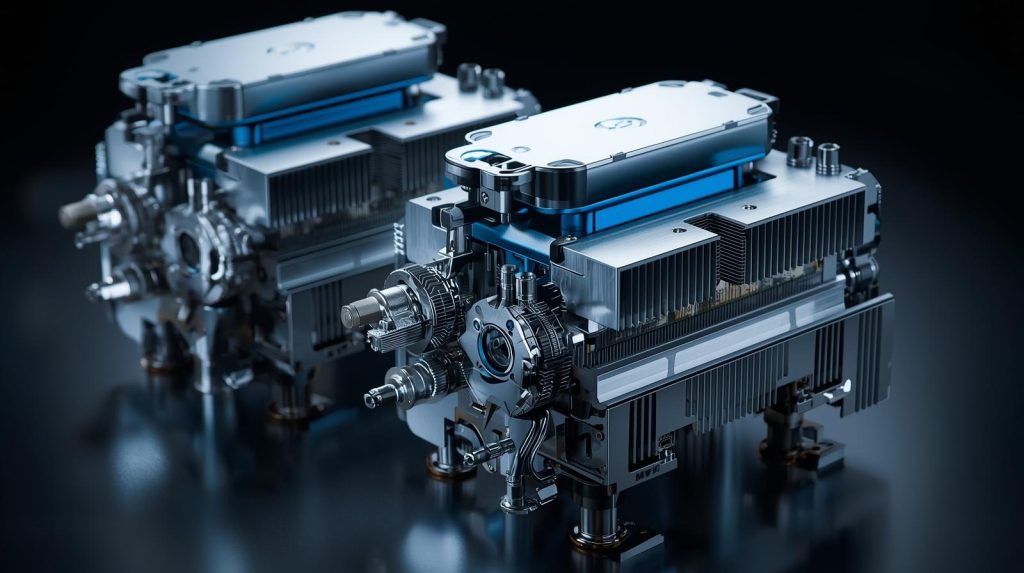
High power levels generate heat. Proper thermal management is essential.
Cooling Methods:
- Heat sinks
- Liquid cooling (in high-power EVs)
- Intelligent power derating
Effective cooling ensures long-term reliability.
Advantages of DC to DC Converter in Electric Vehicle
Understanding what is DC to DC converter in electric vehicle also involves recognizing its benefits.
Key Advantages:
- Replaces alternator
- Improves energy efficiency
- Supports modern electronics
- Enhances vehicle safety
- Reduces mechanical complexity
- Enables advanced EV architectures
Limitations and Challenges
Despite their advantages, DC to DC converters have limitations.
Challenges Include:
- High development cost
- Complex design
- Thermal management requirements
- EMI (electromagnetic interference) control
However, ongoing innovation continues to reduce these challenges.
DC to DC Converter vs Alternator: EV vs ICE Vehicles
| Feature | DC to DC Converter (EV) | Alternator (ICE) |
|---|---|---|
| Power Source | Battery | Engine |
| Efficiency | High | Lower |
| Mechanical Parts | None | Many |
| Maintenance | Low | Higher |
| Emissions | Zero | Indirect |
This comparison further clarifies what is DC to DC converter in electric vehicle.
Types of DC to DC Converters Used in EVs
1. Isolated DC to DC Converters
- Improved safety
- Reduced noise
- Common in high-end EVs
2. Non-Isolated DC to DC Converters
- Compact and efficient
- Lower cost
- Used in less demanding applications
3. Bidirectional DC to DC Converters
- Allow power flow both ways
- Support regenerative braking
- Enable vehicle-to-load (V2L) and vehicle-to-grid (V2G)
Role in Advanced EV Features
Modern EV features rely heavily on DC to DC converters.
Examples:
- Autonomous driving systems
- Advanced driver assistance systems (ADAS)
- Smart energy management
- Vehicle-to-everything (V2X) technology
These innovations would not be possible without efficient DC to DC conversion.
Future of DC to DC Converters in Electric Vehicles
The future of what is DC to DC converter in electric vehicle is closely tied to EV innovation.
Emerging Trends:
- Higher voltage systems (1000V+)
- Silicon carbide (SiC) and gallium nitride (GaN) semiconductors
- Smaller, lighter converters
- Higher efficiency and power density
- Integration with battery management systems
These advancements will further enhance EV performance and reliability.
Conclusion: What Is DC to DC Converter in Electric Vehicle and Why It Matters
So, what is DC to DC converter in electric vehicle?
It is the backbone of EV power management, enabling high-voltage batteries to safely and efficiently power low-voltage systems. From lighting and infotainment to safety electronics and control units, the DC to DC converter ensures that every part of the vehicle functions reliably.
As electric vehicles become more advanced, the importance of DC to DC converters will continue to grow. Understanding this technology is essential for engineers, EV enthusiasts, and anyone interested in the future of clean transportation.
Frequently Asked Questions (FAQs)
1. What is DC to DC converter in electric vehicle?
A DC to DC converter in an electric vehicle converts high-voltage power from the traction battery into low-voltage DC power to run vehicle electronics and charge the auxiliary battery.
2. Why is a DC to DC converter important in electric vehicles?
A DC to DC converter is important because EVs do not have alternators, and low-voltage systems require stable, regulated power for safe operation.
3. How does a DC to DC converter work in an electric vehicle?
It receives high-voltage DC from the main battery, steps it down using switching circuits, regulates output voltage, and supplies power to 12V or 48V systems.
4. What voltage does a DC to DC converter use in EVs?
Most EV DC to DC converters convert 400V–800V battery power into 12V or 48V for auxiliary systems.
5. What systems are powered by a DC to DC converter in an EV?
It powers lighting, infotainment, braking systems, power steering, sensors, control units, and safety electronics.
6. Is a DC to DC converter the same as an alternator?
No, a DC to DC converter replaces the alternator in EVs by supplying low-voltage power without mechanical parts.
7. Are DC to DC converters used to charge EV batteries?
No, DC to DC converters mainly supply power to low-voltage systems, while EV batteries are charged using onboard or external chargers.
8. What are the main components of a DC to DC converter in EVs?
Key components include switching devices, inductors or transformers, control circuits, filters, sensors, and protection systems.
9. Is the DC to DC converter in an EV safe?
Yes, EV DC to DC converters include safety features such as electrical isolation, overcurrent protection, thermal shutdown, and short-circuit protection.
10. Will future EVs still use DC to DC converters?
Yes, future EVs will continue to rely on DC to DC converters, with improvements in efficiency, power density, and bidirectional capabilities.