
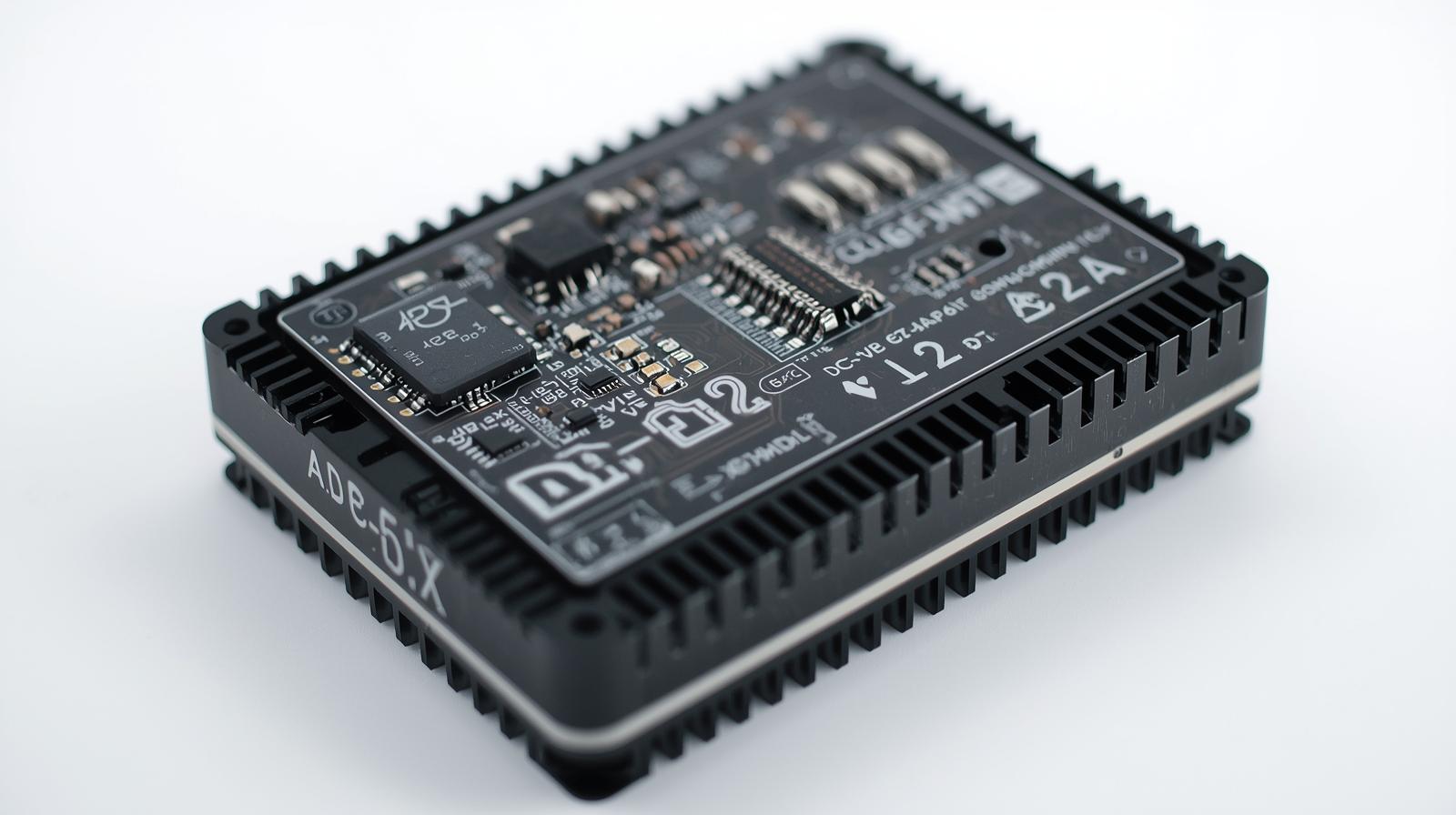
Electric vehicles (EVs) are often described as simpler than internal combustion engine vehicles, yet beneath the smooth and silent driving experience lies an advanced network of power electronics. Among these components, the DC to DC converter plays a vital but often overlooked role. Understanding how a DC to DC converter works in an EV is essential for anyone interested in electric vehicle technology, energy efficiency, and modern automotive design.
Unlike conventional cars that rely on alternators, EVs must manage electrical power using sophisticated electronic systems. A DC to DC converter ensures that energy from the high-voltage battery is safely and efficiently distributed to low-voltage systems. Without it, an electric vehicle simply cannot operate reliably.
This in-depth guide explains how a DC to DC converter works in an EV, covering its purpose, working principle, internal components, operating modes, safety mechanisms, efficiency factors, and future developments.
Understanding Electrical Architecture in Electric Vehicles
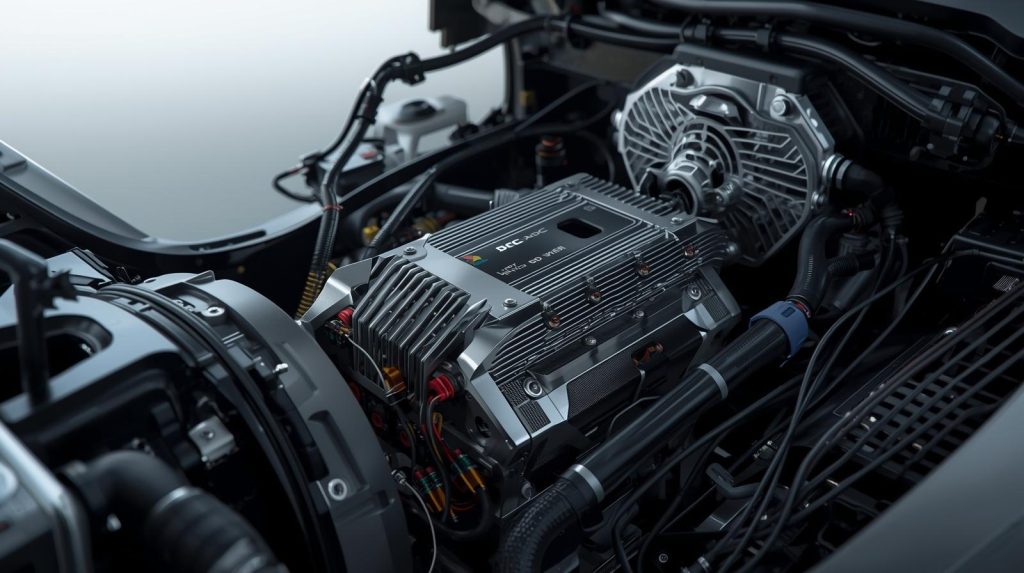
To fully grasp how a DC to DC converter works in an EV, it is important to understand the electrical architecture of electric vehicles.
High-Voltage and Low-Voltage Systems in EVs
Electric vehicles operate with two primary voltage levels:
- High-voltage system (300V–800V+)
- Traction battery
- Electric motor
- Inverter
- DC fast charging
- Low-voltage system (12V or 48V)
- Lights
- Infotainment
- Power steering electronics
- Safety systems
- Sensors and ECUs
These systems cannot directly share power, which is why DC to DC conversion is essential.
What Is a DC to DC Converter in an EV?
A DC to DC converter is a power electronic device that converts one DC voltage level into another DC voltage level. In electric vehicles, it typically converts high-voltage DC from the traction battery into low-voltage DC used by auxiliary systems.
Understanding how a DC to DC converter works in an EV reveals how EVs replace traditional alternators with a far more efficient and intelligent solution.
Why a DC to DC Converter Is Essential in an EV
A DC to DC converter performs multiple critical functions:
- Supplies power to low-voltage systems
- Charges the 12V auxiliary battery
- Maintains voltage stability
- Protects sensitive electronics
- Improves energy efficiency
Without understanding how a DC to DC converter works in an EV, it is impossible to fully understand EV reliability and safety.
Basic Working Principle: How a DC to DC Converter Works in an EV
At its core, how a DC to DC converter works in an EV involves controlled electronic switching, energy storage, and voltage regulation.
Step-by-Step Overview
- High-voltage DC input from the traction battery enters the converter
- Power semiconductor switches rapidly turn on and off
- Energy is stored and released using inductors and capacitors
- Voltage is stepped down to the required level
- Output is regulated for stable low-voltage supply
This process occurs thousands of times per second.
Key Internal Components of a DC to DC Converter
Understanding how a DC to DC converter works in an EV requires knowing its main components.
Power Switches
- MOSFETs or IGBTs
- Increasingly SiC or GaN devices
- Control voltage and current flow
Inductors
- Store energy temporarily
- Smooth current flow
Capacitors
- Filter voltage ripple
- Stabilize output voltage
Transformer (in Isolated Converters)
- Provides electrical isolation
- Improves safety
Control Unit
- Regulates output voltage
- Adjusts switching frequency
- Manages protection functions
Types of DC to DC Converters Used in EVs
While this article focuses on how a DC to DC converter works in an EV, understanding converter types adds clarity.
Buck (Step-Down) Converter
- Most common in EVs
- Reduces high voltage to low voltage
Boost Converter
- Increases voltage when required
Buck-Boost Converter
- Can step voltage up or down
Isolated Converter
- Provides electrical separation
Bidirectional Converter
- Enables energy flow in both directions
Detailed Working of a Buck DC to DC Converter in an EV
The buck converter is the most widely used example when explaining how a DC to DC converter works in an EV.
Operating Stages
Switch ON Phase
- High-voltage input connects to inductor
- Energy is stored in the magnetic field
Switch OFF Phase
- Inductor releases stored energy
- Energy flows to output capacitor and load
By adjusting the duty cycle, the converter controls output voltage.
Role of PWM Control in DC to DC Conversion
Pulse Width Modulation (PWM) is central to how a DC to DC converter works in an EV.
- Controls how long switches remain ON
- Regulates voltage output
- Improves efficiency
Advanced EV converters use digital PWM controllers for precision.
How DC to DC Converter Manages the 12V Battery
One of the most important functions of how a DC to DC converter works in an EV is maintaining the auxiliary battery.
Key Functions
- Charges the 12V battery
- Prevents overcharging
- Ensures stable supply during vehicle startup
Unlike traditional vehicles, EVs do not use alternators.
Thermal Management and Efficiency
Efficiency is a critical factor in how a DC to DC converter works in an EV.
Heat Generation
- Switching losses
- Conduction losses
- Magnetic losses
Cooling Methods
- Passive heat sinks
- Liquid cooling
- Integration with EV thermal systems
Efficient converters extend driving range.
Bidirectional Operation: Advanced DC to DC Converters
Modern EVs increasingly use bidirectional converters.
How Bidirectional DC to DC Converter Works in an EV
- Allows energy flow from battery to load
- Allows energy flow back to battery
- Supports regenerative braking
- Enables V2G, V2L, and V2H
This represents the future of how a DC to DC converter works in an EV.
Future Trends in DC to DC Converters for EVs
The future of how a DC to DC converter works in an EV includes:
- 800V+ architectures
- Fully bidirectional systems
- Integrated power modules
- AI-based power management
Real-World Example: DC to DC Converter in a Modern EV
In a modern EV:
- High-voltage battery supplies ~400V
- DC to DC converter steps down to 12V
- Low-voltage systems operate seamlessly
- Auxiliary battery remains charged
This real-world application clearly demonstrates how a DC to DC converter works in an EV.
Conclusion
Understanding how a DC to DC converter works in an EV provides insight into the sophistication of modern electric vehicles. Though often invisible to drivers, this component ensures reliability, efficiency, safety, and performance.
As electric vehicles continue to evolve, DC to DC converters will become even more efficient, compact, and intelligent—cementing their role as one of the most critical components in electric mobility.
Frequently Asked Questions (FAQs)
1. How does a DC to DC converter work in an EV?
A DC to DC converter works in an EV by converting high-voltage DC power from the main traction battery into lower voltages such as 12V or 48V. It uses high-speed electronic switching, inductors, and capacitors to regulate voltage efficiently and safely.
2. Why is a DC to DC converter important in electric vehicles?
A DC to DC converter is important in electric vehicles because EVs do not use alternators. The converter powers low-voltage systems, charges the auxiliary battery, and ensures stable operation of safety and control electronics.
3. What voltage does a DC to DC converter step down in an EV?
In most electric vehicles, the DC to DC converter steps down high-voltage battery power (typically 400V or 800V) to 12V or 48V for auxiliary systems.
4. Does a DC to DC converter charge the 12V battery in an EV?
Yes, the DC to DC converter charges and maintains the 12V battery in an EV, ensuring reliable startup and continuous operation of low-voltage electronics.
5. Is a DC to DC converter always running in an EV?
The DC to DC converter operates whenever the vehicle is active or when low-voltage power is required. Its operation is managed by the vehicle’s power management system to optimize efficiency.
6. What types of DC to DC converters are used in EVs?
Electric vehicles use several types of DC to DC converters, including buck (step-down), boost, buck-boost, isolated, and bidirectional converters, depending on power and safety requirements.
7. How does a DC to DC converter improve EV efficiency?
A DC to DC converter improves EV efficiency by minimizing electrical losses, providing stable voltage, and reducing unnecessary energy consumption, which helps extend driving range.
8. Are DC to DC converters used in regenerative braking?
Yes, in advanced EVs, bidirectional DC to DC converters help manage energy flow during regenerative braking by safely directing recovered energy back to the battery.
9. What safety features are built into EV DC to DC converters?
DC to DC converters include safety features such as over-voltage protection, over-current protection, thermal shutdown, electrical isolation, and short-circuit protection.
10. Will DC to DC converters change in future electric vehicles?
Future DC to DC converters will support higher voltages, improved efficiency, bidirectional charging, wide-bandgap semiconductors, and smart energy management for next-generation EVs.