
Electric vehicles (EVs) rely on advanced power electronics to operate efficiently, safely, and reliably. While batteries and motors receive most of the attention, another critical component works silently behind the scenes—the DC to DC converter. Understanding the types of DC to DC converters used in EVs is essential for grasping how electric vehicles manage power distribution, protect sensitive electronics, and support modern features such as regenerative braking and bidirectional charging.
In an EV, multiple voltage levels coexist. High-voltage battery packs power the drivetrain, while low-voltage systems operate lighting, infotainment, safety electronics, and control units. Bridging these voltage domains efficiently requires different types of DC to DC converters used in EVs, each designed for specific functions, power levels, and safety requirements.
Understanding the Role of DC to DC Converters in Electric Vehicles
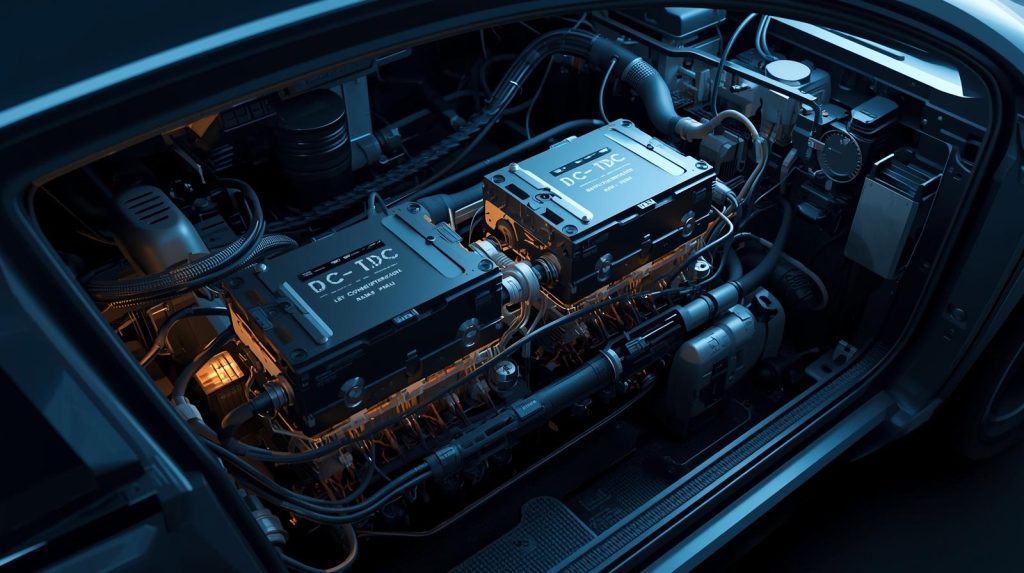
Before exploring the types of DC to DC converters used in EVs, it is important to understand why EVs need DC to DC conversion in the first place.
Dual-Voltage Architecture in EVs
Electric vehicles typically operate with two main voltage systems:
- High-voltage system (400V–800V)
Powers the traction motor, inverter, fast charging, and high-power auxiliaries. - Low-voltage system (12V or 48V)
Powers lighting, infotainment, sensors, ECUs, ADAS, braking electronics, and safety systems.
DC to DC converters ensure efficient and safe energy transfer between these voltage domains.
What Is a DC to DC Converter in an EV?
A DC to DC converter is an electronic power device that converts one DC voltage level to another. In electric vehicles, it typically converts high-voltage DC from the traction battery into lower DC voltages required by auxiliary systems.
Different use cases require different designs, which is why multiple types of DC to DC converters used in EVs exist.
Why Multiple Types of DC to DC Converters Are Used in EVs
EVs are complex systems with varying power demands. One single converter design cannot efficiently meet all requirements. Manufacturers select different converter types based on:
- Voltage levels
- Power capacity
- Isolation requirements
- Direction of power flow
- Efficiency targets
- Safety standards
This diversity explains the need for different types of DC to DC converters used in EVs.
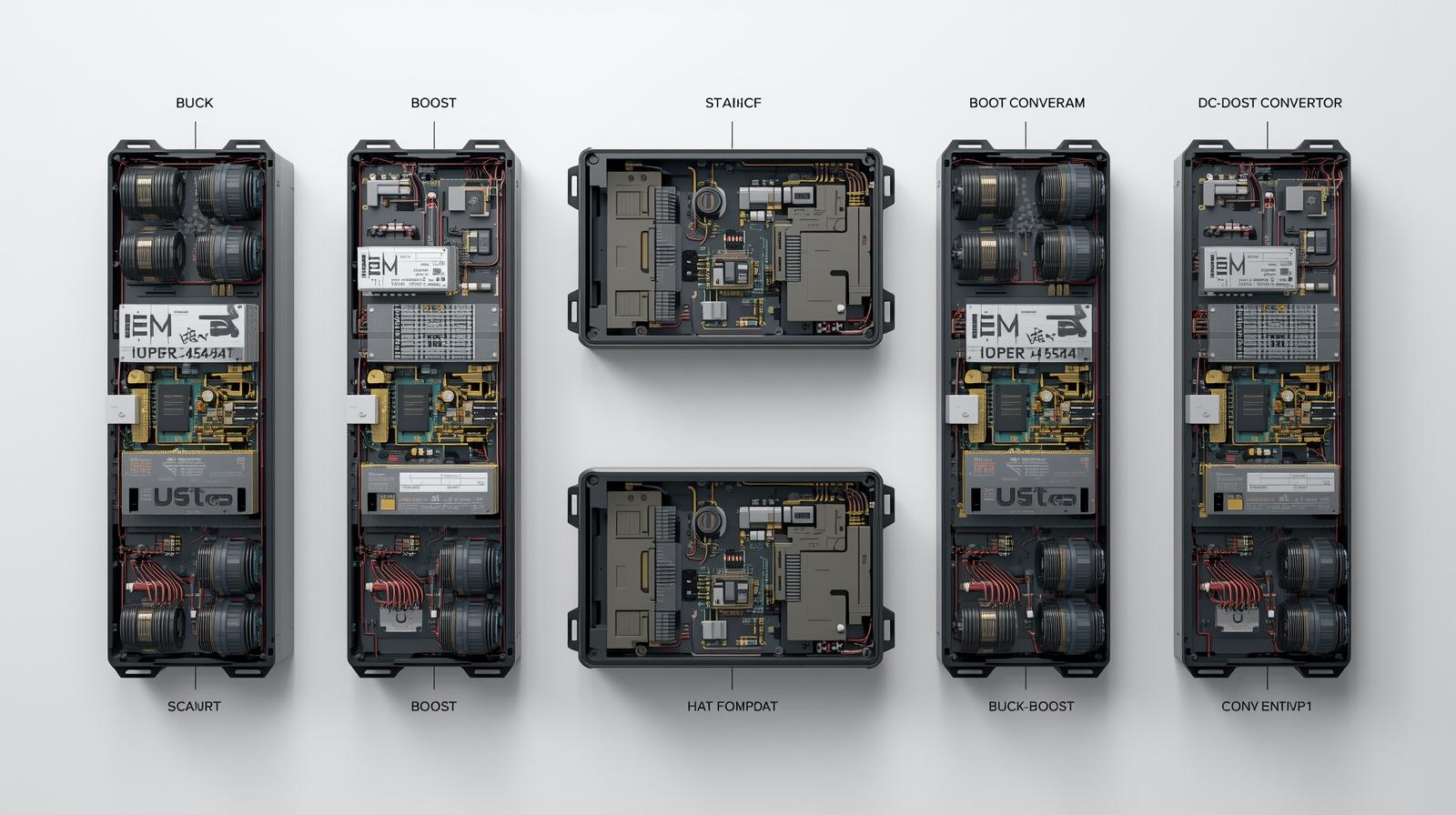
Main Types of DC to DC Converters Used in EVs
Buck (Step-Down) DC to DC Converters
Overview
Buck converters are one of the most common types of DC to DC converters used in EVs. They reduce a higher DC voltage to a lower DC voltage.
How Buck Converters Work
- Use high-speed switching components
- Store energy in inductors
- Deliver a regulated lower output voltage
Applications in EVs
- High-voltage battery (400V) → 12V systems
- Powering low-voltage electronics
- Charging the auxiliary battery
Advantages
- High efficiency
- Simple design
- Compact size
Buck converters are widely used in standard EV low-voltage power supply units.
Boost (Step-Up) DC to DC Converters
Overview
Boost converters increase a lower DC voltage to a higher DC voltage. Although less common than buck converters, they are still important types of DC to DC converters used in EVs.
How Boost Converters Work
- Store energy in inductors
- Release energy at a higher voltage level
Applications in EVs
- Supporting auxiliary systems requiring higher voltage
- Battery management systems
- Certain hybrid EV configurations
Advantages
- Efficient voltage boosting
- Useful for specialized subsystems
Buck-Boost DC to DC Converters
Overview
Buck-boost converters can both step voltage up and step it down, making them versatile types of DC to DC converters used in EVs.
How Buck-Boost Converters Work
- Adjust output voltage regardless of input variations
- Maintain stable voltage under changing conditions
Applications in EVs
- Systems with fluctuating battery voltage
- Energy management modules
- Certain auxiliary power units
Advantages
- Voltage flexibility
- Stable output under dynamic loads
Isolated DC to DC Converters
Overview
Isolated converters provide electrical isolation between input and output circuits. This makes them one of the most important types of DC to DC converters used in EVs from a safety perspective.
How Isolated Converters Work
- Use transformers to transfer energy
- Prevent direct electrical connection between circuits
Applications in EVs
- High-voltage to low-voltage conversion
- Safety-critical systems
- Compliance with automotive safety standards
Advantages
- Enhanced safety
- Protection from voltage spikes
- Improved fault tolerance
Non-Isolated DC to DC Converters
Overview
Non-isolated converters share a common ground between input and output. They are simpler and more compact types of DC to DC converters used in EVs.
Applications in EVs
- Low-power auxiliary systems
- Cost-sensitive designs
Advantages
- High efficiency
- Lower cost
- Smaller size
Bidirectional DC to DC Converters
Overview
Bidirectional converters allow energy to flow in both directions, making them advanced types of DC to DC converters used in EVs.
How Bidirectional Converters Work
- Control switching devices for two-way power flow
- Adjust voltage dynamically
Applications in EVs
- Regenerative braking
- Vehicle-to-Load (V2L)
- Vehicle-to-Grid (V2G)
- Vehicle-to-Home (V2H)
Advantages
- Energy recovery
- Smart grid integration
- Improved system efficiency
Dual-Active Bridge (DAB) DC to DC Converters
Overview
DAB converters are high-power isolated bidirectional converters and represent one of the most advanced types of DC to DC converters used in EVs.
Applications in EVs
- High-power energy transfer
- Fast charging systems
- Bidirectional grid interaction
Advantages
- High power density
- Excellent efficiency
- Suitable for high-voltage systems
Resonant DC to DC Converters
Overview
Resonant converters reduce switching losses and electromagnetic interference, making them premium types of DC to DC converters used in EVs.
Applications in EVs
- High-frequency power conversion
- Advanced EV architectures
Advantages
- Reduced heat generation
- High efficiency
- Lower EMI
Multi-Phase DC to DC Converters
Overview
Multi-phase converters distribute load across multiple phases for better performance.
Applications in EVs
- High-current low-voltage systems
- Advanced auxiliary power modules
Advantages
- Improved thermal management
- Higher reliability
- Reduced current ripple
Onboard Auxiliary DC to DC Converters
Overview
These converters are dedicated to powering auxiliary systems and are essential types of DC to DC converters used in EVs.
Applications
- Infotainment
- Lighting
- Climate control electronics
Comparison Table: Types of DC to DC Converters Used in EVs
| Converter Type | Voltage Control | Isolation | Bidirectional | Common Use |
|---|---|---|---|---|
| Buck | Step-down | No | No | Low-voltage systems |
| Boost | Step-up | No | No | Specialized systems |
| Buck-Boost | Both | No | No | Variable voltage |
| Isolated | Step-down | Yes | Optional | Safety-critical |
| Non-Isolated | Step-down | No | No | Cost-effective |
| Bidirectional | Both | Optional | Yes | V2G, V2L |
| DAB | Both | Yes | Yes | High-power EVs |
Role of Semiconductor Technology
Modern types of DC to DC converters used in EVs increasingly use:
- Silicon Carbide (SiC)
- Gallium Nitride (GaN)
These materials:
- Improve efficiency
- Reduce size
- Support higher switching frequencies
Safety and Compliance Considerations
DC to DC converters must comply with:
- ISO 26262 (functional safety)
- Automotive EMC standards
- Thermal and electrical safety regulations
This ensures reliability and passenger safety.
Advantages of Using Multiple Converter Types in EVs
Using different types of DC to DC converters used in EVs allows:
- Optimized power management
- Improved efficiency
- Enhanced safety
- Better system scalability
Challenges in DC to DC Converter Design
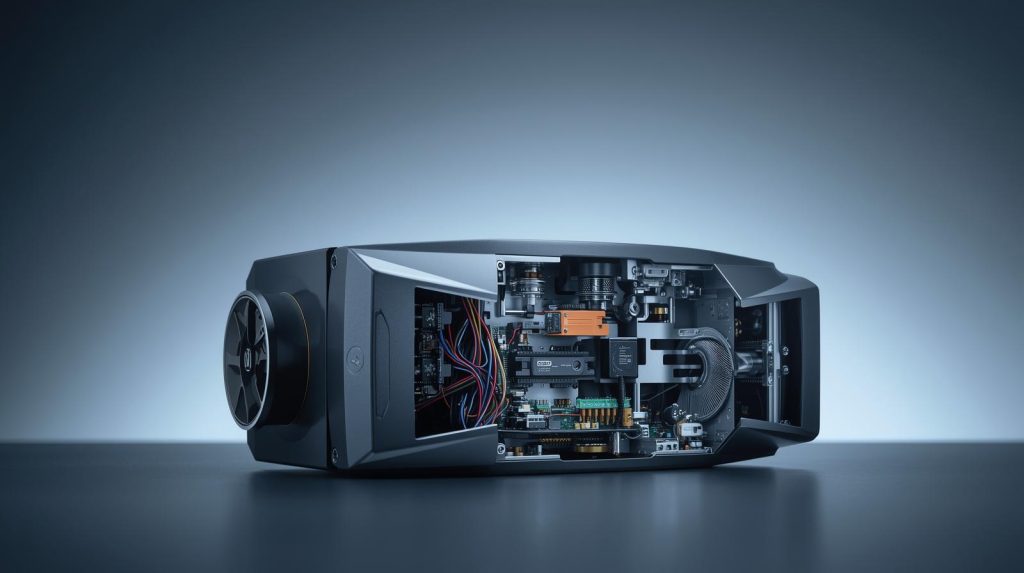
Despite their benefits, challenges include:
- Thermal management
- Cost optimization
- High-voltage isolation
- Complex control algorithms
Continuous innovation is addressing these challenges.
Future Trends in DC to DC Converters for EVs
The future of types of DC to DC converters used in EVs includes:
- Higher voltage support (800V+)
- Fully bidirectional architectures
- AI-based power control
- Greater integration with smart grids
Conclusion
DC to DC converters are the backbone of EV power electronics. Understanding the types of DC to DC converters used in EVs helps engineers, EV owners, and enthusiasts appreciate how electric vehicles manage energy so effectively.
As EV technology advances, these converters will become even more efficient, compact, and intelligent—continuing to play a central role in the global shift toward electric mobility.
Frequently Asked Questions (FAQs)
1. What are DC to DC converters used for in electric vehicles?
DC to DC converters in electric vehicles are used to convert high-voltage DC power from the main traction battery into lower voltages such as 12V or 48V. These lower voltages power essential systems like lighting, infotainment, safety electronics, sensors, and control units.
2. Why are different types of DC to DC converters used in EVs?
Different types of DC to DC converters are used in EVs because various vehicle systems require different voltage levels, power capacities, isolation, and efficiency. Each converter type is designed to handle specific electrical and safety requirements.
3. What are the main types of DC to DC converters used in EVs?
The main types of DC to DC converters used in EVs include buck converters, boost converters, buck-boost converters, isolated converters, non-isolated converters, bidirectional converters, and dual-active bridge converters.
4. What is the difference between isolated and non-isolated DC to DC converters in EVs?
Isolated DC to DC converters provide electrical separation between high-voltage and low-voltage systems, improving safety. Non-isolated converters share a common ground and are usually more compact and cost-effective but offer less protection.
5. Why are bidirectional DC to DC converters important in electric vehicles?
Bidirectional DC to DC converters are important because they allow power to flow in both directions. This enables regenerative braking, vehicle-to-grid (V2G), vehicle-to-home (V2H), and vehicle-to-load (V2L) applications.
6. Which DC to DC converter is commonly used to power 12V systems in EVs?
Buck (step-down) DC to DC converters are commonly used to reduce high-voltage battery power to 12V for auxiliary systems such as lighting, infotainment, and safety electronics.
7. How do DC to DC converters improve EV efficiency?
DC to DC converters improve EV efficiency by minimizing energy losses during voltage conversion, maintaining stable output voltage, and optimizing power delivery to various vehicle systems.
8. Are DC to DC converters necessary in all electric vehicles?
Yes, DC to DC converters are essential in all electric vehicles because EVs do not use traditional alternators. Without DC to DC converters, low-voltage systems would not receive stable power.
9. What role do DC to DC converters play in EV safety?
DC to DC converters enhance EV safety by providing regulated voltage, electrical isolation, over-current protection, and thermal management, ensuring reliable operation of safety-critical systems.
10. How will DC to DC converter technology evolve in future EVs?
Future DC to DC converters will support higher voltages, improved efficiency, bidirectional power flow, wide-bandgap semiconductors, and deeper integration with smart grids and fast-charging infrastructure.