
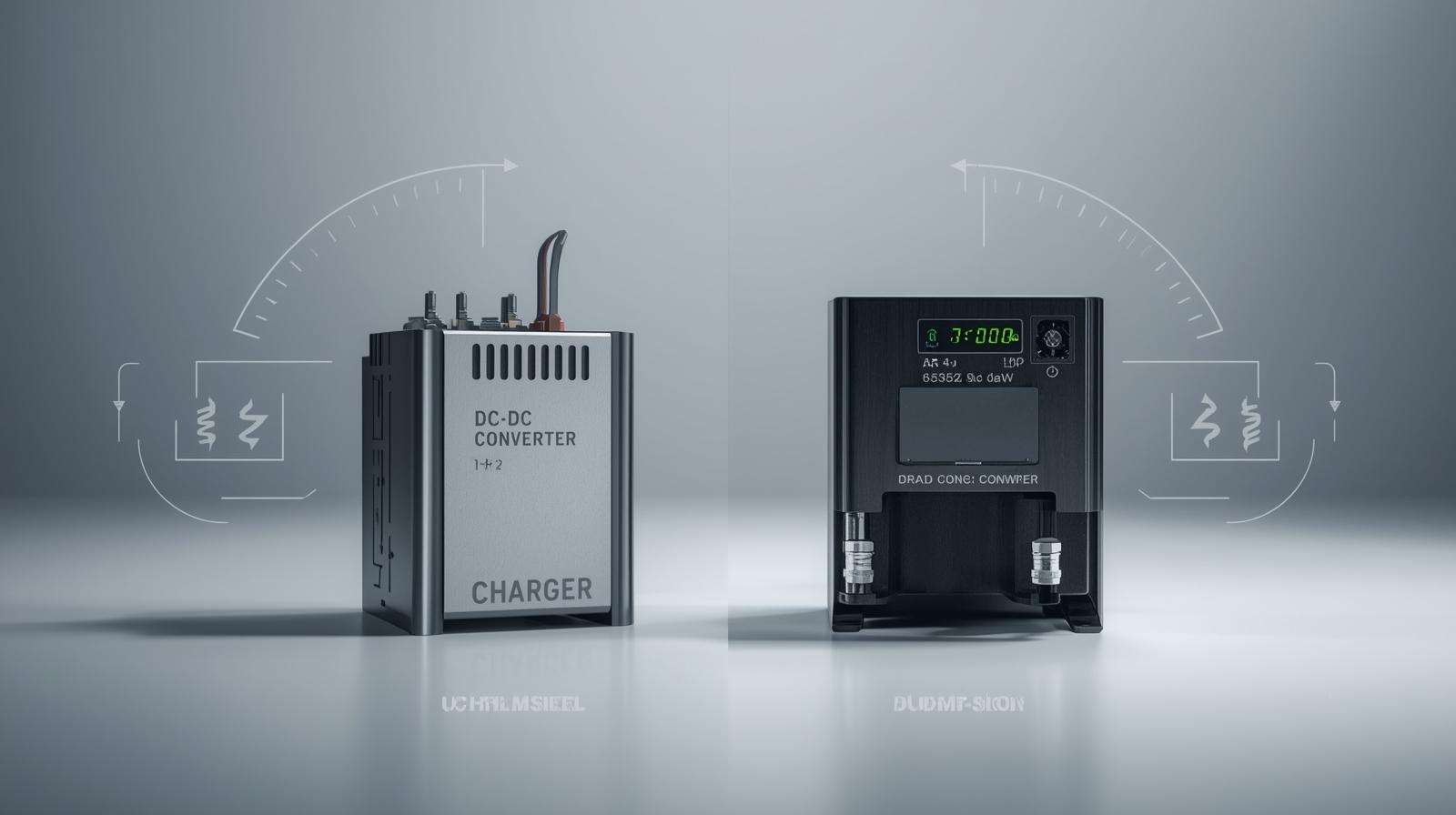
As electric vehicles (EVs), renewable energy systems, and battery-powered technologies become more common, confusion around power electronics is also increasing. One of the most frequently misunderstood topics is what is the difference between a DC-DC converter & charger. Although these two devices may appear similar because both deal with DC power, they serve very different purposes.
Understanding what is the difference between a DC-DC converter & charger is essential for EV owners, engineers, solar system users, and anyone working with batteries. Using the wrong device in the wrong application can reduce efficiency, shorten battery life, or even cause system failure.
This in-depth guide explains what is the difference between a DC-DC converter & charger, how each works, where they are used, their internal components, safety considerations, and how to choose the right one for your application.
Understanding the Basics of DC Power Systems
Before answering what is the difference between a DC-DC converter & charger, it’s important to understand how DC power systems work.
What Is DC Power?
Direct Current (DC) electricity flows in a single direction and is used by:
- Batteries
- Electric vehicles
- Solar energy systems
- Electronic devices
Since most modern energy storage systems store power as DC, devices are needed to manage, regulate, or charge DC power—and this is where DC-DC converters and chargers come in.
What Is a DC-DC Converter?
A DC-DC converter is a power electronic device that converts one DC voltage level into another DC voltage level.
Primary Purpose of a DC-DC Converter
The main purpose of a DC-DC converter is voltage conversion, not battery charging.
Example Applications
- Stepping down 400V EV battery power to 12V
- Converting 48V to 24V in industrial systems
- Powering electronics from a battery pack
DC-DC converters are essential in systems where multiple voltage levels are required.
What Is a DC Charger?
A DC charger is a device specifically designed to charge a battery safely and efficiently by delivering controlled DC power.
Primary Purpose of a DC Charger
The main purpose of a DC charger is battery charging, not just voltage conversion.
Example Applications
- DC fast chargers for EVs
- Solar battery chargers
- Industrial battery charging stations
This fundamental purpose is a key point when explaining what is the difference between a DC-DC converter & charger.
Core Difference: DC-DC Converter vs Charger
The simplest explanation of what is the difference between a DC-DC converter & charger is:
| Aspect | DC-DC Converter | DC Charger |
|---|---|---|
| Main Function | Voltage conversion | Battery charging |
| Battery Management | No | Yes |
| Charging Profiles | No | Yes |
| Current Control | Limited | Precise |
| Safety for Batteries | Not designed | Designed |
How a DC-DC Converter Works
To fully understand what is the difference between a DC-DC converter & charger, let’s explore how each works.
Working Principle of a DC-DC Converter
- DC input voltage enters the converter
- Power switches rapidly turn on and off
- Energy is stored in inductors and capacitors
- Output voltage is regulated to a fixed level
Key Characteristics
- Constant voltage output
- Designed for powering loads
- No awareness of battery state
A DC-DC converter assumes the load can safely accept the output voltage.
How a DC Charger Works
A DC charger is much more sophisticated.
Working Principle of a DC Charger
- DC input power is received
- Charger communicates with the battery or BMS
- Charging current and voltage are carefully controlled
- Charging follows specific stages (CC/CV)
- Charging stops when the battery is full
This intelligent behavior highlights what is the difference between a DC-DC converter & charger.
Charging Profiles: A Major Difference
One of the most important answers to what is the difference between a DC-DC converter & charger lies in charging profiles.
DC Charger Charging Stages
- Constant Current (CC)
- Constant Voltage (CV)
- Float or trickle charging
DC-DC converters do not support these stages and should not be used directly to charge batteries.
Role of Battery Management Systems (BMS)
DC Charger + BMS
- Communicates with battery
- Adjusts current and voltage
- Prevents overcharging
DC-DC Converter + BMS
- No communication
- Relies entirely on external protection
This distinction is critical in understanding what is the difference between a DC-DC converter & charger.
Use Case in Electric Vehicles
DC-DC Converter in EVs
- Steps down high voltage (400V–800V) to 12V
- Powers lights, infotainment, ECUs
- Charges auxiliary 12V battery indirectly
DC Charger in EVs
- Charges the main traction battery
- Controls charging speed and safety
- Used in fast-charging stations
This is a real-world demonstration of what is the difference between a DC-DC converter & charger.
Safety Differences
DC-DC Converter Safety
- Over-voltage protection
- Over-current protection
- Load-focused safety
DC Charger Safety
- Battery temperature monitoring
- Cell voltage balancing
- Overcharge protection
- Thermal shutdown
DC chargers are far safer for batteries.
Efficiency Comparison
DC-DC Converter Efficiency
- Very high (90–98%)
- Optimized for steady loads
DC Charger Efficiency
- Slightly lower due to control systems
- Optimized for battery protection
Efficiency alone does not determine which is better—another key aspect of what is the difference between a DC-DC converter & charger.
Cost Comparison
| Device | Cost | Reason |
|---|---|---|
| DC-DC Converter | Lower | Simpler design |
| DC Charger | Higher | Intelligent control & safety |
Using a DC-DC converter as a charger may seem cheaper but can cause expensive battery damage.
When Should You Use a DC-DC Converter?
Use a DC-DC converter when:
- You need voltage conversion
- You are powering electronics
- Battery charging is not the main function
When Should You Use a DC Charger?
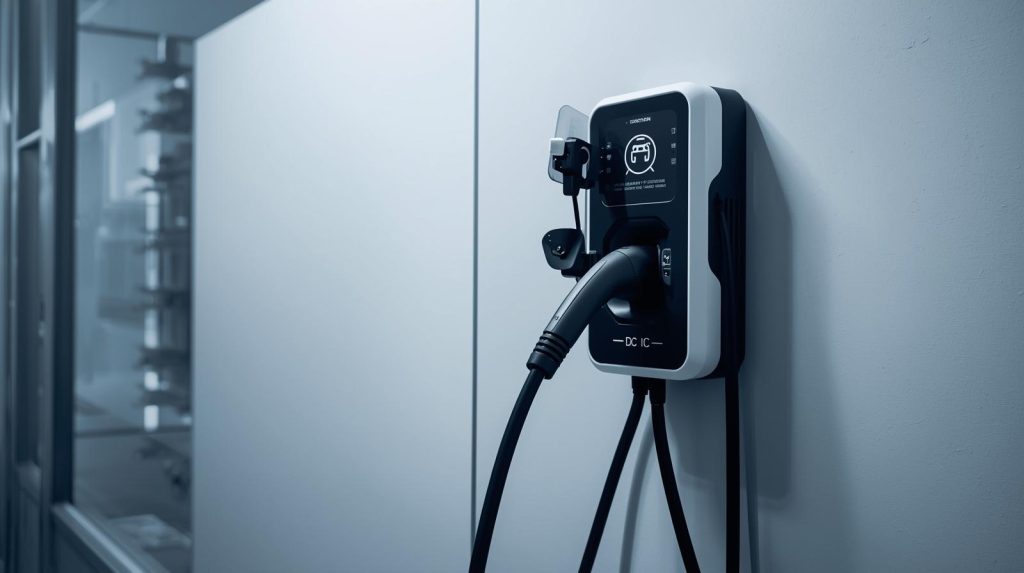
Use a DC charger when:
- Charging lithium-ion, lead-acid, or EV batteries
- Battery safety is critical
- Long battery life is important
Conclusion
So, what is the difference between a DC-DC converter & charger?
The answer lies in purpose, intelligence, and safety.
- Use DC-DC converters for voltage conversion
- Use DC chargers for battery charging
- Never substitute one for the other
Understanding this difference ensures better performance, longer battery life, and safer systems—especially in electric vehicles and energy storage applications.
Frequently Asked Questions (FAQs)
1. What is the difference between a DC-DC converter and a charger?
The main difference between a DC-DC converter and a charger is their purpose. A DC-DC converter changes one DC voltage level to another, while a charger is designed specifically to safely charge a battery using controlled current and voltage.
2. Can a DC-DC converter be used as a battery charger?
No, a DC-DC converter should not be used as a battery charger. It lacks charging stages, battery communication, and safety controls required to prevent overcharging and battery damage.
3. What is the primary function of a DC-DC converter?
The primary function of a DC-DC converter is voltage conversion. It supplies regulated DC power to electronic systems but is not intended for managing battery charging.
4. What is the primary function of a DC charger?
A DC charger’s primary function is to charge batteries safely and efficiently by controlling current, voltage, temperature, and charging stages such as constant current and constant voltage.
5. Why are DC chargers more complex than DC-DC converters?
DC chargers are more complex because they include battery management features, charging algorithms, communication with battery management systems (BMS), and multiple safety protections.
6. How are DC-DC converters and chargers used in electric vehicles?
In electric vehicles, DC-DC converters step down high-voltage battery power to low voltages (like 12V) for auxiliary systems, while DC chargers are used to charge the main traction battery.
7. Which device is safer for charging lithium-ion batteries?
A DC charger is safer for charging lithium-ion batteries because it is specifically designed to control charging current, voltage, and temperature to prevent battery damage.
8. Do DC-DC converters include battery protection features?
DC-DC converters include basic electrical protections but do not offer battery-specific protections such as charge termination, cell balancing, or thermal monitoring.
9. Why is understanding the difference important?
Understanding the difference between a DC-DC converter and a charger helps prevent improper usage, improves system safety, extends battery life, and ensures efficient energy management.
10. Can DC-DC converters and chargers work together in one system?
Yes, in systems like electric vehicles and solar setups, DC-DC converters and chargers often work together—each performing its specific role within the power system.