
If you’re researching electric vehicles (EVs), you’ve probably heard that most of them use lithium-ion batteries. But here’s something many people don’t realize:
Not all lithium-ion batteries are the same.
There are different types, and each one has its own strengths, weaknesses, and real-world use cases.
So let’s answer the key question:
What are the types of lithium-ion batteries used in electric vehicles?
In this complete, easy-to-understand guide, you’ll learn about the main battery types, how they work, and which one is best for different driving needs in the United States.
Types of Lithium-Ion Batteries Used in Electric Vehicles
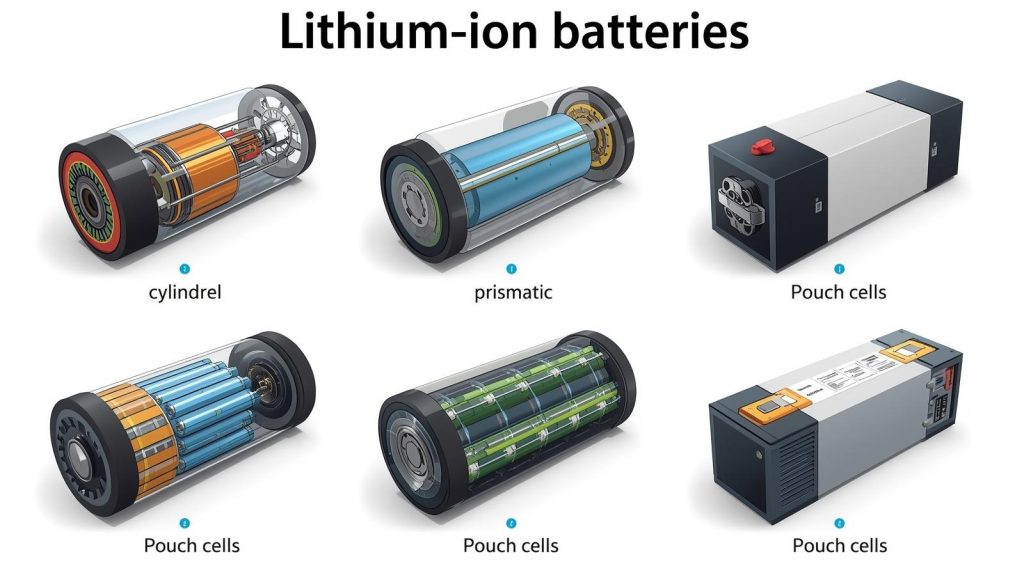
The most common types of lithium-ion batteries used in EVs are:
- NMC (Nickel Manganese Cobalt)
- NCA (Nickel Cobalt Aluminum)
- LFP (Lithium Iron Phosphate)
- LMO (Lithium Manganese Oxide)
- LTO (Lithium Titanate)
Simple takeaway:
Each battery type is designed for a specific balance of range, cost, safety, and performance.
Why Different Lithium-Ion Battery Types Exist
Electric vehicles are used in many ways:
- Daily commuting
- Long road trips
- City driving
- Performance driving
Because of this, no single battery type fits every situation.
Manufacturers Choose Based On:
- Driving range
- Cost
- Charging speed
- Safety
- Lifespan
That’s why different EVs use different battery chemistries.
1. NMC Batteries (Nickel Manganese Cobalt)
NMC is one of the most popular battery types in EVs today.
Key Features:
- High energy density
- Good balance of performance and cost
- Widely used in the U.S.
Advantages:
- Long driving range
- Efficient performance
- Versatile for many EV types
Disadvantages:
- Uses cobalt (expensive and limited)
- Moderate safety compared to LFP
Best for:
Drivers who want a balance of range and performance.
2. NCA Batteries (Nickel Cobalt Aluminum)
NCA batteries are known for high performance and long range.
Key Features:
- Very high energy density
- Strong power output
Advantages:
- Longer driving range
- Excellent performance
- Lightweight
Disadvantages:
- Higher cost
- Requires advanced safety management
Best for:
High-performance electric vehicles and long-distance driving.
3. LFP Batteries (Lithium Iron Phosphate)
LFP batteries are becoming very popular in the U.S. market.
Key Features:
- Lower cost
- Excellent safety
- Long lifespan
Advantages:
- Very stable and safe
- Longer cycle life
- No cobalt required
Disadvantages:
- Lower energy density
- Slightly shorter driving range
Best for:
Budget-friendly EVs and daily commuting.
4. LMO Batteries (Lithium Manganese Oxide)
LMO batteries focus on safety and thermal stability.
Key Features:
- Good safety performance
- Fast charging capability
Advantages:
- Safer chemistry
- Good power delivery
Disadvantages:
- Shorter lifespan compared to others
- Lower energy density
Best for:
Applications where safety and power are important.
5. LTO Batteries (Lithium Titanate)
LTO batteries are known for extremely fast charging and long life.
Key Features:
- Ultra-fast charging
- Very long lifespan
Advantages:
- Charges very quickly
- Extremely durable
- Performs well in cold weather
Disadvantages:
- Very expensive
- Lower energy density
Best for:
Special applications like buses or fleets.
Comparison of Lithium-Ion Battery Types
| Battery Type | Range | Cost | Safety | Lifespan | Charging Speed |
|---|---|---|---|---|---|
| NMC | High | Medium | Medium | High | Fast |
| NCA | Very High | High | Medium | High | Fast |
| LFP | Medium | Low | High | Very High | Moderate |
| LMO | Medium | Medium | High | Medium | Fast |
| LTO | Low | Very High | Very High | Extremely High | Very Fast |
This table helps you quickly compare options.
Which Battery Type Is Most Common in the U.S.?
In the United States:
- NMC and NCA are widely used in long-range EVs
- LFP is growing fast due to lower cost and safety
Many modern EVs now offer different battery options.
How These Battery Types Affect Your Driving Experience
The type of battery directly impacts your daily driving.
Range:
- NCA → longest range
- LFP → moderate range
Charging:
- LTO → fastest charging
- NMC/NCA → balanced
Safety:
- LFP → safest option
Choosing the right battery depends on your needs.
Challenges of Lithium-Ion Batteries
Even though lithium-ion batteries are advanced, they have challenges:
Key Issues:
- Raw material mining (lithium, cobalt)
- Cost of production
- Recycling complexity
However, improvements are happening quickly.
Lifespan of Lithium-Ion Batteries in EVs
Average Lifespan:
- 8–15 years
- 100,000–200,000 miles
Over Time:
- Battery capacity slowly decreases
- Driving range reduces slightly
Proper care can extend lifespan.
Tips to Extend Lithium-Ion Battery Life
1. Keep Charge Between 20%–80%
Avoid extreme levels.
2. Limit Fast Charging
Use only when necessary.
3. Avoid Extreme Temperatures
Protect the battery.
4. Drive Smoothly
Reduce stress on the battery.
5. Use Eco Mode
Improve efficiency.
6. Follow Manufacturer Guidelines
Each EV is different.
7. Monitor Battery Health
Watch for alerts.
8. Maintain Your Vehicle
Efficiency supports battery life.
9. Plan Trips Efficiently
Reduce unnecessary energy use.
10. Keep Software Updated
Improve performance.
Common Myths About EV Battery Types
Myth: All lithium-ion batteries are the same
Fact: Different chemistries have different features
Myth: Higher range means better battery
Fact: It depends on your needs
Myth: EV batteries don’t last long
Fact: Most last over a decade
Future of Lithium-Ion Battery Technology
The future looks exciting.
What’s Coming:
- Better energy density
- Lower costs
- Improved safety
- New chemistries
EV batteries will continue to evolve.
Final Verdict: Types of Lithium-Ion Batteries Used in Electric Vehicles
The main types are:
- NMC
- NCA
- LFP
- LMO
- LTO
Key Takeaways:
- Each type has unique benefits
- LFP is safest and cheapest
- NCA offers the longest range
- NMC balances performance and cost
Simple Rule:
There is no “one best battery”—only the best battery for your needs.
FAQs: Types of Lithium-Ion Batteries Used in Electric Vehicles
1. What is the most common lithium-ion battery in EVs?
NMC and NCA are widely used.
2. Which battery is safest?
LFP batteries are considered the safest.
3. Which battery gives the longest range?
NCA batteries usually offer the longest range.
4. Which battery lasts the longest?
LFP and LTO have the longest lifespan.
5. Are EV batteries improving?
Yes, technology is advancing rapidly.
Conclusion: Types of Lithium-Ion Batteries Used in Electric Vehicles
Now you fully understand the types of lithium-ion batteries used in electric vehicles.
The key takeaway:
Different battery types are designed for different needs.
Whether you care about range, cost, safety, or lifespan, there’s a battery that fits your driving style.
As technology continues to improve, EV batteries will become even better—making electric vehicles smarter, safer, and more efficient than ever before.