
Electric vehicles (EVs) are smart, efficient, and packed with advanced technology. But behind every smooth and safe EV drive, there’s an invisible system working all the time.
That system is called the BMS (Battery Management System).
So, let’s answer the big question:
Why is BMS required in EVs?
The simple answer is:
A BMS is required in EVs to protect the battery, ensure safety, and optimize performance.
Without it, an electric vehicle would not be safe to drive.
In this complete guide, you’ll learn exactly why a BMS is essential, how it works, and why it plays such a critical role in every EV on the road today.
Why Is BMS Required in EVs?
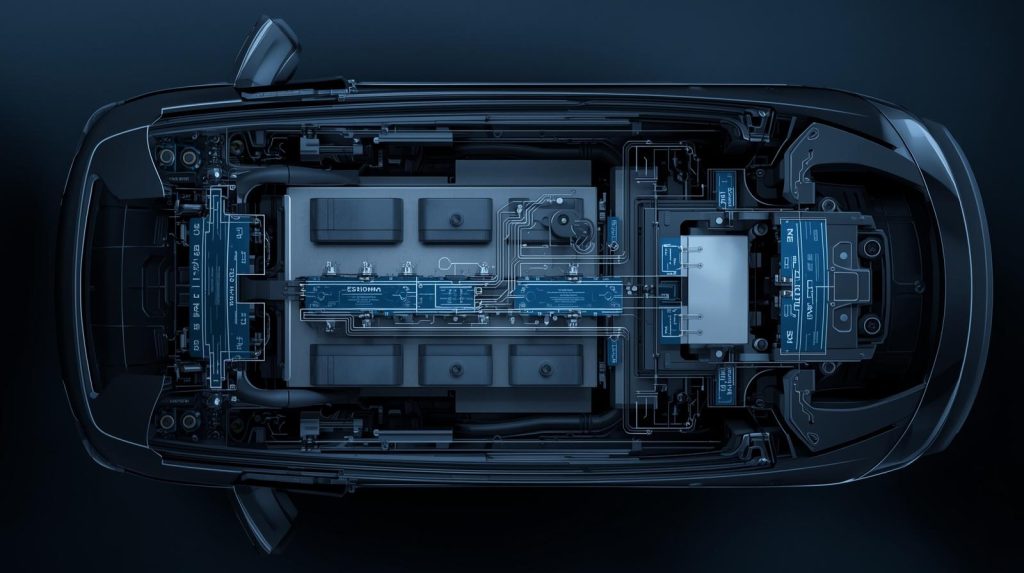
A BMS is required in EVs because it:
- Protects the battery from damage
- Controls charging and discharging
- Maintains safe temperature levels
- Improves battery lifespan
Simple explanation:
The BMS is the system that keeps your EV battery safe, smart, and efficient.
What Is a BMS in an Electric Vehicle?
Before going deeper, let’s quickly understand what a BMS is.
BMS (Battery Management System) is an electronic system that manages the EV battery.
Think of It Like This:
- Battery = heart
- BMS = brain
The BMS controls how the battery behaves at all times.
Why Is BMS Required in EVs?
Let’s break down the reasons in detail.
1. Battery Safety (Most Important Reason)
The primary reason a BMS is required is safety.
Without a BMS:
- The battery could overcharge
- The battery could overheat
- Risk of fire or damage
With a BMS:
- Charging is controlled
- Temperature is managed
- Risks are minimized
This makes EVs safe for everyday use.
2. Temperature Control
EV batteries are sensitive to temperature changes.
The BMS:
- Prevents overheating in hot weather
- Protects the battery in cold conditions
This ensures safe and efficient operation in all climates.
3. Cell Balancing
An EV battery contains hundreds or thousands of small cells.
Problem:
- Cells don’t charge evenly
Solution:
- The BMS balances all cells
This improves battery performance and lifespan.
4. Charging Control
Charging is one of the most critical processes in an EV.
The BMS Controls:
- Charging speed
- Voltage levels
- Maximum charge limits
This prevents overcharging and damage.
5. Prevents Deep Discharge
Letting a battery drain completely can damage it.
The BMS:
- Stops the battery from reaching unsafe low levels
This protects the battery from long-term damage.
6. Monitors Battery Health
The BMS continuously tracks battery condition.
It Measures:
- State of Charge (SOC)
- State of Health (SOH)
This helps detect problems early.
7. Improves Performance
The BMS doesn’t just protect—it enhances performance.
It Helps By:
- Delivering power efficiently
- Supporting smooth acceleration
- Optimizing energy use
This makes your EV feel responsive and reliable.
8. Extends Battery Lifespan
One of the biggest reasons BMS is required is to increase battery life.
It Does This By:
- Controlling charging cycles
- Preventing overheating
- Balancing cells
This helps batteries last 8–15 years or more.
Why BMS Is Essential for U.S. Driving Conditions
The United States has diverse climates and driving conditions.
Examples:
- Hot summers in Texas and Arizona
- Cold winters in Minnesota and New York
- Long highway drives
The BMS Helps By:
- Adjusting to temperature changes
- Managing energy efficiently
- Ensuring reliability
It keeps your EV performing well everywhere.
What Happens If an EV Doesn’t Have a BMS?
In reality, no EV is built without a BMS—but let’s imagine.
Without a BMS:
- Battery damage would happen quickly
- Charging would be unsafe
- Performance would drop
- The risk of failure would increase
The vehicle would not be safe to operate.
Can a BMS Fail?
BMS failures are rare but possible.
Signs of Failure:
- Incorrect battery readings
- Charging issues
- Warning lights
- Reduced performance
If this happens, you should get your vehicle checked immediately.
BMS in EV vs Hybrid vs Plug-In Hybrid
Electric Vehicle (EV):
- Advanced BMS
- Large battery system
Hybrid (HEV):
- Simpler BMS
- Smaller battery
Plug-In Hybrid (PHEV):
- Moderate BMS
- Dual system management
All electrified vehicles require a BMS.
Tips to Support Your EV’s BMS
Even though the BMS does most of the work, your habits matter.
1. Keep Charge Between 20%–80%
Avoid extreme levels.
2. Limit Fast Charging
Use only when necessary.
3. Avoid Extreme Temperatures
Park in a safe environment.
4. Drive Smoothly
Reduce stress on the battery.
5. Use Eco Mode
Improve efficiency.
6. Follow Manufacturer Guidelines
Each EV is different.
7. Monitor Battery Alerts
Pay attention to warnings.
8. Maintain Your Vehicle
Efficiency supports battery health.
9. Plan Trips Efficiently
Reduce unnecessary energy use.
10. Keep Software Updated
BMS improves with updates.
Common Myths About BMS in EVs
Myth: BMS is optional
Fact: Every EV requires a BMS
Myth: BMS prevents all issues
Fact: It helps, but user habits matter
Myth: BMS needs regular maintenance
Fact: It works automatically
Future of BMS Technology
BMS technology is evolving quickly.
What’s Coming:
- AI-powered systems
- Better diagnostics
- Longer battery lifespan
Future EVs will be smarter and more efficient.
Final Verdict: Why Is BMS Required in EVs?
BMS is required in EVs to ensure safety, efficiency, and long battery life.
Key Takeaways:
- Protects the battery
- Controls charging and temperature
- Improves performance
- Extends lifespan
Simple Rule:
Without a BMS, an EV cannot operate safely.
FAQs: Why Is BMS Required in EVs?
1. Why is BMS important in EVs?
It protects and manages the battery.
2. Can an EV work without a BMS?
No, it would be unsafe.
3. Does BMS improve battery life?
Yes, significantly.
4. What does BMS control?
Charging, temperature, and battery health.
5. Is BMS visible to the driver?
No, it works in the background.
Conclusion: Why Is BMS Required in EVs?
Now you clearly understand “Why is BMS required in EV?”
The truth is simple:
The BMS is the system that keeps your EV safe, efficient, and reliable.
It protects your battery, improves performance, and ensures your vehicle lasts for years.
So every time you drive your EV, remember—there’s a smart system working behind the scenes to keep everything running perfectly.