

Electric vehicles (EVs) are changing how people drive in the United States. But behind every smooth, quiet ride, there’s one powerful system doing all the work:
The lithium-ion battery
So let’s answer the key question in the simplest way:
How does a lithium-ion battery work in an EV?
The short answer:
A lithium-ion battery stores energy and releases it to power the electric motor by moving lithium ions between two electrodes.
That might sound technical—but don’t worry. In this guide, we’ll break everything down step by step in simple language, so anyone can understand it.
How Does a Lithium-Ion Battery Work in an EV?
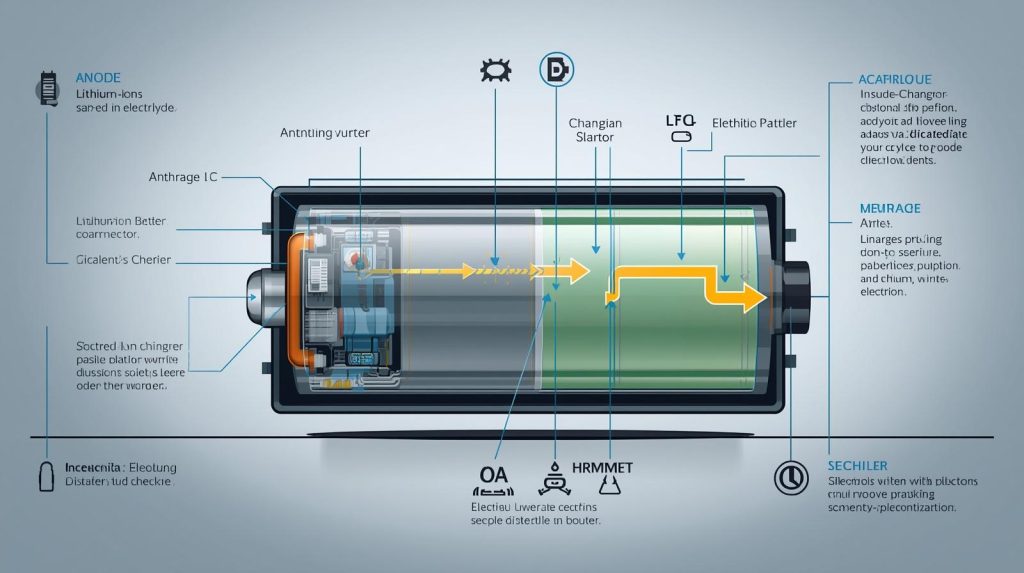
A lithium-ion battery works by:
- Storing electrical energy
- Moving lithium ions between the anode and cathode
- Releasing energy to power the motor
- Recharging by reversing the process
Simple analogy:
Think of it like a rechargeable energy tank that fills up and empties as you drive.
What Is a Lithium-Ion Battery in an EV?
A lithium-ion battery is the main power source in an electric vehicle.
It Does Three Main Things:
- Stores energy
- Supplies power to the motor
- Recharges when plugged in
Without it, your EV cannot move.
Key Parts of a Lithium-Ion Battery
To understand how it works, you need to know its basic components.
1. Anode (Negative Side)
- Stores lithium ions during charging
- Usually made of graphite
2. Cathode (Positive Side)
- Releases lithium ions during discharge
- Made of lithium metal compounds
3. Electrolyte
- A liquid or gel that allows ions to move
4. Separator
- Prevents short circuits
- Keeps the anode and cathode apart
These parts work together to store and release energy safely.
Step-by-Step: How Does a Lithium-Ion Battery Work in EV?
Let’s break it down into simple steps.
When You Are Driving (Discharging)
This is when the battery is powering the car.
Process:
- Lithium ions move from the anode to the cathode
- Electrons flow through an external circuit
- Electricity powers the motor
- The car moves
This is how your EV gets energy while driving.
When You Are Charging the EV
This is the reverse process.
Process:
- Electricity comes from the charger
- Lithium ions move from the cathode to the anode
- Energy is stored in the battery
The battery is now ready for your next drive.
Simple Real-Life Example
Imagine this:
- You plug in your EV at night
- The battery stores energy
- In the morning, you drive to work
- The battery releases energy
That’s the full cycle of how a lithium-ion battery works.
How the Battery Powers the Motor
The battery doesn’t directly move the car—it powers the motor.
Process:
- The battery sends electricity
- An inverter converts DC to AC
- The electric motor spins
- Wheels move
This is why EVs feel smooth and quiet.
What Makes Lithium-Ion Batteries Efficient?
Lithium-ion batteries are widely used because of their efficiency.
Key Benefits:
- High energy density
- Fast charging
- Lightweight design
- Long lifespan
These features make them perfect for EVs.
How Temperature Affects Battery Working
Temperature plays a big role in performance.
In Hot Weather:
- The battery may heat up
- Cooling system activates
In Cold Weather:
- Chemical reactions slow down
- Range may decrease
EVs use thermal management systems to handle this.
Role of Battery Management System (BMS)
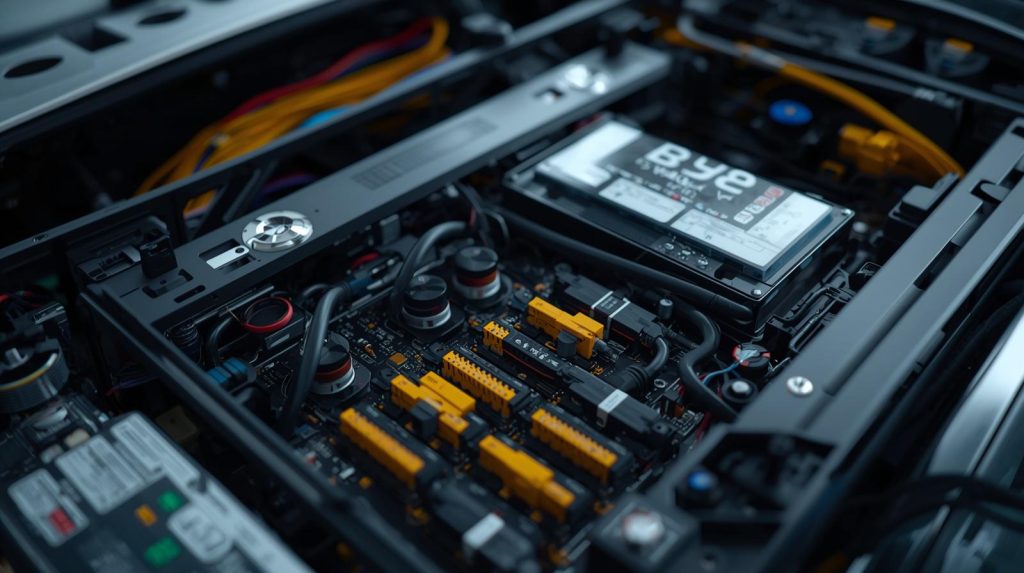
The battery cannot work safely without a BMS.
What the BMS Does:
- Monitors voltage and temperature
- Controls charging and discharging
- Balances battery cells
- Prevents overheating
Think of it as the “brain” of the battery.
How EV Batteries Store So Much Energy
An EV battery is not just one unit—it’s made of many small cells.
Structure:
- Cells → Modules → Battery Pack
Thousands of cells work together to power your car.
What Happens Over Time?
Lithium-ion batteries change as they age.
Over Time:
- Capacity decreases
- Range reduces slightly
- Charging efficiency drops
This is called battery degradation, and it’s normal.
Why This Matters for U.S. Drivers
In the United States, driving conditions vary a lot.
Examples:
- Long highway drives
- Extreme weather conditions
- Daily commuting
The Battery Helps By:
- Providing consistent power
- Supporting long-distance travel
- Adapting to different climates
Understanding how it works helps you use your EV better.
Tips to Improve Lithium-Ion Battery Performance
1. Keep Charge Between 20%–80%
Avoid extreme levels.
2. Limit Fast Charging
Use only when needed.
3. Avoid Extreme Temperatures
Protect battery health.
4. Drive Smoothly
Reduce energy use.
5. Use Eco Mode
Improve efficiency.
6. Follow Manufacturer Guidelines
Each EV is different.
7. Monitor Battery Status
Watch dashboard alerts.
8. Maintain Your Vehicle
Efficiency matters.
9. Plan Trips Smartly
Avoid unnecessary energy use.
10. Keep Software Updated
Enhances performance.
Common Myths About Lithium-Ion Batteries
Myth: EV batteries work like phone batteries
Fact: EV batteries are more advanced
Myth: Charging fully always damages the battery
Fact: Modern systems manage charging safely
Myth: EV batteries stop working suddenly
Fact: They degrade slowly over time
Future of Lithium-Ion Battery Technology
The future looks promising.
Innovations:
- Faster charging
- Higher energy density
- Longer lifespan
- Safer materials
EV batteries will keep improving.
Final Verdict: How Does a Lithium-Ion Battery Work in an EV?
A lithium-ion battery works by moving lithium ions between two electrodes to store and release energy.
Key Takeaways:
- Stores energy when charging
- Releases energy when driving
- Powers the electric motor
- Works with a BMS for safety
Simple Rule:
Charge → Store → Drive → Repeat
FAQs
1. How does a lithium-ion battery power an EV?
By storing energy and sending electricity to the motor.
2. What moves inside the battery?
Lithium ions move between electrodes.
3. Can EV batteries recharge?
Yes, they are fully rechargeable.
4. How long do EV batteries last?
8–15 years on average.
5. Are lithium-ion batteries efficient?
Yes, they are highly efficient and widely used.
Conclusion
Now you fully understand how a lithium-ion battery works in an EV.
The concept is simple:
It stores energy when you charge and releases it when you drive.
This smart system is what makes electric vehicles efficient, quiet, and powerful.
As technology improves, lithium-ion batteries will become even better—making EVs the future of transportation