

Electric vehicles (EVs) are more popular than ever, and as adoption continues to rise, homeowners are becoming increasingly curious about the fastest and most powerful ways to charge their vehicles. Public DC fast chargers can deliver 80% battery in 15–45 minutes, making them extremely appealing. Naturally, many EV owners wonder: Why not install one at home?
This question leads us to a critical discussion: Why You Cannot Install a DC Fast Charger at Most Homes.
While the idea sounds convenient, the reality is filled with electrical, logistical, safety, and financial barriers that make installing a DC fast charger in a typical residential setting nearly impossible.
Understanding the Basics: What Is a DC Fast Charger?
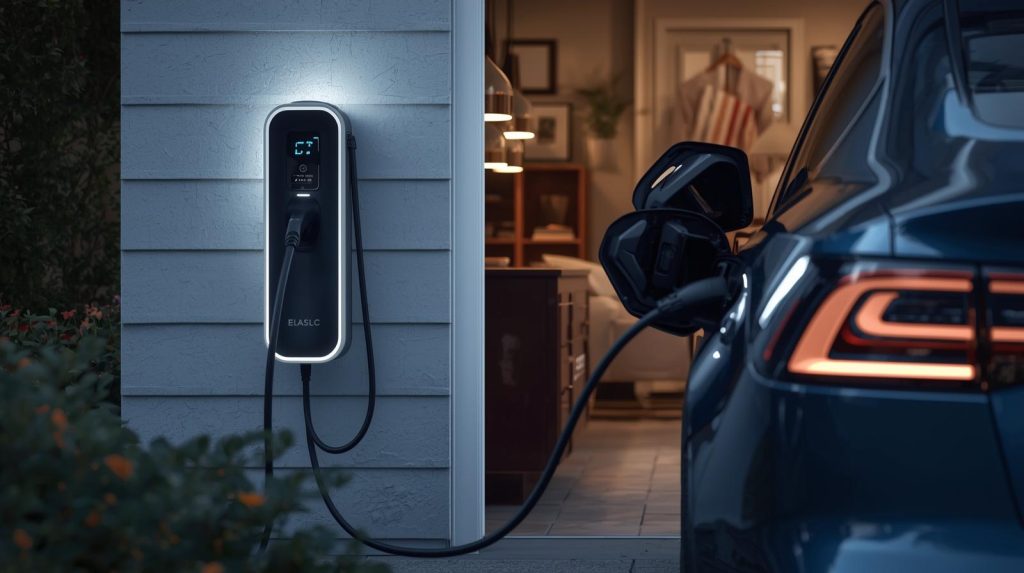
Before diving into why you cannot install a DC fast charger at most homes, it’s important to understand what a DC charger does and how it differs from Level 1 and Level 2 home chargers.
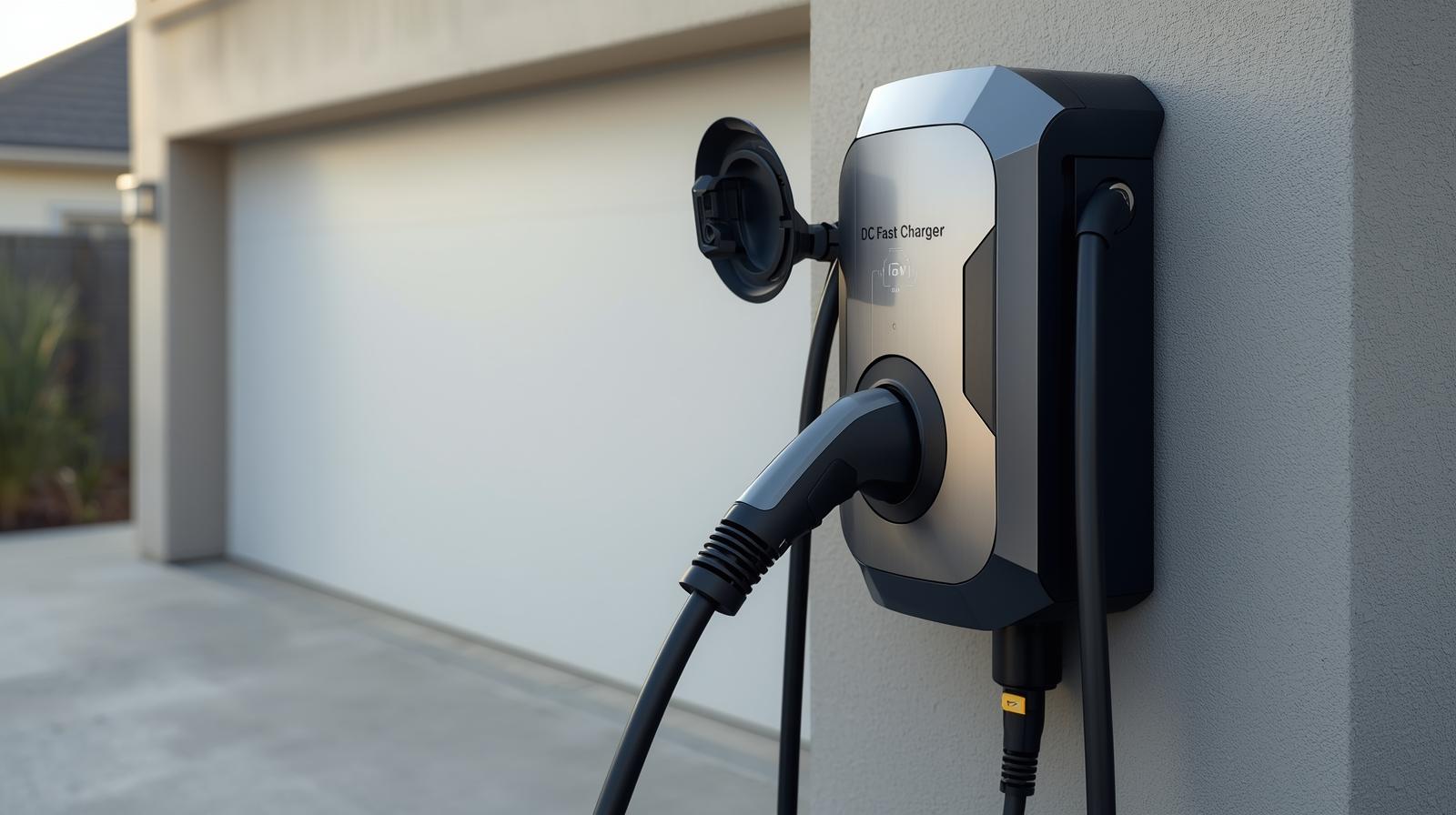
Types of EV Chargers
EV chargers fall into three general categories:
| Charger Type | Voltage | Typical Location | Speed |
|---|---|---|---|
| Level 1 (AC) | 120V | Homes | 3–5 miles per hour |
| Level 2 (AC) | 240V | Homes, workplaces | 20–40 miles per hour |
| DC Fast Charger | 400–1000V (DC) | Highways, commercial stations | 80% in 15–45 minutes |
Level 1 and Level 2 chargers deliver Alternating Current (AC).
Your car then converts this AC power into Direct Current (DC) using its onboard charger.
A DC fast charger bypasses the car’s onboard charger and sends DC power straight into the battery. This enables extremely fast charging—but at a very high electrical demand.
And that’s where the challenges begin.
Explained: Why You Cannot Install a DC Fast Charger at Most Homes
The primary reason behind the rising interest in this topic is the assumption that if DC fast charging is the fastest method available, then it should also be the ideal option for home charging. But the truth is more complicated.
The focus topic — Why You Cannot Install a DC Fast Charger at Most Homes — is rooted in several real-world barriers:
- Electrical limitations
- High installation costs
- Utility restrictions
- Space constraints
- Safety risks
- Permitting challenges
- Unsuitability for residential environments
Each of these reasons plays a significant role, and understanding them helps homeowners make informed and realistic decisions.
Let’s break them down one by one.
Reason 1: Homes Do Not Have the Electrical Capacity
This is the biggest and most significant reason why you cannot install a DC fast charger at most homes.
Typical Home Electrical Capacity
Most homes have:
- Single-phase power
- 100A to 200A service
- 120/240V supply
This is enough for:
- Lights
- Appliances
- HVAC
- A Level 2 EV charger
But nowhere near enough for DC fast charging.
DC Fast Chargers Require Massive Power
DC fast chargers need:
- 400V–1000V
- Three-phase power
- Up to 400–1600 amps
- Dedicated infrastructure
This level of power is extremely rare in residential areas and is typically only found in:
- Industrial buildings
- Shopping centers
- Highway charging plazas
- Commercial garages
In other words, your home’s electrical panel simply cannot support a DC fast charger.
Reason 2: Utility Upgrades Are Extremely Expensive
Even if you wanted to upgrade your home’s electrical system to support DC fast charging, utility companies would need to make massive changes.
This includes:
Installing a new transformer
Running new power lines
Installing a three-phase connection
Adding switchgear and protective equipment
Approving a new high-power metering system
The cost of such upgrades can range from:
$20,000 to over $200,000
— before buying the charger itself.
Most utility companies won’t approve this for a residential address because the current grid structure is not designed for such high load in residential neighborhoods.
Reason 3: DC Chargers Are Extremely Expensive
Even if your home could support a DC charger, the cost of the charger itself is enormous.
DC Fast Charger Price Range
- Low-power 25 kW DC charger: $10,000–$20,000
- Mid-power 50–100 kW DC charger: $20,000–$50,000
- 150–350 kW fast chargers: $60,000–$300,000+
Meanwhile, most Level 2 home chargers cost:
$300–$1,500
Even wealthy homeowners rarely consider spending six figures on a home charger.
Reason 4: Homes Lack Necessary Cooling & Ventilation
DC fast chargers generate tremendous heat during operation. This requires:
- Advanced liquid cooling systems
- Heavy-duty ventilation
- Thermal management modules
- Heat-resistant wiring
Homes do not have the space, airflow, or cooling infrastructure required.
For example, a 150 kW charger may require:
- A cooling cabinet
- External ventilation
- A heat exchanger
These systems are designed for commercial environments—not residential garages.
Reason 5: Safety Hazards Are Significantly Higher
High-voltage equipment poses safety risks such as:
- Electrical fires
- Overheating
- Arc flashes
- Shock hazards
- Transformer overloads
For this reason, strict standards govern DC charger installation:
- NEC guidelines
- NFPA fire codes
- Utility safety protocols
- Specialized grounding requirements
Residential homes are not built to meet these requirements.
Reason 6: Permits and Zoning Limitations
DC fast chargers require multiple permits, including:
- Electrical permits
- Utility approval
- Zoning permission
- Environmental compliance
- Commercial-use authorization
Most jurisdictions do not allow DC fast chargers in residential zones because:
- They require commercial infrastructure
- They may increase grid load
- They attract non-residential traffic
- They pose safety concerns
Even if approved, the permitting process is lengthy and complex.
Reason 7: Battery Health Concerns Make Daily DC Charging Unnecessary
Even if you could install a DC charger at home, daily DC fast charging is not recommended for EV battery longevity.
Frequent fast charging causes:
- Higher battery temperatures
- Increased cell stress
- Faster degradation over time
EV manufacturers such as:
- Tesla
- Hyundai
- BMW
- Ford
- Kia
all recommend using Level 2 chargers for daily home charging because it’s gentler on the battery.
DC fast charging is intended for:
- Long trips
- Emergency charging
- Short rest stops
—not daily use.
Reason 8: Level 2 Chargers Already Meet 99% of Daily Charging Needs
The biggest misconception is that DC fast charging is needed for home use.
But Level 2 chargers offer:
- 20–40 miles of range per hour
- Full overnight charging
- Affordable installation
- Better battery health
- Lower electricity costs
Most EV owners only drive:
25–50 miles per day
So overnight Level 2 charging is more than enough.
This is a major reason why you cannot install a DC fast charger at most homes—because it is unnecessary.
When Is It Possible to Install a DC Fast Charger at Home? (Rare Cases)
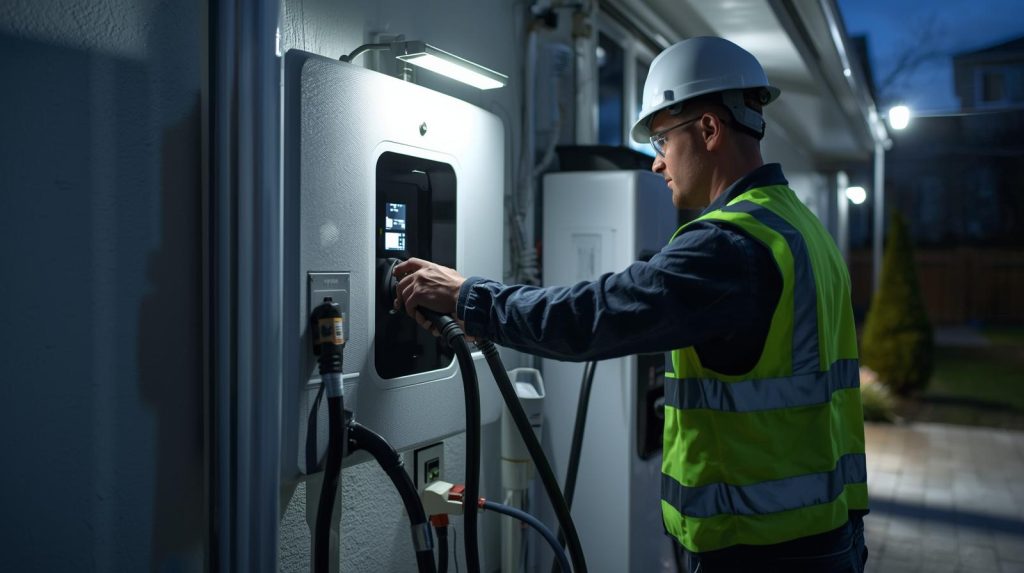
Though rare, some unique situations exist where homeowners might be able to install a DC fast charger:
Large estate homes with commercial utility connections
Homes connected to a business grid
Industrial properties with residential zoning
Multi-million-dollar estates
Supercar collectors with custom garages
Even then, the cost is extremely high and requires extensive planning.
Less than 0.1% of homes in the world meet these criteria.
Practical Alternatives to DC Fast Chargers for Homes
If you want faster or more convenient home charging, here are realistic alternatives:
1. Install a High-Power Level 2 Charger (9.6–19.2 kW)
Provides extremely fast home charging without needing commercial power.
2. Upgrade Your Electrical Panel
A 200A or 400A panel supports more powerful Level 2 chargers.
3. Use Public DC Fast Chargers Only When Necessary
They are ideal for:
- Road trips
- Emergencies
- Fast top-ups
4. Install Solar Panels + Battery Storage
This reduces energy costs and supports long-term EV charging efficiency.
5. Use Smart Charging Features
Schedule charging during off-peak hours for:
- Lower costs
- Less grid stress
- Better battery health
Future Outlook: Will Home DC Fast Charging Ever Become Possible?
The EV industry is evolving rapidly. In the future, we may see:
- Smaller DC chargers
- Lower-voltage high-speed charging
- Solid-state batteries
- More efficient infrastructure
- Wireless DC charging systems
But until these technologies become widespread, the reasons why you cannot install a DC fast charger at most homes will continue to dominate the landscape.
Conclusion
To summarize, we explored all the major reasons Why You Cannot Install a DC Fast Charger at Most Homes, including:
- Insufficient electrical capacity
- Massive utility upgrades
- Extremely high costs
- Heavy cooling requirements
- Complex permitting
- Safety hazards
- Zoning restrictions
- Battery health concerns
- Lack of need for daily use
For 99% of homeowners, a Level 2 charger is the best, most affordable, and safest solution. It offers everything you need for daily charging without the overwhelming demands of DC fast charging infrastructure.
As EV technology continues to advance, residential solutions will evolve. But for now, DC fast chargers remain firmly in the commercial world—where they belong.
FAQs: Why You Cannot Install a DC Fast Charger at Most Homes
1. Why can’t I install a DC fast charger at home?
Most homes do not have the electrical capacity required for DC fast chargers. These chargers need 480V three-phase power and extremely high amperage, which standard residential electrical systems cannot support without major infrastructure upgrades.
2. How much power does a DC fast charger require?
A typical DC fast charger requires 50 kW to 350 kW of power. In comparison, most homes only have 7 kW to 19 kW capacity for all appliances combined. This massive difference makes home installation impractical.
3. Do any homes have the power needed for DC fast charging?
Only specialized commercial-style properties or industrial-grade buildings might have this kind of electrical infrastructure. Regular residential homes—even newly built ones—do not have three-phase high-voltage power.
4. How much does it cost to install a DC fast charger?
A home installation could cost anywhere from $50,000 to over $200,000, including electrical upgrades, utility approvals, and the charger itself. This is why DC fast chargers are usually installed at public charging stations, not homes.
5. Can the utility company upgrade my home for a DC fast charger?
In most cases, no. Utilities rarely upgrade single-family homes to commercial-level power because:
- It is extremely expensive
- Residential grids are not built for such loads
- It could cause instability in the neighborhood grid
6. Are there any alternatives to DC fast chargers for homes?
Yes. The most practical residential solution is a Level 2 home EV charger, which offers 20–40 miles of range per hour and works with a standard 240V electrical system.
7. Why are DC fast chargers usually found in public areas?
Public charging stations have access to commercial-grade electrical lines and large power capacities. They can safely support high loads without disrupting residential infrastructure.
8. Can future homes support DC fast charging?
It’s theoretically possible but unlikely in the near future. Residential electrical grids would need drastic upgrades, and the cost to homeowners would be extremely high compared to using convenient Level 2 chargers.
9. If I have solar panels, can they support a DC fast charger?
No. Home solar systems produce nowhere near the power required. Even large solar installations cannot supply the instantaneous 50–350 kW power needed for DC fast charging.
10. What is the best charging solution for home use?
A Level 2 EV charger is the most efficient, affordable, and compatible option for everyday home charging.