

Electric vehicles (EVs) are becoming an essential part of modern transportation, offering environmentally friendly alternatives to traditional gasoline-powered vehicles. As EV adoption grows, understanding charging technology is critical. One of the most commonly asked questions is: “What is the difference between AC chargers and DC fast chargers?”
Choosing the right charger impacts charging speed, battery health, convenience, and overall user experience. This guide will explain the differences between AC chargers (Level 1 and Level 2) and DC fast chargers (Level 3) in detail, including their operation, power levels, costs, applications, advantages, disadvantages, and real-world usage.
Introduction: AC vs DC Charging
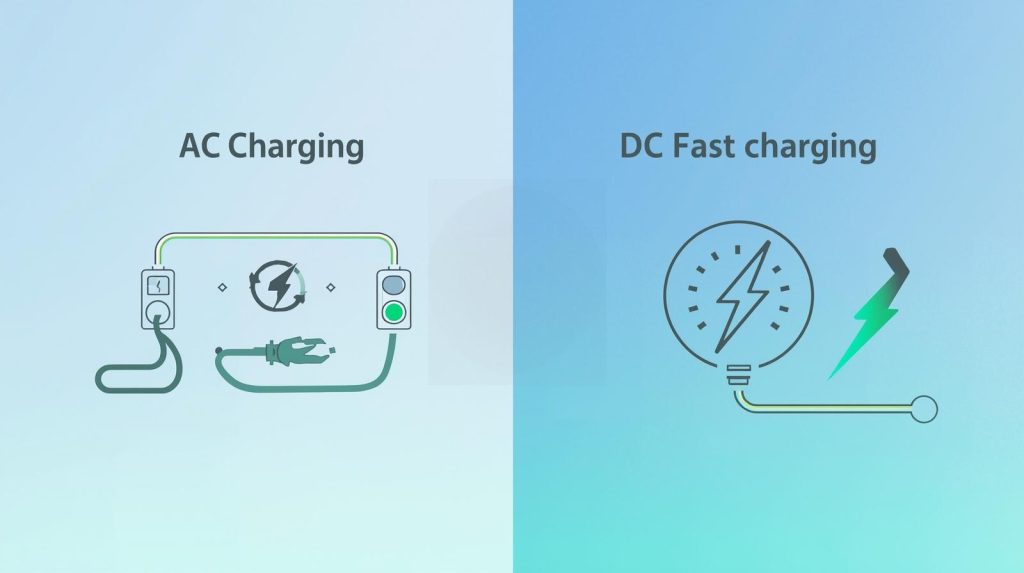
The EV charging ecosystem relies on two primary types of electricity delivery:
- Alternating Current (AC) Charging: Typical for homes and workplaces; uses the onboard charger of the vehicle to convert AC to DC.
- Direct Current (DC) Fast Charging: Provides DC directly to the battery, bypassing the onboard charger for rapid charging.
Understanding the difference between AC chargers and DC fast chargers is essential for maximizing efficiency, cost-effectiveness, and battery longevity.
What Are AC Chargers?
AC chargers use alternating current (AC) to supply power to the vehicle. The onboard charger within the EV converts AC to direct current (DC), which charges the battery.
Types of AC Chargers
- Level 1 AC Charger:
- 120V (standard household outlet)
- Charging speed: 3–8 miles of range per hour
- Ideal for overnight charging at home
- Level 2 AC Charger:
- 240V (home or public charging)
- Charging speed: 15–60 miles of range per hour
- Used in homes, workplaces, and public spaces
What Are DC Fast Chargers?
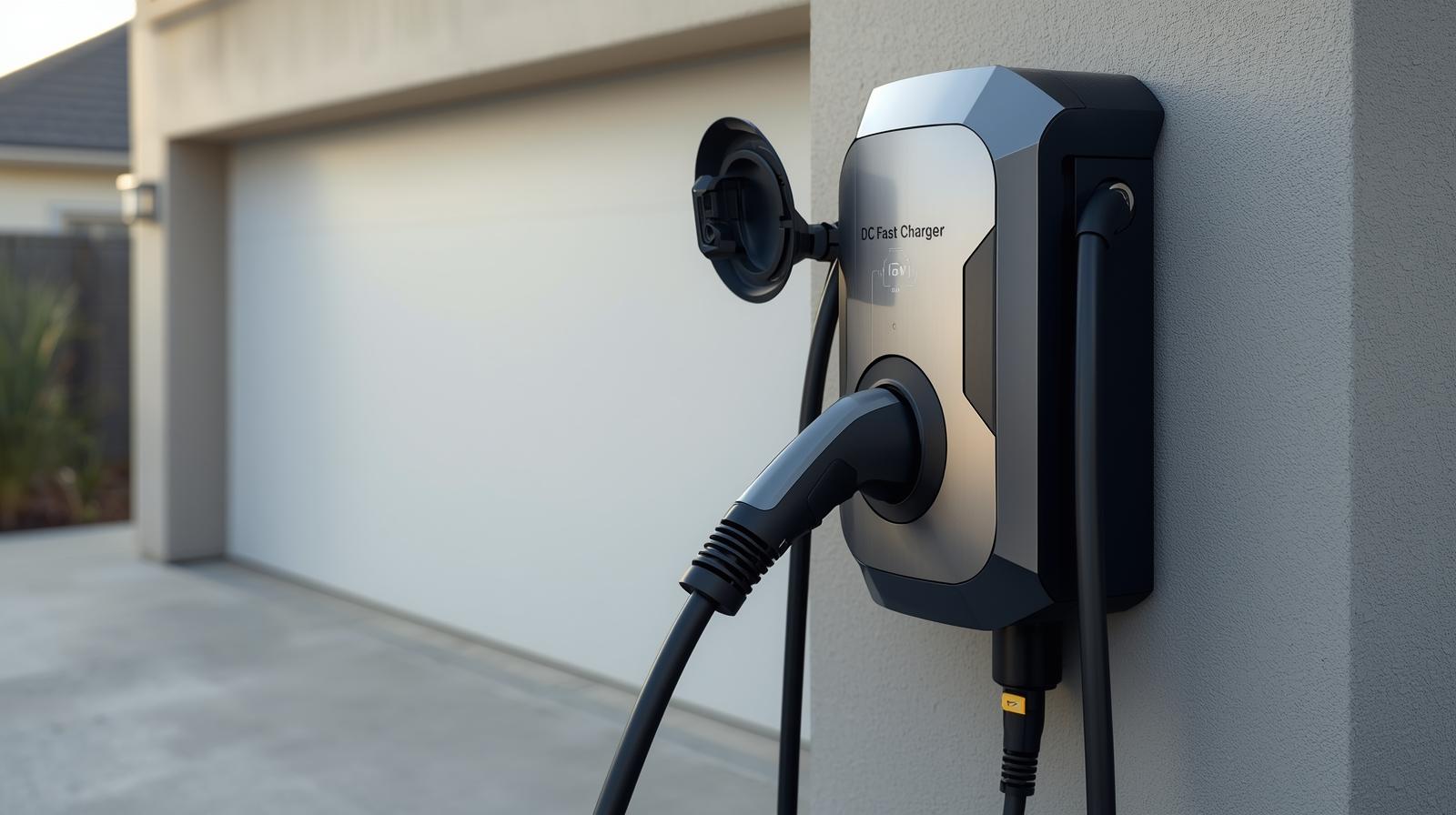
DC fast chargers deliver direct current (DC) directly to the EV battery, bypassing the onboard charger. This allows significantly higher power levels, resulting in much faster charging times.
Key Characteristics
- Power output: 50 kW to 350+ kW
- Charging speed: 0–80% in 15–45 minutes
- Common in highways, urban hubs, and fleet depots
Key Differences Between AC and DC Chargers
| Feature | AC Charger | DC Fast Charger |
|---|---|---|
| Current Type | Alternating Current (AC) | Direct Current (DC) |
| Power Delivery | Limited by onboard charger | Bypasses onboard charger for higher power |
| Charging Speed | Slow to moderate | Ultra-fast |
| Typical Location | Homes, workplaces, public Level 2 stations | Highways, fleet depots, urban fast-charging hubs |
| Installation Complexity | Simple | Complex, requires high-voltage infrastructure |
| Cost | Low to moderate | High |
| Impact on Battery | Gentle, minimal stress | Slightly higher stress if overused |
Charging Speed Comparison
AC Chargers
- Level 1: 3–8 miles of range per hour
- Level 2: 15–60 miles of range per hour
DC Fast Chargers
- 50 kW: 100 miles in ~1 hour
- 150 kW: 200–250 miles in 30–40 minutes
- 350 kW: 80% charge in ~15–20 minutes
Takeaway: DC chargers are essential for long-distance travel and rapid turnaround times.
Power Levels and Electrical Requirements
AC Chargers
- Level 1: 120V, 12–16A
- Level 2: 240V, 16–80A
- Compatible with most residential wiring
DC Fast Chargers
- Require 3-phase high-voltage supply
- Draw from 400V–1000V systems
- Installation often requires utility coordination
Equipment and Installation Differences
- AC Chargers: Small, wall-mounted, simple to install; minimal electrical upgrades needed.
- DC Chargers: Larger, require heavy-duty electrical panels, cooling systems, and sometimes transformers; installation is expensive and complex.
How AC Chargers Work
AC chargers supply AC power to the onboard charger, which converts AC to DC for battery storage.
Key Points:
- Slower due to onboard charger limitations
- Cost-effective for home charging
- Gentle on battery health
How DC Fast Chargers Work
DC chargers deliver DC directly to the battery, bypassing the onboard charger.
Key Points:
- Enables high-speed charging
- Generates heat; requires thermal management
- Ideal for highways, public stations, and fleets
Impact on Battery Health
- AC Chargers: Minimal stress on battery, ideal for daily charging
- DC Chargers: Occasional use is safe; frequent high-power charging may accelerate minor degradation
- Battery Management Systems (BMS): Protects battery health during both AC and DC charging
Best Use Cases for AC Chargers
- Home overnight charging
- Workplace charging
- Daily commuting
- Small public charging stations
Best Use Cases for DC Fast Chargers
- Long-distance travel
- Urban fast-charging hubs
- Fleet operations
- High-traffic public areas
Cost Comparison: AC vs DC Chargers
| Type | Equipment Cost | Installation | Total Cost |
|---|---|---|---|
| AC Level 1 | $300–$600 | Minimal | $300–$1,000 |
| AC Level 2 | $500–$2,500 | $500–$2,000 | $1,000–$4,500 |
| DC Fast Charger | $10,000–$150,000+ | $20,000–$100,000+ | $30,000–$250,000+ |
Installation and Infrastructure Considerations
- AC Chargers: Simple wiring, plug-and-play
- DC Chargers: High-voltage lines, grid upgrades, permits, heavy equipment
Home Charging vs Public Charging
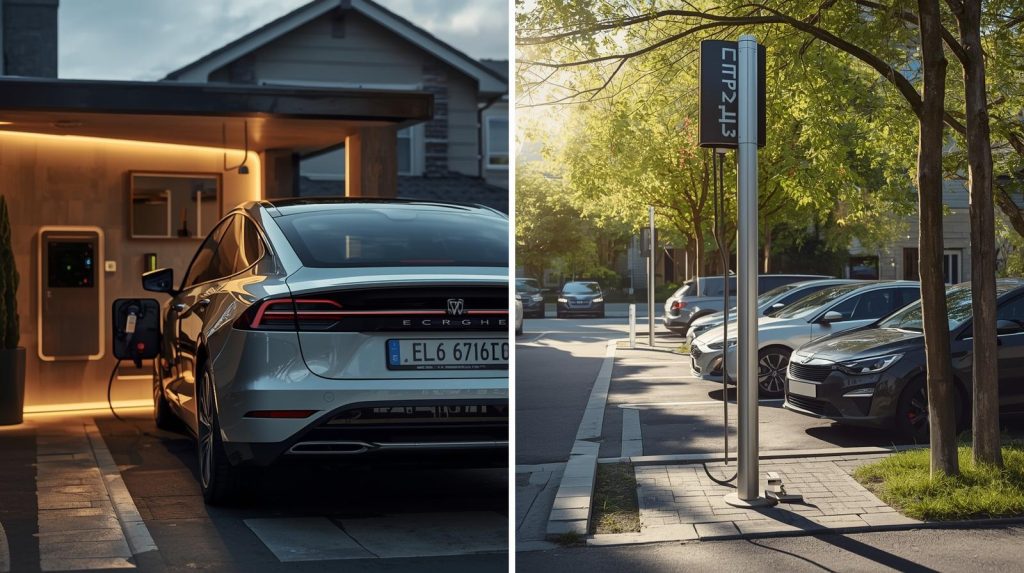
- AC Chargers: Ideal for home and workplace daily charging
- DC Chargers: Primarily for public and highway charging to minimize downtime
Fleet and Commercial EV Applications
- AC Chargers: Used for overnight fleet charging
- DC Chargers: Used for fast turnaround and high-mileage fleet operations
Pros and Cons of AC Chargers
Pros:
- Low cost
- Gentle on battery
- Easy to install
Cons:
- Slow charging
- Not suitable for long-distance travel
Pros and Cons of DC Fast Chargers
Pros:
- Ultra-fast charging
- Ideal for long trips
- High throughput for fleets
Cons:
- Expensive
- Complex installation
- Slightly more battery stress if overused
Charging Networks and Accessibility
- AC chargers: Widespread in homes, workplaces, and urban areas
- DC chargers: Concentrated along highways, urban fast-charging hubs, and public stations
Safety Considerations
Both AC and DC chargers are designed with safety in mind, including:
- Overcurrent protection
- Thermal management
- Ground fault detection
- Communication with EV BMS
Technological Advancements in Charging
- Smart AC chargers: Adjustable current, app-controlled
- Ultra-fast DC chargers: 800V architecture, AI-optimized charging
- Integration with renewable energy and storage
Government Incentives and Subsidies
- AC chargers: Tax credits and workplace incentives
- DC chargers: Grants for public and commercial charging infrastructure
- Incentives reduce upfront costs and promote EV adoption
Myths and Misconceptions
- Myth: DC chargers always damage batteries → Modern BMS protects battery health
- Myth: AC chargers are too slow → Suitable for daily charging
- Myth: DC chargers are only for highways → Used in urban hubs and fleets as well
Future Trends in EV Charging
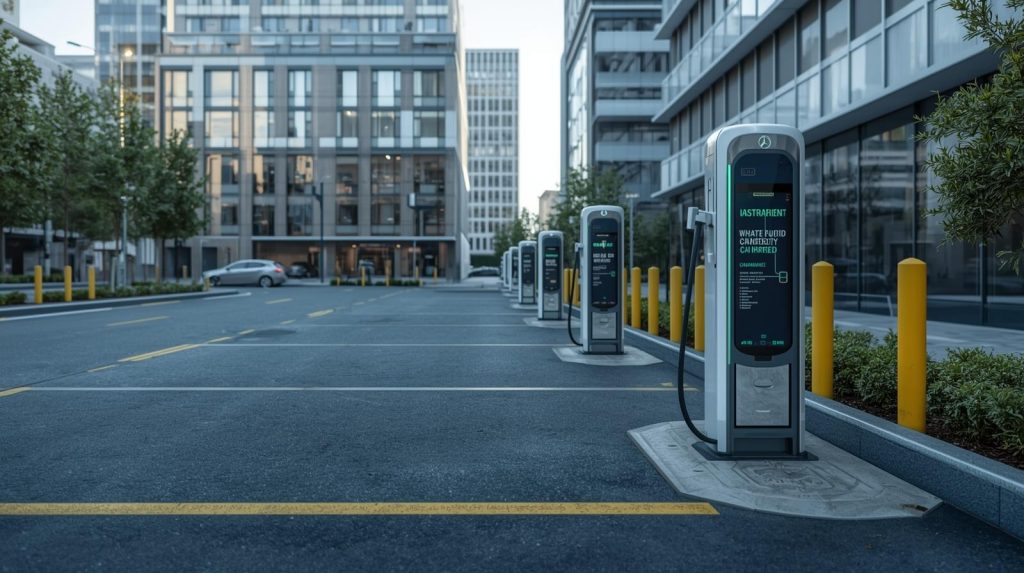
- Higher power DC chargers (>350 kW)
- Wireless and ultra-fast AC charging technologies
- Smart charging integration with renewable energy
- Standardization for global EV adoption
Tips for EV Owners
- Use AC charging for daily needs
- Use DC fast charging for long trips
- Monitor SOC and avoid 100% frequent fast charging
- Follow manufacturer recommendations
Conclusion
The difference between AC chargers and DC fast chargers comes down to charging speed, power delivery, cost, and use case. AC chargers are ideal for home, work, and daily commuting, offering gentle, cost-effective charging. DC fast chargers are essential for long-distance travel, fleet operations, and urban fast-charging hubs, delivering rapid charging at a higher cost.
Understanding these differences helps EV owners, businesses, and public planners choose the right charger for the right situation, ensuring convenience, efficiency, and battery longevity.
FAQs: Difference Between AC Chargers and DC Fast Chargers
1. What is the main difference between AC chargers and DC fast chargers?
AC chargers supply alternating current to the vehicle’s onboard charger, which converts it to DC for the battery, while DC fast chargers deliver direct current straight to the battery, enabling much faster charging.
2. Which charger is faster, AC or DC?
DC fast chargers are significantly faster, charging 0–80% in 15–45 minutes, while AC chargers typically take several hours depending on the level and power.
3. Can I use DC fast chargers at home?
Generally, no. DC fast chargers require high-voltage, three-phase connections and complex installation, making them suitable mainly for public stations or commercial use. AC chargers are ideal for home charging.
4. Are AC chargers cheaper than DC fast chargers?
Yes. AC chargers are much cheaper to purchase and install. DC fast chargers have high equipment and installation costs due to advanced technology and electrical infrastructure requirements.
5. How does each charger affect battery health?
AC chargers are gentler on batteries and ideal for daily charging. DC fast chargers can cause slight stress if used frequently, but modern EVs have battery management systems to protect battery health.
6. Where are AC chargers typically used?
AC chargers are used at homes, workplaces, and some public locations where slower, convenient charging is sufficient.
7. Where are DC fast chargers typically used?
DC fast chargers are commonly installed along highways, urban fast-charging hubs, fleet depots, and high-traffic public locations for rapid turnaround.
8. What are the installation requirements for AC vs DC chargers?
AC chargers require simple wiring and minimal upgrades. DC chargers require high-voltage electrical service, heavy-duty panels, cooling systems, and sometimes utility coordination.
9. Are there government incentives for installing these chargers?
Yes. Both AC and DC chargers may be eligible for tax credits, grants, and subsidies. DC chargers often receive larger incentives due to their role in public infrastructure and fleet operations.
10. Which charger should I choose for daily use?
For daily use, AC Level 2 chargers are recommended due to their cost-effectiveness, battery-friendly charging, and suitability for overnight or workplace charging. DC fast chargers are ideal for long trips or urgent charging needs.