
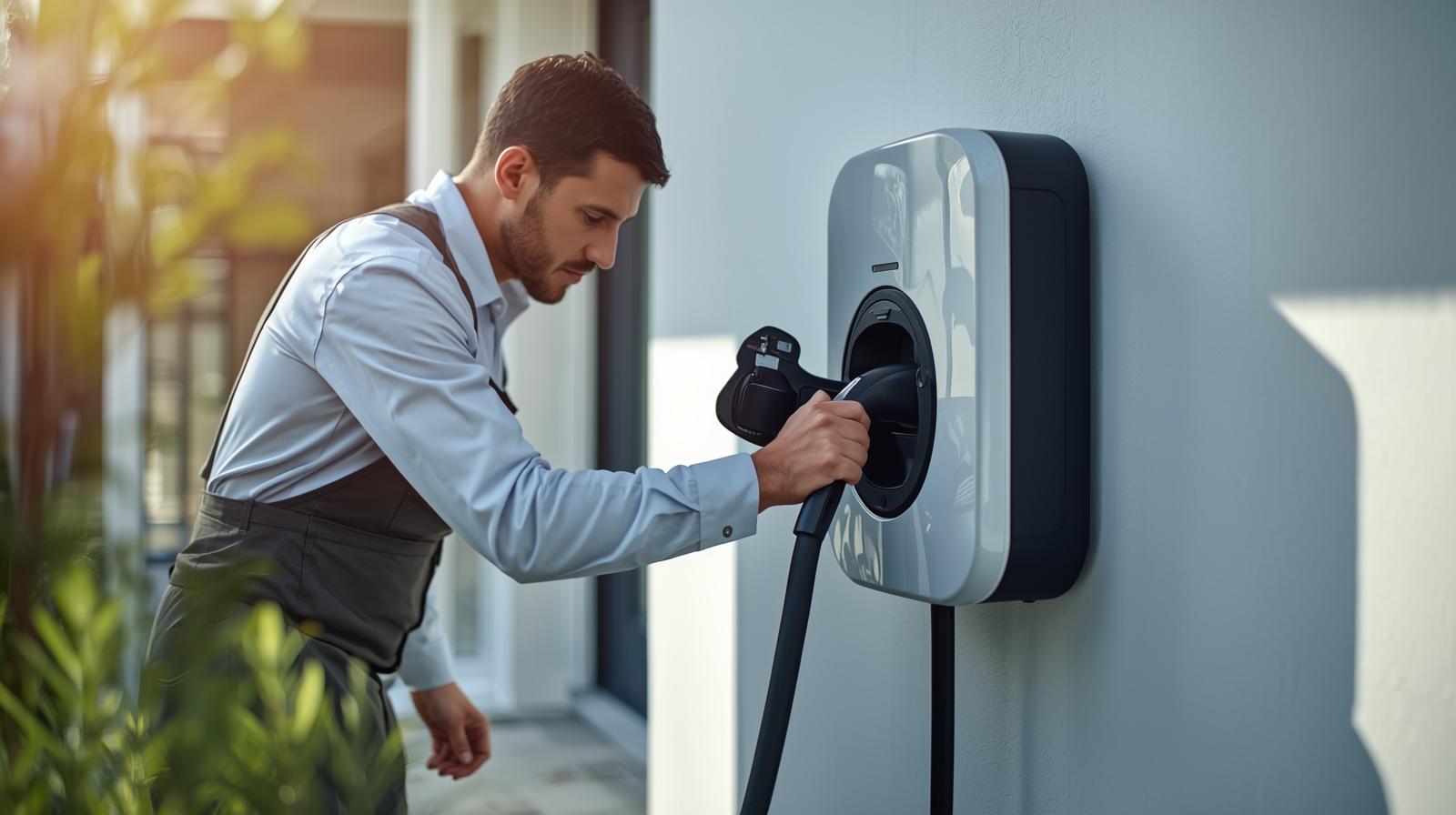
As electric vehicles (EVs) continue gaining momentum worldwide, more homeowners are looking for ways to upgrade their home charging systems for faster, more efficient charging. This growing interest naturally brings up a big question: can you install a DC fast charger at home? Many EV owners have heard about the ultra-fast charging speeds offered by public DC fast chargers and want to replicate that convenience at home.
However, while the idea sounds appealing, the reality is much more complex. DC fast chargers are extremely powerful units designed for commercial use, high-traffic charging stations, and highway corridors. Home installations come with major challenges—from electrical infrastructure limitations to permitting requirements and extremely high installation costs.
What Is a DC Fast Charger?
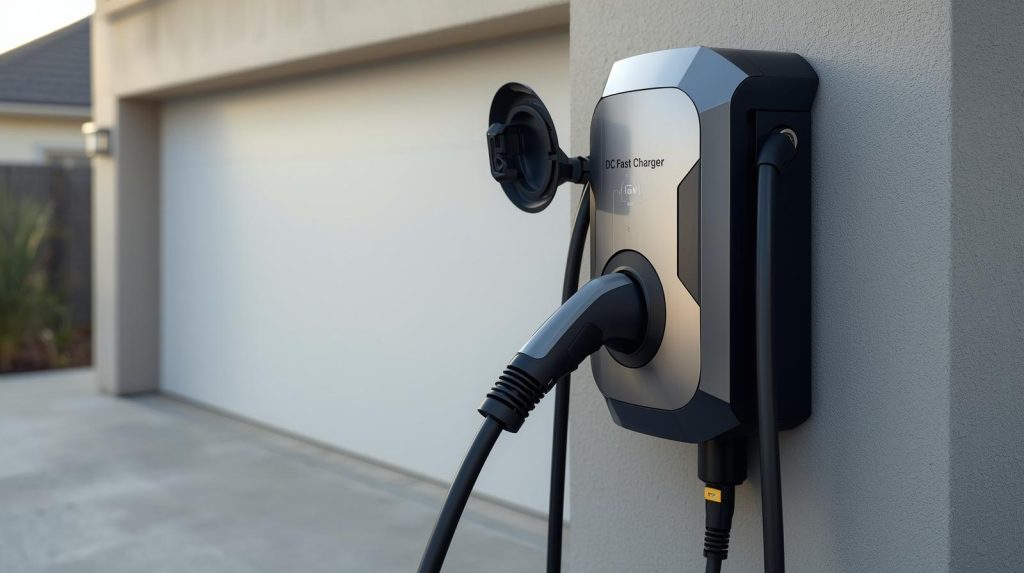
DC fast chargers—also known as DCFC, Level 3 chargers, or DC rapid chargers—are high-power EV charging units that supply direct current (DC) directly to a vehicle’s battery.
Unlike AC chargers (Level 1 and Level 2), which rely on the vehicle’s onboard charger to convert AC to DC, DC chargers skip the conversion process. This allows the charger to deliver power directly into the battery, resulting in extremely fast charging speeds.
Typical DC Charging Power Levels
| Charger Type | Power Output | Charging Speed |
|---|---|---|
| Level 1 AC | 1–2 kW | 3–5 miles/hour |
| Level 2 AC | 7–19 kW | 20–40 miles/hour |
| DC Fast Charging | 50–350+ kW | 80% in 15–45 minutes |
Because of these high power levels, DC chargers require industrial-grade infrastructure, advanced cooling systems, and professional installation.
Difference Between AC Chargers and DC Fast Chargers
To understand whether you can install a DC fast charger at home, you first need to understand key differences between AC and DC chargers:
Power Supply
- AC Chargers: Use 120V or 240V available in homes.
- DC Chargers: Require 480V three-phase power or higher.
Infrastructure Requirements
- AC Chargers: Work with home panels (100–200 amps).
- DC Chargers: Often require commercial transformers, utility upgrades, and special switchgear.
Cost
- AC Chargers: $500–$2,000 installed.
- DC Chargers: $30,000–$200,000+ installed.
Use Cases
- AC Chargers: Ideal for daily overnight charging.
- DC Chargers: Best for highway stations, commercial plazas, fleet depots.
These differences explain why installing a DC charger at home is extremely challenging and rarely feasible.
Homes Do Not Have Enough Electrical Capacity
This is the biggest barrier.
Most homes have:
- Single-phase electrical supply
- 100A–200A total panel capacity
- 120/240 volt configurations
But DC fast chargers require:
- Three-phase 480V power
- 400–1600 amps
- Industrial-grade transformers
This level of power is far beyond what home infrastructure can support.
Massive Utility Upgrades Would Be Required
A DC fast charger requires:
- A dedicated transformer
- High-voltage service lines
- Utility coordination
- New meter and service panel
- Extensive trenching and wiring
This process can cost $20,000–$200,000+ before you even buy the charger.
The Charger Unit Is Extremely Expensive
DC fast chargers cost:
$20,000 to $100,000+ for the charger alone
And if you want a 350 kW ultra-fast charger?
Expect prices of:
$150,000 to $300,000+
These costs are simply not realistic for residential customers.
Additional Cooling and Ventilation Needed
DC chargers generate tremendous heat and require:
- Liquid cooling
- Dedicated ventilation
- Commercial cooling systems
Homes are not equipped to handle these conditions.
Permitting and Zoning Restrictions
Many localities prohibit residential installation of:
- High-voltage equipment
- Commercial-grade EV infrastructure
- Multi-phase electrical systems
You would need special permits, which are rarely approved.
Safety Concerns
High-voltage equipment like DC chargers requires:
- Special grounding
- Heavy-duty wiring
- Fault detection systems
- Fire and electrical hazard mitigation
Installing industrial charging equipment in a residential environment increases risk.
Are There Situations Where You Can Install a DC Fast Charger at Home?
While rare, it is technically possible if you meet certain conditions.
You may be able to install a DC charger at home if:
You live on a large commercial property
You have access to three-phase 480V power
You can afford the installation cost
You have utility approval
You receive special permits
Your home is part of a large estate or private business property
This scenario is extremely uncommon.
Some luxury homeowners with large estates or private garages attached to businesses have installed low-power DC chargers (24–50 kW), but this is not typical residential behavior.
Why Most Homeowners Don’t Need DC Fast Chargers Anyway
Even if you could install a DC fast charger at home, you wouldn’t need one.
Here’s why:
1. EVs Are Designed for AC Charging at Home
Most EV owners charge:
8–12 hours overnight using a Level 2 charger.
This is ideal for:
- Daily use
- Battery health
- Electricity cost
- Convenience
DC charging is meant for quick stops, not daily use.
2. Frequent DC Use Can Degrade Battery Health Over Time
Manufacturers recommend limiting DC fast charging because:
- It increases battery temperature
- It stresses lithium-ion cells
- It may accelerate battery degradation
Home charging with Level 2 keeps the battery healthier long-term.
3. A Level 2 Charger Is Fast Enough for 99% of Drivers
A Level 2 home charger provides:
20–40 miles of range per hour
Full charge overnight
Electricity rates 2–4x cheaper than public chargers
Simple installation
So for daily commuting, a Level 2 charger is perfect.
Cost Breakdown: Level 2 Charger vs DC Fast Charger at Home
| Feature | Level 2 Home Charger | DC Fast Charger |
|---|---|---|
| Charger Price | $300–$1,500 | $20,000–$100,000+ |
| Installation Cost | $300–$2,000 | $20,000–$200,000+ |
| Power Required | 240V | 480V 3-Phase |
| Charging Time | 4–10 hours | 15–45 minutes |
| Best for | Daily home charging | Public stations & fleets |
This comparison clearly shows why DC fast charging is not practical for residential homes.
Alternatives to Installing a DC Fast Charger at Home
If your goal is faster or more convenient charging at home, consider these options:
Install a Hardwired Level 2 Charger
Delivers:
- 7–19 kW
- Full overnight charging
- Affordable installation
- Universal compatibility
This is the best solution for 99% of homeowners.
Upgrade Your Electrical Panel
If your panel is old or limited, upgrading to 200A or 400A may:
- Support faster Level 2 charging
- Improve home electrical safety
- Prepare your home for future EVs
Look for Local DC Fast Charging Stations
Instead of installing at home, use local DC fast chargers for:
- Road trips
- Emergency charging
- Fast top-ups
They’re widely available and far more practical.
Install Solar + Home Battery System
Solar power can:
- Offset EV charging costs
- Reduce grid dependency
- Provide cleaner energy
Paired with a Level 2 charger, this is a powerful home charging solution.
Future of Home DC Charging: Is It Possible One Day?
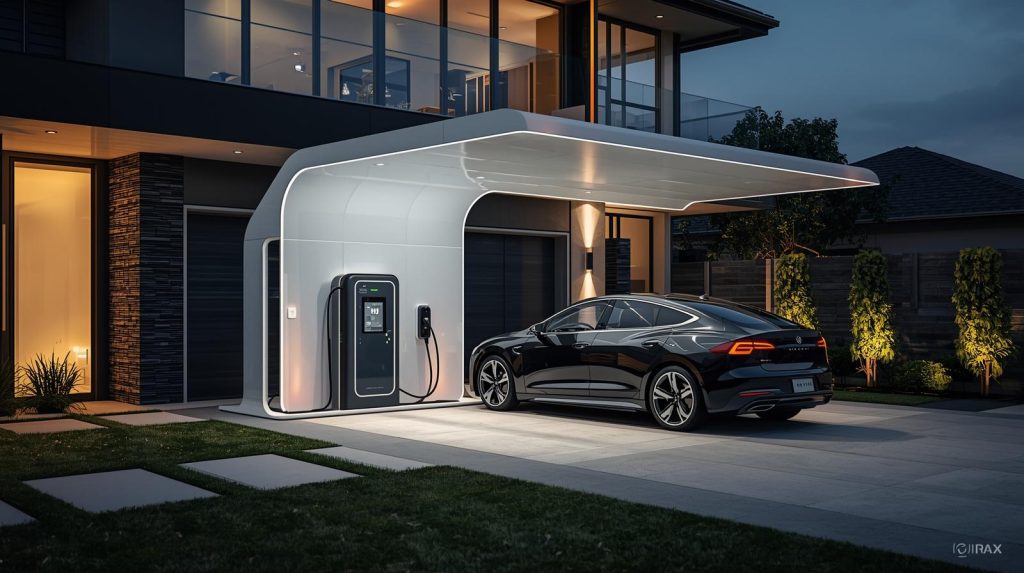
Technological advancements may one day allow home DC charging, but several breakthroughs are needed:
- Smaller, less expensive DC chargers
- Lower power requirements
- Safer designs
- New battery technologies
Companies are exploring compact 24–30 kW DC chargers for home use, but they are still expensive and impractical for typical residential electrical systems.
In the near future, Level 2 home charging will remain the standard.
Conclusion
So, can you install a DC fast charger at home?
For 99% of homeowners: No, it is not practical, affordable, or feasible.
DC fast chargers require industrial-grade power, expensive equipment, extensive utility upgrades, and special permits that most homes cannot support.
However, you don’t need a DC fast charger at home anyway. A Level 2 home charger is more than enough for daily driving, more affordable, safer for your EV battery, and compatible with typical residential electrical systems.
If you’re looking to upgrade your EV home charging setup, investing in a high-quality Level 2 charger is the best solution.
FAQs for “Can You Install a DC Fast Charger at Home?”
1. Can you install a DC fast charger at home?
In most cases, no. DC fast chargers require high-voltage 480V three-phase power, industrial equipment, and costly utility upgrades that homes don’t support.
2. Why are DC fast chargers not suitable for residential homes?
They require commercial-grade electrical infrastructure, large transformers, advanced cooling systems, special permits, and extremely high installation costs.
3. How much does it cost to install a DC fast charger at home?
Installation can cost $40,000–$200,000+, not including necessary utility upgrades. This makes residential installation impractical for most homeowners.
4. Can any home support three-phase power for a DC charger?
Very few homes have three-phase 480V power. Most residential properties would need major utility upgrades, which are rarely approved and extremely expensive.
5. Is it harmful to charge an EV with DC fast charging regularly?
Frequent DC fast charging generates heat and may increase long-term battery wear. Daily home charging is best done with a Level 2 AC charger.
6. Are low-power DC home chargers available?
Yes, some low-power 20–30 kW DC chargers exist, but they are still expensive and require special electrical supply, making them unrealistic for most homes.
7. What is the best charging option for a home?
A Level 2 AC home charger is the most practical option. It offers fast overnight charging, low installation cost, and is safe for long-term battery health.
8. Can solar panels support a home DC charger?
No. A DC fast charger needs far more energy than a residential solar system can produce. However, solar panels can support a Level 2 AC charger effectively.