
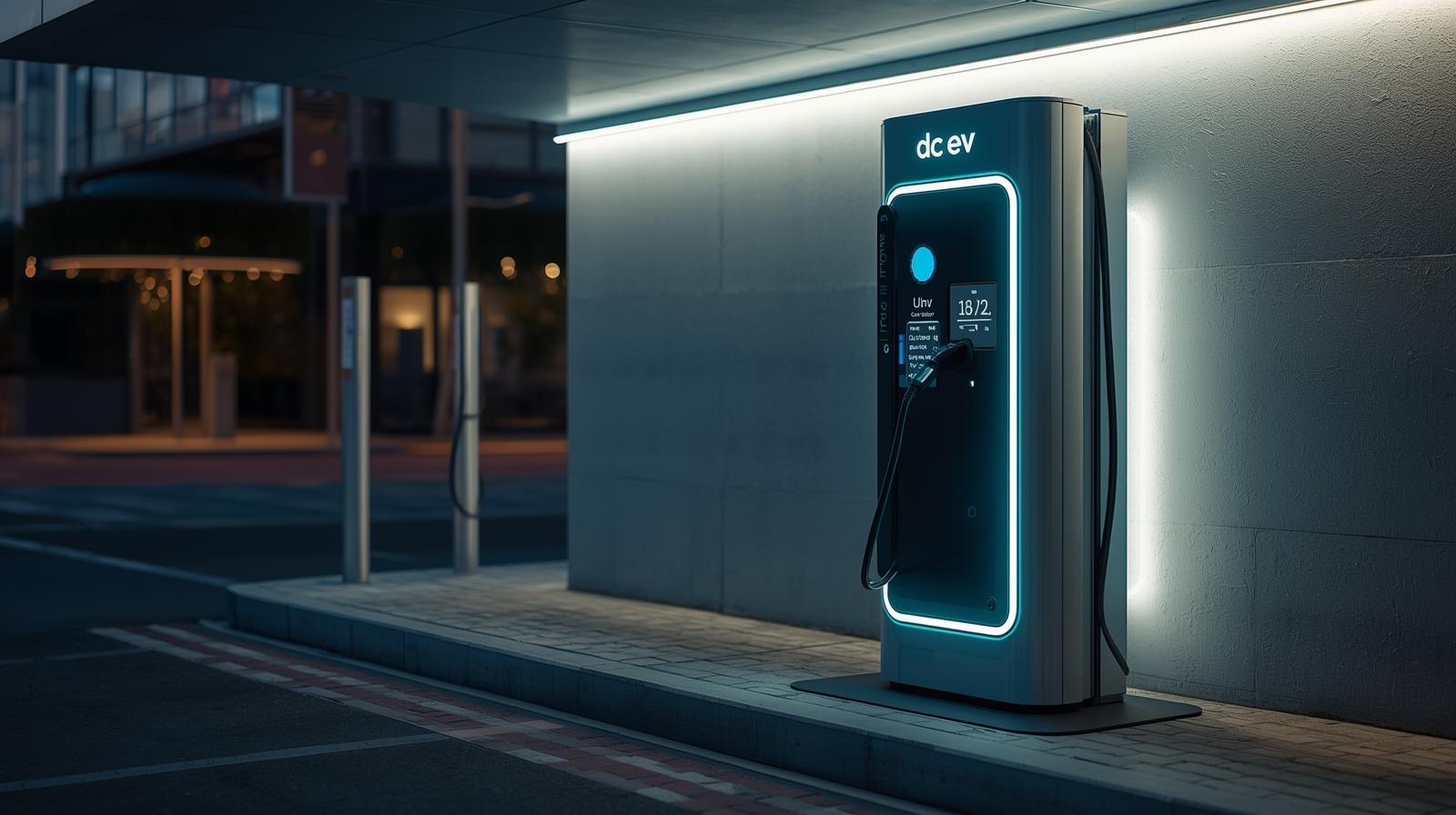
As electric vehicles (EVs) become a central part of modern transportation, charging technology is evolving rapidly to meet growing demand. Among all charging options, DC EV chargers—often called DC fast chargers—stand out as the fastest way to recharge an electric vehicle. You’ve probably seen them along highways, at shopping centers, or in public charging stations, capable of adding hundreds of miles of range in under an hour.
But many EV owners and enthusiasts still ask an important question:
How Do DC EV Chargers Work?
Understanding how DC EV chargers work is essential for making informed decisions about EV ownership, charging habits, battery health, and infrastructure planning. This in-depth guide explains everything you need to know—from basic electrical principles to real-world charging behavior.
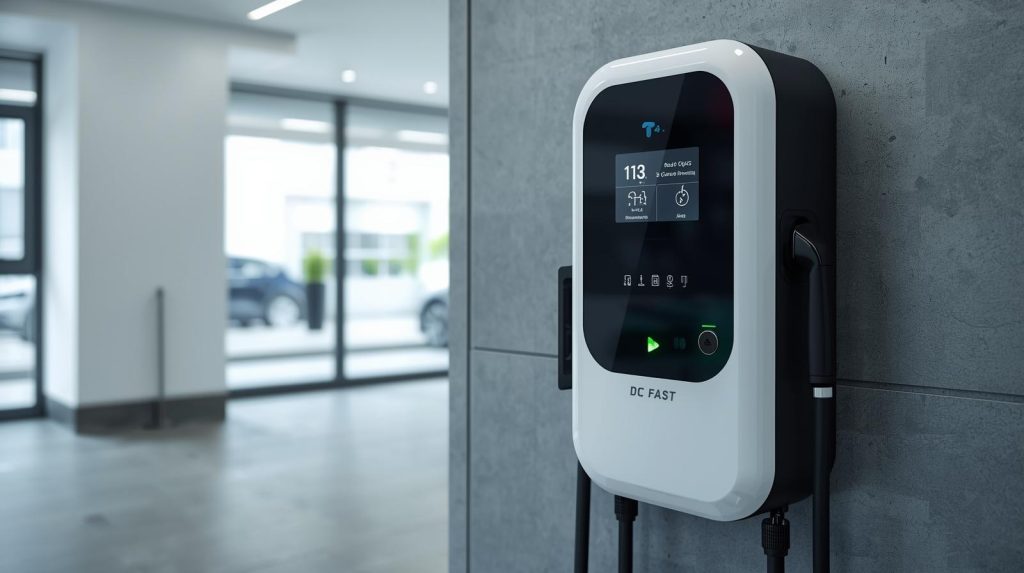
Introduction to DC EV Charging
Electric vehicles are powered by large lithium-ion battery packs that store energy as direct current (DC). However, the electricity supplied by the power grid is alternating current (AC). This mismatch is at the heart of why different charging technologies exist.
Most home chargers deliver AC power and rely on the car’s onboard charger to convert it into DC. DC EV chargers, on the other hand, skip this step entirely—allowing for much faster charging.
To fully understand how do DC EV chargers work, we must first understand the difference between AC and DC charging.
What Is a DC EV Charger?
A DC EV charger is a high-power charging system that delivers direct current (DC) electricity straight to an electric vehicle’s battery, bypassing the vehicle’s onboard charger.
These chargers are also known as:
- DC Fast Chargers
- DCFC
- Level 3 EV Chargers
They are designed for rapid charging, often capable of delivering 50 kW to 350 kW of power.
AC vs DC Charging: Key Differences
Understanding the difference between AC and DC charging is critical when exploring how DC EV chargers work.
| Feature | AC Charging | DC Charging |
|---|---|---|
| Power Type | Alternating Current | Direct Current |
| Conversion | Inside the car | Inside the charger |
| Speed | Slow to moderate | Very fast |
| Common Locations | Homes, offices | Highways, public stations |
| Equipment Cost | Low | Very high |
AC charging is limited by the size of the vehicle’s onboard charger. DC charging removes that limitation.
Why EV Batteries Use DC Power
EV batteries store and release energy in DC form. This is because:
- Lithium-ion cells operate on DC
- DC power is more stable for energy storage
- Battery management systems are designed for DC input
Therefore, any AC electricity must be converted to DC before entering the battery. DC EV chargers perform this conversion externally and at much higher power levels.
How Do DC EV Chargers Work? (Step-by-Step Explanation)
Now let’s answer the core question directly: How Do DC EV Chargers Work?
Step 1: Power Draw from the Grid
DC EV chargers draw electricity from the grid, usually from:
- High-voltage commercial power lines
- Three-phase electrical supply
This allows access to large amounts of energy quickly.
Step 2: AC to DC Conversion Inside the Charger
Inside the charger, powerful rectifiers convert AC electricity into DC electricity.
This conversion happens using industrial-grade power electronics, far more powerful than anything inside a car.
Step 3: Voltage Adjustment
The charger adjusts voltage to match the vehicle’s battery requirements, which may range from:
- 400V systems (older EVs)
- 800V systems (modern high-performance EVs)
Step 4: Communication with the Vehicle
Before charging begins, the charger and the EV exchange data to confirm:
- Maximum battery voltage
- Maximum current
- Battery temperature
- State of charge (SoC)
This communication ensures safe and efficient charging.
Step 5: Direct DC Power Delivery
Once approved, the charger sends DC power directly to the battery, bypassing the onboard charger completely.
This is the key reason DC charging is so fast.
Step 6: Continuous Monitoring
Throughout the session, the charger monitors:
- Battery temperature
- Voltage levels
- Charging speed
- Safety parameters
If any abnormal condition is detected, charging slows or stops automatically.
Key Components of a DC EV Charger
To understand how DC EV chargers work, it’s important to know their internal components:
1. Rectifier
Converts AC power to DC power.
2. Power Modules
Control voltage and current output.
3. Cooling System
Liquid or air cooling prevents overheating.
4. Control Unit
Manages communication and safety protocols.
5. High-Voltage Cables
Deliver power safely to the vehicle.
Power Levels and Charging Speeds
DC EV chargers come in various power levels:
| Charger Power | Typical Use | Charging Speed |
|---|---|---|
| 25–50 kW | Urban stations | 80% in ~1 hour |
| 100–150 kW | Highway stops | 80% in 30–40 min |
| 250–350 kW | Ultra-fast | 80% in 15–20 min |
Actual charging speed depends on vehicle compatibility.
Charging Curve Explained
A common misconception is that DC chargers always charge at full speed. In reality, charging follows a curve:
- Fastest from 10%–50%
- Slows between 50%–80%
- Significantly slows after 80%
This protects battery health and prevents overheating.
Communication Between Car and Charger
DC EV chargers use standardized communication protocols such as:
- ISO 15118
- DIN 70121
These allow:
- Automatic power negotiation
- Plug-and-charge functionality
- Billing and authentication
This communication is essential to how DC EV chargers work safely.
DC Charging Standards and Connector Types
Different regions use different DC connectors:
CCS (Combined Charging System)
- Most common globally
- Used by Tesla (outside North America), BMW, Ford, VW
CHAdeMO
- Used mainly by older Nissan and Mitsubishi models
Tesla Supercharger
- Proprietary (North America)
- High-speed and tightly integrated
Safety Systems in DC EV Chargers
DC EV chargers include advanced safety mechanisms:
- Ground fault protection
- Overcurrent protection
- Thermal monitoring
- Emergency shutoff
- Insulation monitoring
These systems ensure high-voltage charging remains safe.
Impact of DC Fast Charging on EV Batteries
Frequent DC fast charging can:
- Increase battery temperature
- Accelerate degradation over time
That’s why manufacturers recommend DC charging mainly for:
- Road trips
- Occasional fast charging
Level 2 charging is better for daily use.
Where DC EV Chargers Are Commonly Used
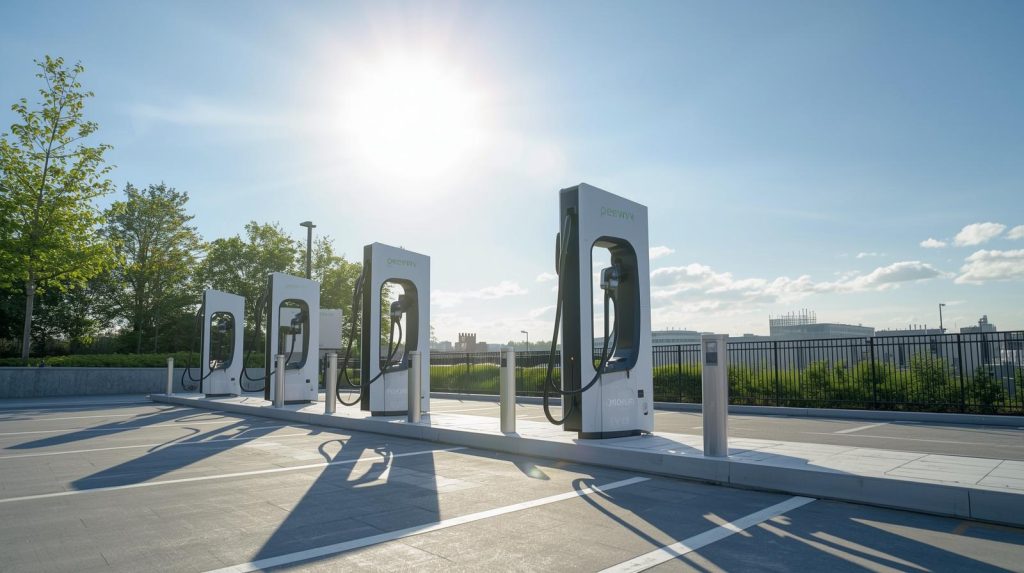
DC EV chargers are typically installed at:
- Highway rest stops
- Shopping malls
- Public charging hubs
- Commercial fleets
- Urban fast-charging stations
They are rarely used in homes due to infrastructure limits.
Advantages of DC EV Chargers
Key benefits include:
- Extremely fast charging
- Reduced range anxiety
- Ideal for long trips
- Commercial viability
Limitations of DC EV Chargers
Despite their speed, DC chargers have drawbacks:
- Very high cost
- Grid stress
- Battery wear
- Limited availability
DC EV Chargers vs Level 2 Chargers
| Feature | DC Charger | Level 2 Charger |
|---|---|---|
| Speed | Very fast | Moderate |
| Cost | Very high | Affordable |
| Location | Public | Home |
| Battery Impact | Higher | Lower |
Energy Efficiency and Grid Impact
DC fast chargers draw massive power instantly, which can:
- Stress local grids
- Require energy storage buffers
- Increase demand charges
Utilities carefully manage where these chargers are installed.
Cost of DC EV Charging
Costs include:
- Equipment: $20,000–$300,000
- Installation: $10,000–$100,000+
- Maintenance and electricity
This explains why DC chargers are commercial investments.
Future of DC EV Charging Technology
The future may include:
- Higher-efficiency power electronics
- Solid-state batteries
- Megawatt charging for trucks
- Smart grid integration
These innovations will further refine how DC EV chargers work.
Conclusion
So, How Do DC EV Chargers Work?
In simple terms, they convert high-voltage AC power into DC power outside the vehicle and deliver it directly to the battery at extremely high speeds. This bypasses onboard chargers, enabling rapid charging but requiring massive infrastructure, advanced safety systems, and careful battery management.
DC EV chargers are a cornerstone of long-distance EV travel and commercial charging networks. While not ideal for everyday home use, they play a crucial role in accelerating EV adoption worldwide.
Understanding how DC EV chargers work empowers EV owners to charge smarter, protect battery health, and use the right charging method for every situation.
FAQs: How Do DC EV Chargers Work?
1. How do DC EV chargers work?
DC EV chargers work by converting AC electricity from the power grid into DC power inside the charger itself and delivering it directly to the EV’s battery, bypassing the vehicle’s onboard charger for much faster charging.
2. Why are DC EV chargers faster than Level 2 chargers?
DC EV chargers supply high-voltage DC power directly to the battery and are not limited by the vehicle’s onboard charger capacity, allowing them to charge much faster than Level 2 AC chargers.
3. What power levels do DC EV chargers use?
DC EV chargers typically operate between 50 kW and 350 kW, depending on the charger type and vehicle compatibility. Higher power levels result in faster charging times.
4. Do all electric vehicles support DC fast charging?
No. Most modern EVs support DC fast charging, but some older or entry-level models do not. Charging speed also varies based on battery size, voltage architecture, and thermal management systems.
5. Does DC fast charging damage EV batteries?
Occasional DC fast charging is safe, but frequent use can increase battery wear due to higher heat and stress. Manufacturers recommend Level 2 charging for daily use and DC fast charging for trips or emergencies.
6. Why does DC charging slow down after 80%?
DC charging slows after 80% to protect the battery from overheating and excessive stress. This charging curve helps extend battery lifespan and maintain safety.
7. Where are DC EV chargers commonly installed?
DC EV chargers are commonly found at highway rest stops, public charging stations, shopping centers, fleet depots, and commercial charging hubs.
8. What connectors are used for DC EV charging?
Common DC charging connectors include CCS (Combined Charging System), CHAdeMO, and Tesla Supercharger connectors, depending on the region and vehicle brand.