
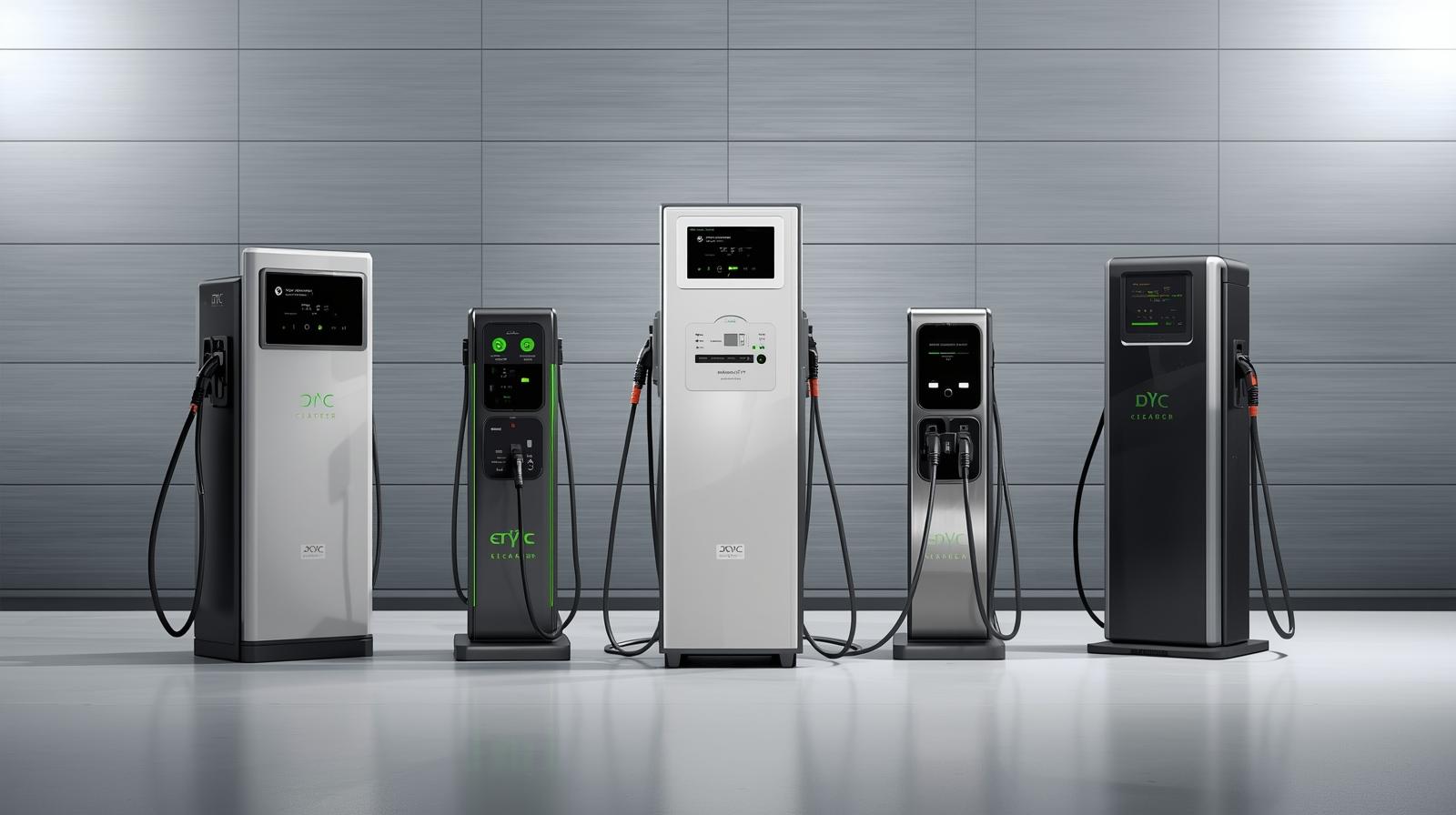
As electric vehicles (EVs) continue to reshape the global transportation landscape, charging infrastructure has become just as important as the vehicles themselves. Among all charging solutions, DC EV chargers play a critical role in enabling fast, long-distance, and commercial EV usage. Whether you see them at highway rest stops, shopping centers, or fleet depots, DC chargers are the backbone of rapid EV charging.
But not all DC chargers are the same.
Understanding the types of DC EV chargers is essential for EV owners, fleet operators, policymakers, businesses, and charging network developers. Each type is designed for specific use cases, power levels, vehicle compatibility, and infrastructure requirements.
Introduction to DC EV Chargers
Electric vehicles rely on batteries that store direct current (DC) electricity. However, the electricity supplied by the grid is alternating current (AC). This fundamental difference led to the development of DC EV chargers, which deliver power directly to the battery without relying on the vehicle’s onboard charger.
As EV adoption accelerates, understanding the types of DC EV chargers becomes increasingly important. Different chargers serve different purposes—from short urban stops to long highway journeys and commercial fleet operations.
What Is a DC EV Charger?
A DC EV charger, also known as a DC fast charger or Level 3 charger, is a high-power charging system that converts AC power from the grid into DC power within the charger itself and delivers it directly to the EV battery.
Key characteristics include:
- High voltage (400V–1000V)
- High power output (25 kW to 350+ kW)
- Very fast charging speeds
- Commercial-grade electrical infrastructure
Why Understanding the Types of DC EV Chargers Matters
Not all EVs charge at the same speed, and not all locations require the same charging solution. Knowing the types of DC EV chargers helps:
- EV owners choose compatible charging stations
- Businesses plan cost-effective installations
- Cities design scalable charging networks
- Fleet operators optimize charging efficiency
Choosing the wrong type of DC charger can result in unnecessary costs, underutilization, or compatibility issues.
Classification of DC EV Chargers
The types of DC EV chargers can be categorized based on:
- Power output
- Connector standard
- Application or use case
- Technology and intelligence level
Let’s explore each category in detail.
Low-Power DC EV Chargers (25–50 kW)
Overview
Low-power DC EV chargers typically deliver 25 kW to 50 kW of power. These chargers are often used in urban environments where space, grid capacity, and cost are limiting factors.
Key Features
- Slower than ultra-fast chargers
- More affordable
- Lower grid impact
- Suitable for short stops
Common Locations
- City centers
- Retail parking lots
- Workplace charging
- Small public stations
Best Use Case
These are ideal when vehicles are parked for 30–90 minutes and need a meaningful range boost rather than ultra-fast charging.
Medium-Power DC EV Chargers (60–150 kW)
Overview
Medium-power chargers are among the most common types of DC EV chargers in public networks today.
Key Features
- Power output between 60 kW and 150 kW
- Can charge most EVs to 80% in 30–45 minutes
- Balanced cost and performance
Common Locations
- Shopping malls
- Highway exits
- Public charging hubs
- Fleet depots
Vehicle Compatibility
Most modern EVs support this charging range, making it a highly versatile option.
High-Power DC EV Chargers (150–350 kW)
Overview
High-power DC EV chargers, often called ultra-fast chargers, deliver exceptional charging speeds.
Key Features
- 150 kW to 350 kW output
- Requires advanced cooling systems
- Best suited for 800V EV architectures
Common Locations
- Highway corridors
- Long-distance travel routes
- Premium charging networks
Charging Performance
Some vehicles can gain 200–300 miles of range in 15–20 minutes under optimal conditions.
Ultra-Fast and Megawatt DC Chargers
Overview
These are the newest and most powerful types of DC EV chargers, designed mainly for electric trucks and buses.
Power Levels
- 500 kW
- 1 MW (1000 kW) or more
Applications
- Heavy-duty commercial fleets
- Logistics hubs
- Electric semi-trucks
These chargers are not intended for passenger vehicles—at least not yet.
Types of DC EV Chargers by Connector Standard
Another critical way to classify the types of DC EV chargers is by connector type.
CCS DC EV Chargers (Combined Charging System)
Overview
CCS is the most widely adopted DC charging standard globally.
Key Features
- Supports AC and DC charging
- High compatibility
- Used by most automakers
Vehicles Using CCS
- BMW
- Ford
- Volkswagen
- Hyundai
- Kia
- Mercedes-Benz
CCS supports power levels up to 350 kW, making it future-proof.
CHAdeMO DC EV Chargers
Overview
CHAdeMO is one of the earliest DC charging standards.
Key Features
- Bi-directional charging capability
- Limited power compared to CCS
- Gradually being phased out
Vehicles Using CHAdeMO
- Nissan Leaf (older models)
- Mitsubishi EVs
While still operational, CHAdeMO usage is declining.
Tesla Supercharger (DC)
Overview
Tesla Superchargers are proprietary DC EV chargers designed exclusively for Tesla vehicles (though some regions now support CCS).
Key Features
- Seamless integration with Tesla vehicles
- Extremely fast charging
- Plug-and-charge functionality
Power Levels
- Up to 250 kW (V3 Superchargers)
Tesla Superchargers represent one of the most refined DC charging ecosystems.
GB/T DC EV Chargers
Overview
GB/T is the DC charging standard used in China.
Key Features
- Supports high power
- Used exclusively in Chinese markets
- Different connector design
As China leads global EV adoption, GB/T chargers play a major role in global DC charging expansion.
Types of DC EV Chargers by Application
Beyond power and connectors, the types of DC EV chargers can also be classified by how they are used.
Public DC Fast Chargers
Overview
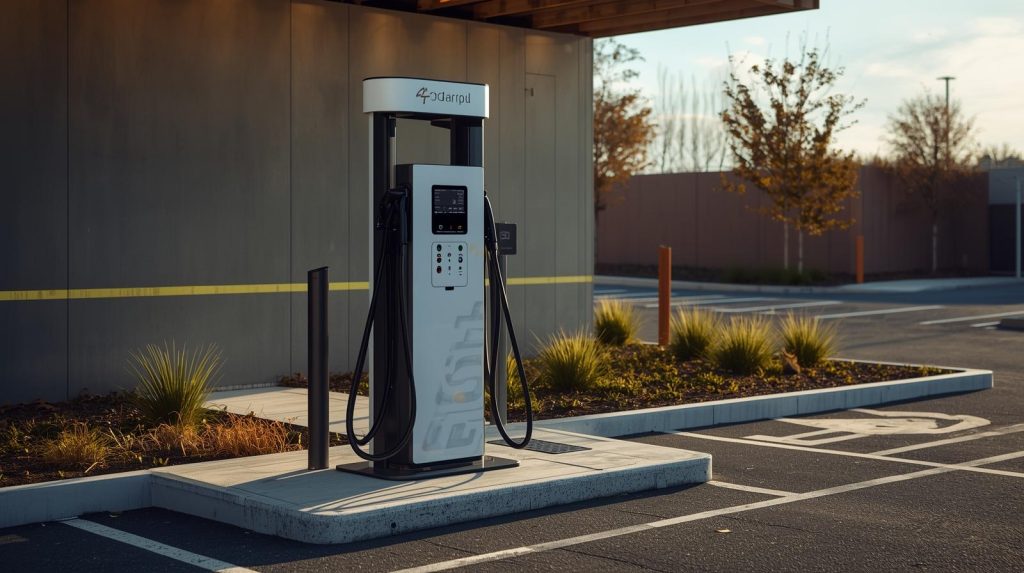
Public chargers are accessible to all EV drivers.
Features
- Network-based access
- Pay-per-use pricing
- Often located in high-traffic areas
These chargers help reduce range anxiety and enable long-distance travel.
Fleet and Depot DC Chargers
Overview
Fleet DC chargers are used by companies operating multiple EVs.
Key Features
- Optimized for predictable schedules
- Load balancing
- Lower operational costs per vehicle
Used by:
- Delivery companies
- Ride-sharing fleets
- Public transport agencies
Highway Corridor DC Chargers
Overview
These are designed for long-distance travel.
Key Features
- Ultra-fast charging
- High reliability
- Multiple charging stalls
They enable EV road trips to rival gasoline refueling convenience.
Portable and Mobile DC EV Chargers
Overview
Portable DC chargers are emerging solutions for temporary or emergency use.
Use Cases
- Roadside assistance
- Events
- Construction sites
While not common, they represent a growing niche.
Smart DC EV Chargers
Overview
Smart chargers use software and connectivity to optimize charging.
Features
- Remote monitoring
- Load management
- Dynamic pricing
- Grid integration
These chargers improve efficiency and reduce grid strain.
Pros and Cons of Different Types of DC EV Chargers
Advantages
- Fast charging
- Reduced downtime
- Essential for long trips
- Supports commercial EV growth
Disadvantages
- High cost
- Grid impact
- Complex installation
- Not ideal for daily home use
DC EV Chargers vs Level 2 Chargers
| Feature | DC EV Chargers | Level 2 Chargers |
|---|---|---|
| Charging Speed | Very fast | Moderate |
| Installation Cost | High | Low |
| Best Location | Public/Fleet | Home |
| Battery Stress | Higher | Lower |
Both play complementary roles in the EV ecosystem.
Cost Differences Between Types of DC EV Chargers
DC charger costs vary widely:
- Low-power DC: $10,000–$20,000
- Medium-power DC: $20,000–$50,000
- High-power DC: $60,000–$300,000+
Installation and grid upgrades can double these costs.
Grid Impact and Infrastructure Requirements
DC EV chargers require:
- High-voltage connections
- Three-phase power
- Advanced cooling
- Utility coordination
This limits where they can be installed.
Future Trends in DC EV Charging
Future developments may include:
- Megawatt charging systems
- Wireless DC charging
- AI-driven load management
- Battery-buffered fast chargers
These innovations will further diversify the types of DC EV chargers available.
Conclusion
Understanding the types of DC EV chargers is essential in today’s rapidly evolving EV landscape. From low-power urban chargers to ultra-fast highway stations and megawatt systems for trucks, each type serves a unique and vital role.
While DC EV chargers are not designed for everyday home use, they are indispensable for public charging, commercial fleets, and long-distance travel. As technology advances, these chargers will become faster, smarter, and more efficient—supporting the global transition to electric mobility.
FAQs: Types of DC EV Chargers
1. What are the main types of DC EV chargers?
The main types of DC EV chargers include low-power DC chargers (25–50 kW), medium-power chargers (60–150 kW), high-power chargers (150–350 kW), and ultra-fast or megawatt chargers designed for heavy-duty vehicles.
2. How are types of DC EV chargers classified?
Types of DC EV chargers are classified based on power output, connector standards (CCS, CHAdeMO, Tesla, GB/T), and application, such as public charging, fleet charging, or highway fast charging.
3. What is the difference between low-power and high-power DC EV chargers?
Low-power DC EV chargers offer slower charging and are ideal for urban or workplace settings, while high-power DC EV chargers provide ultra-fast charging and are commonly installed along highways and travel corridors.
4. Which type of DC EV charger is most commonly used today?
Medium-power DC EV chargers (60–150 kW) are the most widely used because they balance charging speed, cost, vehicle compatibility, and grid requirements.
5. What vehicles support high-power DC EV chargers?
Vehicles with advanced battery systems and 800-volt architectures—such as newer EV models—can take full advantage of high-power DC EV chargers up to 350 kW.
6. What are the most common DC EV charging connector types?
The most common DC EV charging connectors are CCS (Combined Charging System), CHAdeMO, Tesla Supercharger connectors, and GB/T, depending on the region and vehicle manufacturer.6. What are the most common DC EV charging connector types?
The most common DC EV charging connectors are CCS (Combined Charging System), CHAdeMO, Tesla Supercharger connectors, and GB/T, depending on the region and vehicle manufacturer.
7. Are all types of DC EV chargers suitable for home installation?
No. Most types of DC EV chargers require commercial-grade electrical infrastructure and high-voltage power, making them unsuitable for typical residential homes.
8. What types of DC EV chargers are used for fleets?
Fleet operators typically use medium- to high-power DC EV chargers that support fast turnaround times, load management, and predictable charging schedules.